A sober, strategy-first breakdown of this week's AI updates from Google, OpenAI, and Anthropic. What conversational ad inventory and automated file access mean for your brand.

The Conversational Funnel Is No Longer a Pitch Deck Slide
For the past two years, the concept of the "conversational funnel" was mostly a slide that agency planners used to look forward-thinking during chemistry meetings. This week, that slide became a line item on your media plan. With conversational ad inventory expanding across Europe and search engines quietly attempting to bribe publishers back into the index, the mechanics of how brands buy attention are shifting from static banners to real-time dialogue. Here is what actually shipped this week, stripped of the usual developer-conference hype.
1. ChatGPT Ads Expand to 31 European Markets
OpenAI has officially rolled out ChatGPT ads to 31 European countries, marking their largest commercial inventory expansion to date. For brand directors, this is not just another programmatic placement to dump excess display budget. Conversational ads target consumers when they are actively seeking solutions, making them highly effective for capturing specific Category Entry Points. If a user is asking an LLM how to remove a red wine stain from a linen sofa, a native placement for a stain remover bypasses the traditional search engine results page entirely. The challenge for creative teams will be moving away from shouting headlines and toward writing helpful, contextual brand responses that feel like a recommendation from a knowledgeable friend rather than a corporate intrusion.
2. Marketers Shift to Claude as Daily AI Usage Hits 73%
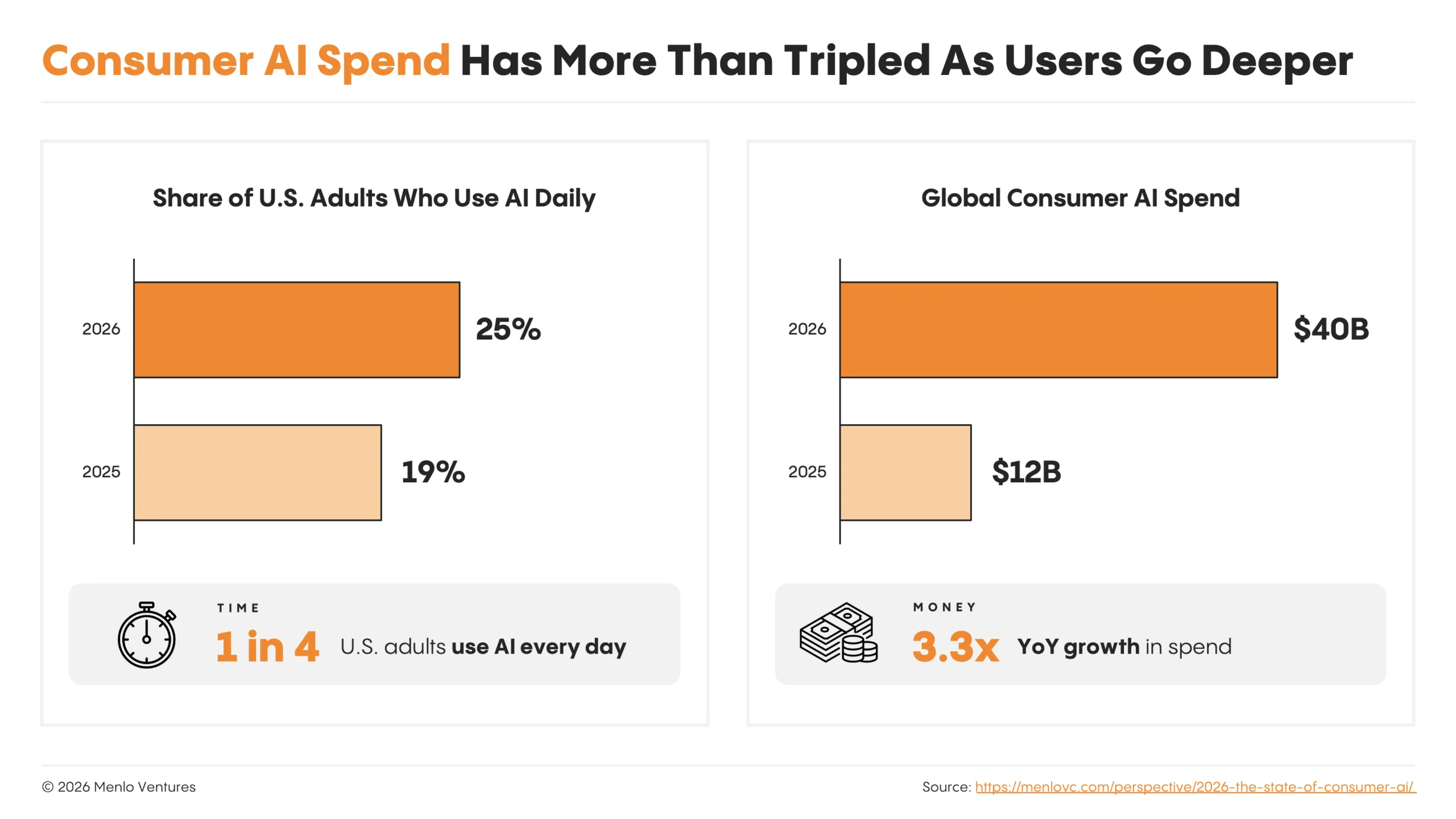
According to the latest 2026 Social Media Examiner AI Report, 73% of marketers now use AI tools on a daily basis, with Claude officially overtaking ChatGPT as the industry's preferred writing and strategy companion. This shift highlights a growing preference for nuance over speed. While early AI adoption was driven by the desire to churn out cheap, generic content, strategists are finding that Claude's superior grasp of tone and context makes it a more reliable partner for unpacking complex consumer insights. It suggests that the industry is slowly moving past the "commodity content" phase and starting to value tools that can actually help sharpen a creative brief rather than just fill a social calendar.
3. Google Ads Adds A/B Testing and Planning to AI Max
Google has introduced A/B testing and performance planning tools for Search campaigns within its AI Max suite. Historically, handing your budget over to Google's black-box automation felt like letting an eager intern run your media mix with zero adult supervision. These new tools are a welcome concession to planners who demand transparency. By allowing strategists to run clean, scientific split-tests between automated campaigns and traditional keyword structures, brands can finally measure the actual incrementality of AI-driven reach. It is a step toward treating automation as a measurable tactic rather than an article of faith.
"The goal of marketing science is not to find a tool that does the thinking for you, but to find a tool that exposes your assumptions to the cold light of real-world data."
4. Google's "Preferred Sources" Button Tries to Save Publisher Traffic
In a bid to appease publishers watching their organic search traffic evaporate into AI-generated summaries, Google has launched a "Preferred Sources" button. This feature allows users to prioritize specific publications in their search results. From a brand perspective, this is a clear signal that the battle for mental availability is moving to curated trust. Brands that invest heavily in building genuine authority and high-quality, original content will likely become the "preferred sources" that users explicitly opt into. It is a stark reminder that relying purely on programmatic SEO to capture search volume is a fragile strategy in an era where platforms can simply summarize your website and keep the user on their own page.
5. OpenAI's GPT-Image-2 Ships Transparent Backgrounds
OpenAI has released a preview of its GPT-Image-2 API featuring native transparent background generation. While this sounds like a minor technical update, anyone who has watched an expensive design team spend half their day manually clipping paths around hair or foliage knows the cost of asset preparation. By generating clean, alpha-channel transparent assets out of the box, this update dramatically reduces the friction of creating localized, multi-market social assets. It frees up design teams to focus on the actual art direction and layout of a campaign rather than the digital equivalent of sweeping the floor.
6. Claude Gains Gmail and Google Drive Integration
Anthropic has updated Claude with direct Gmail and Google Drive access, allowing the assistant to find files, draft emails, and manage documents within your existing workspace. For agency account teams, the immediate benefit is the elimination of the "where is that logo file" scavenger hunt that derails every creative session. More strategically, it means you can feed Claude a folder of raw consumer research documents and ask it to draft a client update or cross-reference findings against your brand guidelines without leaving the chat interface. It turns the tool from an external copywriter into an active, context-aware team member.
7. Runway Launches Ruby for SDR to HDR Video Conversion
Runway has introduced its Ruby model, designed to upsample Standard Dynamic Range (SDR) video to 16-bit HDR in professional formats like ProRes and EXR. In the world of high-end production, brands often struggle to blend archival footage or user-generated content into premium television spots without a jarring drop in visual quality. Ruby promises to solve this by bringing older, lower-resolution assets up to modern broadcast standards. It is a highly practical utility for brands looking to weaponize nostalgia by raiding their own historical archives for modern, high-definition campaigns without paying for expensive manual restoration.
The Monday Morning Playbook
Do not rewrite your entire digital strategy based on this week's headlines, but do take one concrete action on Monday: sit down with your media agency and ask them for a point-of-view on conversational ad placements. Specifically, ask them how they plan to measure the search-to-dialogue conversion rate as ChatGPT's ad network rolls out across Europe. If they do not have an answer, it is time to start building your own test-and-learn budget.