New data from System1 and TikTok reveals why creators are no longer a social tactic - they are advertising's most powerful brand-building tool.
The Yacht People Have Noticed
For years, the annual migration of advertising executives to the south of France followed a predictable script. Large agencies rented expensive yachts to explain why a thirty-second television commercial - filmed over six months in a desert for the GDP of a small island nation - was the pinnacle of human persuasion.
Meanwhile, creators were treated like the energetic teenagers at the kids' table, handed pocket money to make unpolished videos that lived in the margins of the media plan.
But the realization has finally set in: creators are no longer a cheap tactical add-on. They are the new television. Traditional advertising is increasingly finding itself playing the role of the slow, over-packaged protagonist trying to keep up with native, entertaining work that actually earns its place on the screen.
This shift isn't based on creative vibes or enthusiastic agency pitches. It is backed by a massive, cold-hard-data reality check. System1, WPP Media, and TikTok quietly teamed up to publish The Creator Effectiveness Playbook, analyzing one of the largest datasets on short-form creator performance ever assembled. The findings should make anyone still running generic, over-polished corporate wallpaper very, very nervous.
The $70.5 Million Reality Check
This study connected real creative testing with actual, in-market brand lift data. The scale of the research is huge:
1,217 paid TikTok ads analyzed
8 global markets (including the US, UK, Germany, and Brazil)
182,550 real TikTok users tested
$70.5 million in actual media spend
23.6 billion impressions analyzed
The core finding? Creators are the ultimate brand builders, but only if you stop treating them like a cheap way to get clicks and start understanding how they actually build mental availability.
Why Your Creator Metrics Are Lying to You
The industry has a bad habit of judging creator ads on metrics that describe what happened around a post rather than whether anyone remembered the brand. Likes, comments, watch time, and follower counts are comforting numbers in a spreadsheet, but they do not tell you if a buyer will recognize your product on a supermarket shelf three weeks from now.
According to the data, creator ads naturally earn more attention than traditional brand ads. However, they have historically suffered from a massive flaw: they are less likely to leave people remembering the brand. Marketers have been scaling work they cannot properly judge, trading long-term memory structures for cheap, fleeting engagement.
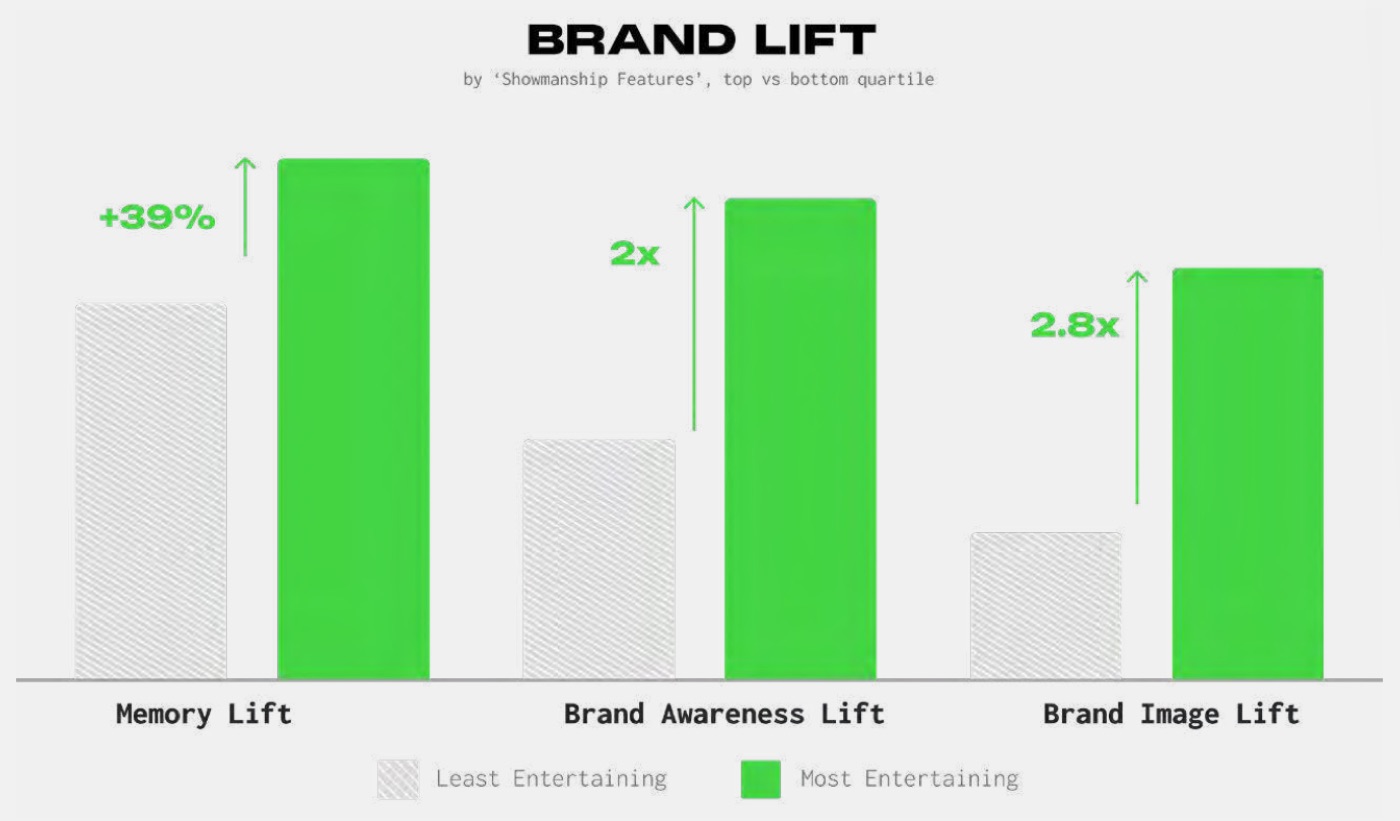
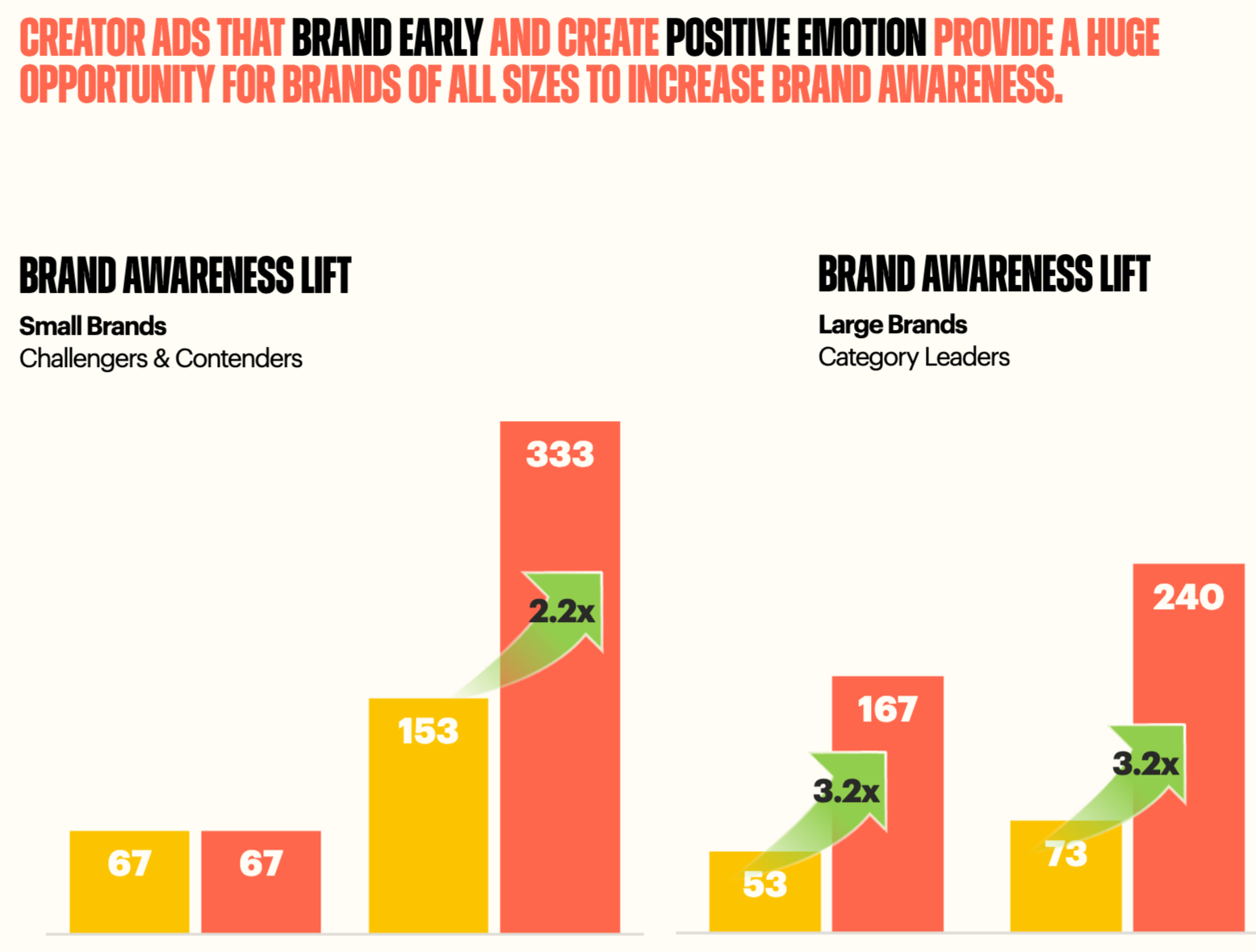
To fix this, we have to look at what happens when you combine the native entertainment value of a creator with the strict discipline of early branding. When you pair positive emotion with brand recognition in the first two seconds, the results are staggering.
Source: System1's Test Your Ad: Social
For small brands and challenger brands, moving from low early branding to exceptional early branding and positive emotion delivers a massive 2.2x lift in brand awareness. For category leaders, the lift is even more pronounced, showing a 3.2x jump. This is the law of emotion over reason in action: make them feel something, but make sure they know exactly who is making them feel it.
The New "Super Touchpoint"
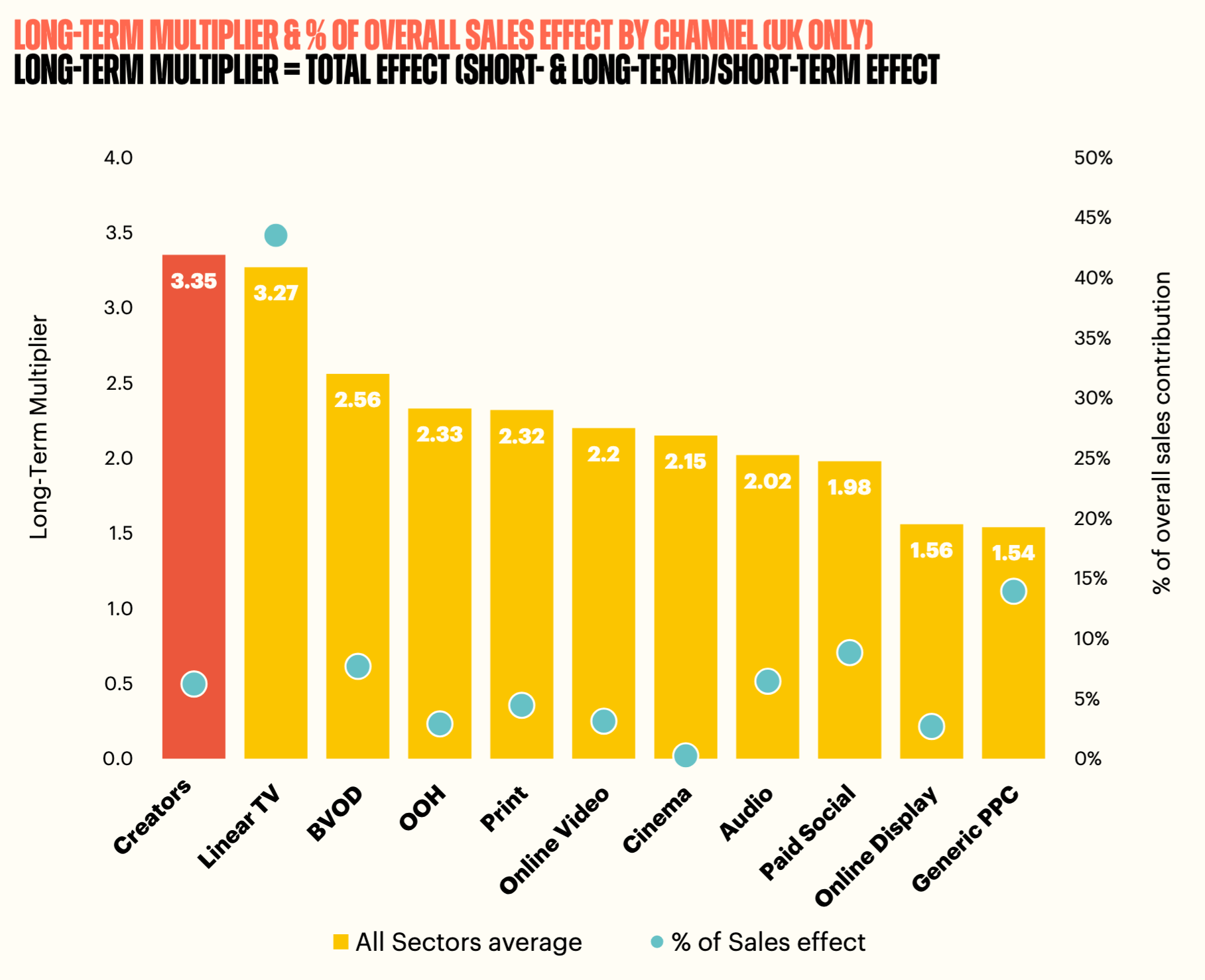
If you still think creators are just a short-term activation tactic, the IPA's Influencer Benchmarking databank has some sobering news. When you look at the long-term multiplier - the total sales effect divided by the short-term effect - creators outperform every single traditional channel measured, including linear television.
Source: IPA Influencer Benchmarking, 2025
With a long-term multiplier of 3.35, creators sit at the very top of the channel hierarchy. They are not a secondary social media tactic; they are a brand-building powerhouse sitting alongside the formats marketers have relied on for decades. This is the ultimate validation of the law of the long and short: creators can convert demand today while quietly building the brand memories that secure tomorrow's sales.
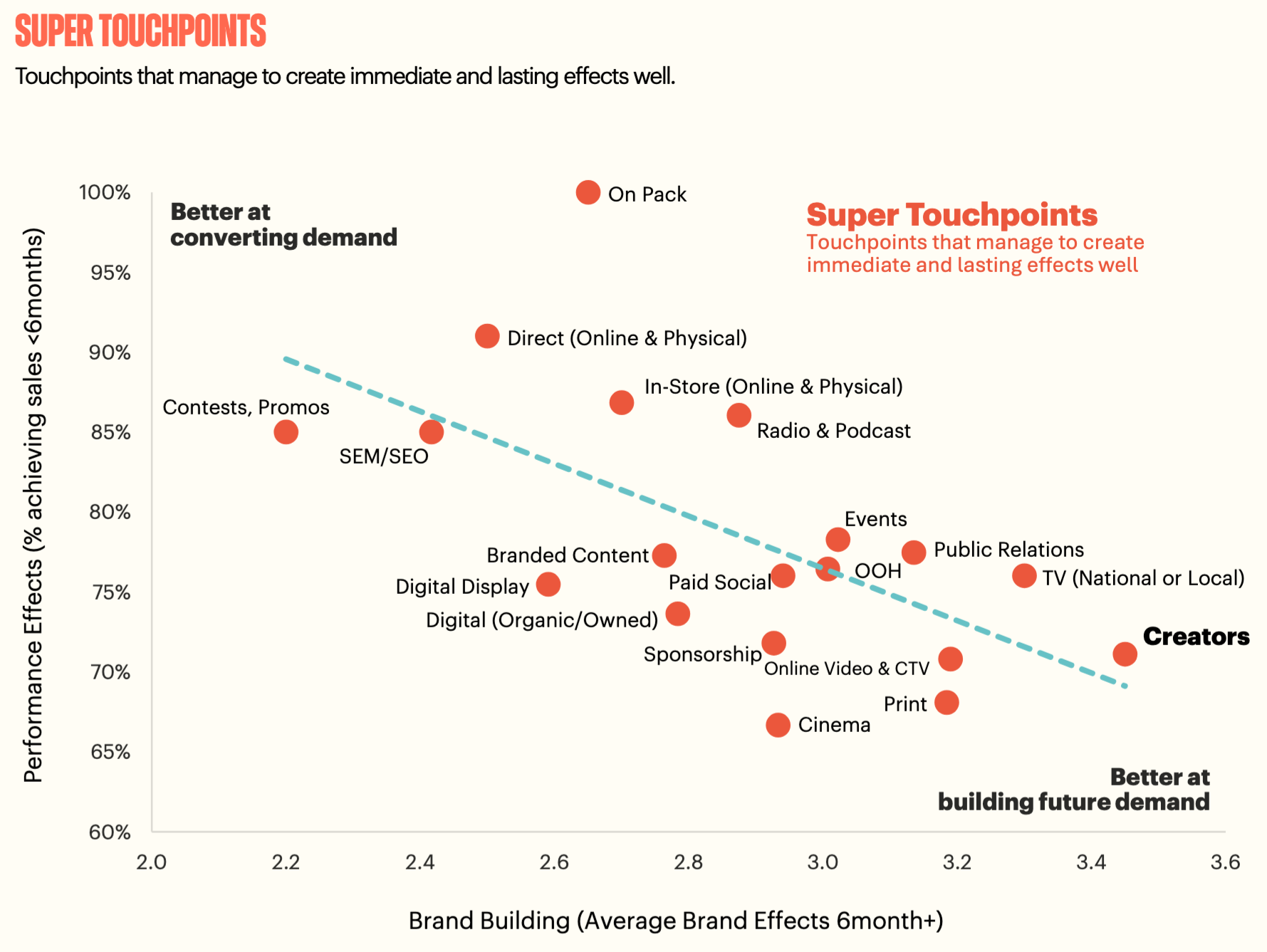
In fact, when mapped against other touchpoints, creators emerge as a genuine "Super Touchpoint" - showing the strongest average ability to build long-term brand effects of any channel, ahead of TV, radio, print, and cinema.
Source: The Creative Dividend, Effie and System1, 2026
The Three Levers of Creator Brand Memory
So, how do you actually make this work without producing expensive, ignored corporate videos? The playbook identifies three distinct levers that build brand memory. They must work together:
Lever | What It Means | How to Maximize It |
|---|---|---|
Creative Quality | Positive emotion paired with brand recognition within the first 2 seconds. | Brief for native entertainment, but integrate the brand early and naturally. Don't hide the logo until the end. |
Creator Fame | The share of your target audience that already recognizes the creator. | Choose creators who have established equity and recognition within their specific subculture. |
Brand Fit | The audience's belief that the brand naturally belongs in the creator's world. | Start with the human need, find the creator world that dramatizes it, and ensure your brand has a natural role. |
As the authors of the playbook point out, strategy sets the ceiling, and the brief decides how much of it you actually reach. A great brief can lift a strong strategy further, but it cannot rescue a weak creator selection, a terrible brand fit, or a video that hides the brand until the final frame.
The era of treating creators like cheap distribution is over. The data is clear: creators are the new brand builders. It's time to stop chasing empty views and start building memories that last.