Two marketing legends who disagree about everything sat down at Cannes Lions 2026 to agree. I was in the room. Here is what Byron Sharp and Mark Ritson nodded along to, from mental availability to the great distinctive brand assets naming truce.
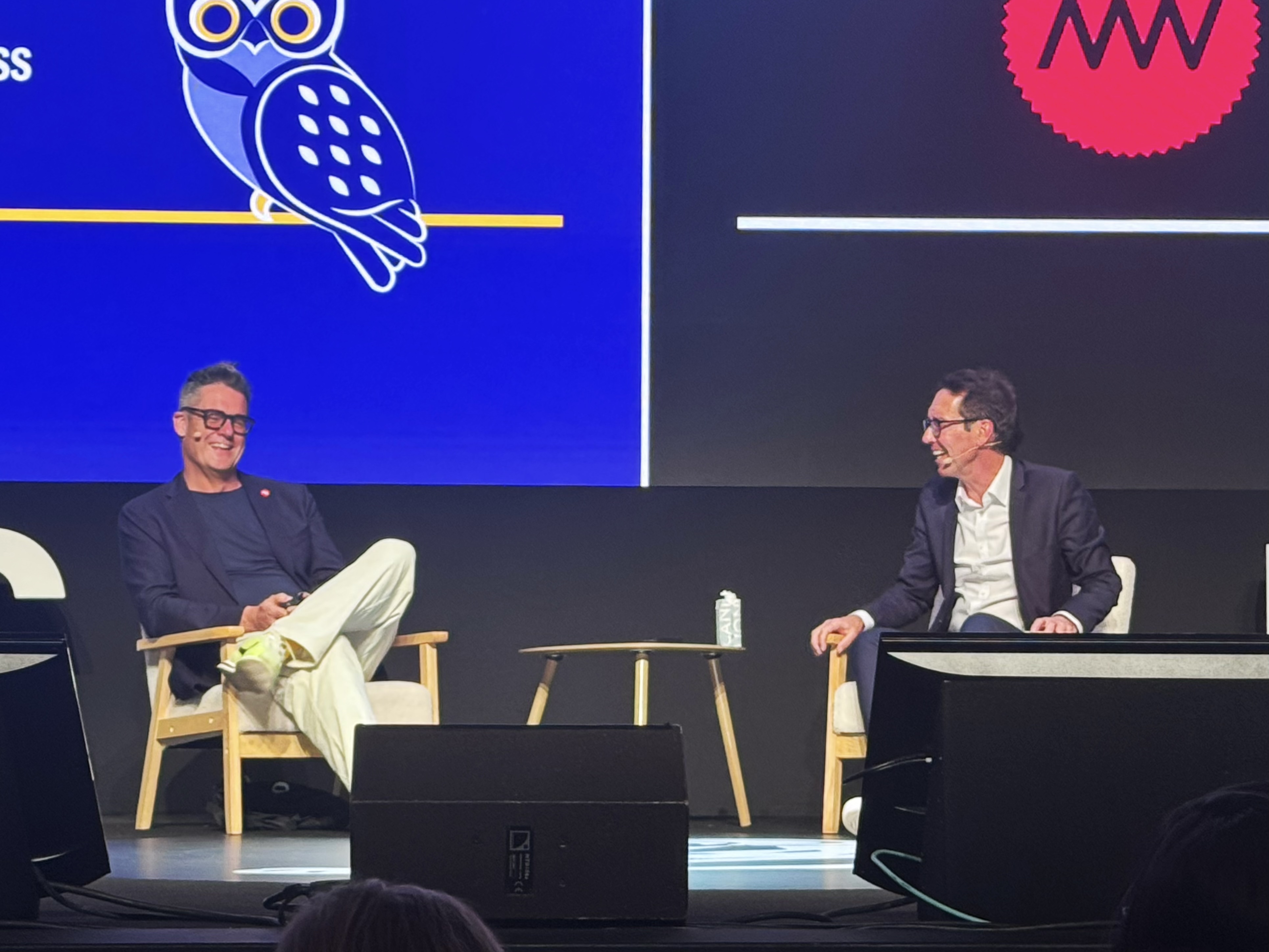
I am pushing forty, and for thirty minutes at Cannes I behaved like a fourteen-year-old at a boyband concert. Packed room, real heat in the air, and me grinning in my seat like I had won a competition. There was, as one of them put it, a circus going on outside. Inside, two men who have built entire careers on disagreeing with each other sat down to talk about the things they actually agree on.
On one chair, Byron Sharp, professor at the Ehrenberg-Bass Institute and the man behind the marketing equivalent of a holy text. On the other, Mark Ritson, the Mini MBA founder and the sharpest tongue in the business. They have known each other for about thirty years, back to the days of Andrew Ehrenberg, the quietly brilliant academic who was so right about so much that the industry mostly ignored him for a decade.
When these two stop arguing and start nodding, you take notes. Here is what they nodded about.
1. Most of your job is just coming to mind
The biggest idea, and the one that still rearranges furniture in my head, is mental availability. Ritson put a number on it that he cheerfully admitted was made up but directionally true: if your brand springs to mind in a buying situation, roughly 70 to 80 percent of your job is already done.
Why? Partly because you are in the game at all, and partly because people are gloriously lazy. Once your brand is in someone's head, they start quietly building the case for you themselves.
Here is the part nobody in our trade wants to hear. You think about your brand eight hours a day. Your customer carries around seven hundred brands and gives each one about three seconds and two brain cells. And this is not just a supermarket thing. The work coming out of Ehrenberg-Bass on B2B shows the first brand that comes to mind, when you think corporate law or logistics or infrastructure, is the one that wins the deal around 70 percent of the time. All that talk about rational procurement, and it still mostly comes down to who you thought of first.
2. Look like yourself, even when you are sick of it
If coming to mind is the job, then distinctive brand assets are how you get there. Sharp's line that I keep stealing is that great branding is simply a brand that looks like itself. Your colour, your logo, your character, your sound, the shape people clock before they read a single word.
Ritson's contribution was the most honest thing said all session. You will get bored of your own assets long before your customer even notices them. He described a champagne brand agonising over whether they had overused their famous yellow and should move to white. They were sick of it. They saw it every single day. The customer sees it twice a year, half-distracted, talking to the dog.
His advice, and I am quoting the man, was to push through the vomit. The moment you are nauseated by your own brand is roughly the moment the public starts to recognise it. Almost every ad in that festival, he reckoned, is not distinctive enough.
3. The naming truce we have needed for years
This was the moment I actually sat up. For about a decade our industry has been calling the exact same thing by five different names, and quietly confusing every junior marketer alive.
Distinctive brand assets, the Ehrenberg-Bass term, the one Jenny Romaniuk literally wrote the book on.
Brand codes, Ritson's preferred phrase, borrowed from the fashion world.
Fluent assets or fluid assets, the System1 version.
And the old reliable, just well branded.
One thing, four labels, endless slides wasted explaining the difference that does not exist. On that stage they finally called it. The agreed term is distinctive brand assets. The reason is wonderfully unglamorous: there is a whole book and a mountain of data behind it, so why reinvent the wheel.
Then Ritson did something you rarely see from a man who has built a brand on being right. He said he will rewrite the modules in his own Mini MBA, where he had been teaching brand codes, and use distinctive brand assets instead. And he publicly called on System1 to do the same with their fluent assets. A genuine ceasefire on jargon. For those of us who present to clients for a living, this is a gift. One name. Full stop.
4. Mass marketing was never the dumb option
For a century the clever-sounding advice has been to niche down, find your little segment, exclude the people who are not for you. Sharp's sophisticated mass marketing turns that on its head.
The caricature of mass marketing is Henry Ford and one black car. The reality, even then, was dozens of models. You are still trying to reach everyone who could plausibly buy the category, you are just not treating them all identically. Some live in the north, some in the south, some speak Spanish. You adapt the edges while aiming at the whole.
This is where the idea I keep hearing marketers fall in love with lives: the 95/5 rule. At any given moment only around 5 percent of buyers are actually in the market. The other 95 percent are not. It is both true and instantly intuitive, and once you say it out loud to a team, everything else in this list suddenly makes sense. You build mental availability for the 95, you capture the 5, and you stop confusing the two.
5. Brand purpose is mostly theatre
They have both been saying this for over a decade, and they said it again with relish. For all but a tiny handful of brands, brand purpose is nonsense. Nobody, and I mean nobody, is choosing toothpaste based on how it feels about social equality.
"Nobody gives a fuck about your brand." - Mark Ritson, to a room that laughed because it is true.
The data is brutal. When Kantar asked people directly how important purpose was to their choice, everyone nodded along, because that is what you do when a nice researcher asks. But when you look at the actual reasons people gave for buying, purpose showed up in about 0.4 percent of cases. Ehrenberg-Bass ran the same test across thousands of studies worldwide, and in real quantitative data the whole thing spectacularly evaporates.
There is an ethics angle too, and it is a fair one. Spending shareholders' money on your personal favourite cause so you have a nice case film for an awards show is not, when you say it plainly, a great look.
6. Leave the cake in the oven
The stat that made the room gasp came via David Tiltman. The average lifespan of a big brand's campaign today is around 30 to 40 days, and shrinking. Meanwhile the evidence says you extract the most value from a campaign when you let it run for two or three years.
We change the creative long before the customer has even registered it. Sharp's reminder lands hard here: advertisers massively overestimate how many people have actually seen their ads. The famous line about people seeing 10,000 ads a day and tuning out? Mostly a myth. They are not tuning you out. They never saw you in the first place.
So the discipline is almost embarrassingly simple. Stop getting bored of your own work. Leave the cake in the oven longer. Consistency is not the safe, lazy choice. It is the hard one, because it means resisting the itch to make something new for the sake of feeling busy.
What I carried out of the room
By the end they were ribbing each other like old friends, Ritson calling Sharp the dark lord of penetration, both clearly enjoying themselves. But strip away the comedy and the agreements form a single, coherent argument that runs against most of what gets celebrated at a festival like this.
Come to mind. Look like yourself. Reach broadly. Skip the sermon. And for the love of everything, give it time.
None of it is new. Most of it has been sitting in the data for years, waiting for enough people to stop dying off and let the better ideas through. The job now is simply to do it, and to be one of the few in the room brave enough to say the emperor's purpose-led manifesto has no clothes.
If you want to see what coming to mind and looking like yourself actually look like in practice, go and lose an hour in the Selfstorming campaign library. It is a very good way to recalibrate your eye for the work that does the boring, brilliant thing well.