A high-stakes World Cup bet ends in a brilliant brand hijack. Is this the best piece of reactive marketing in 2026?
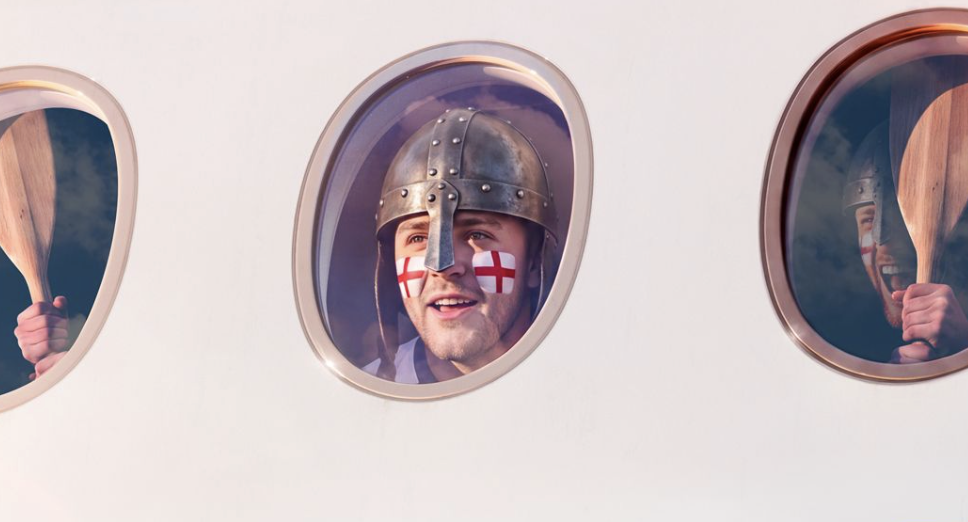
A few weeks ago, some very brave, very optimistic souls in the Oslo marketing department of Norwegian Air Shuttle looked at the FIFA World Cup 2026 bracket and decided to play a game of chicken. They challenged British Airways to a public, high-stakes wager on the England vs. Norway quarter-final match.
The terms? If Norway lost, Norwegian would have to adopt the iconic British Airways visual identity on its social channels and offer discounted flights to London. If England lost, British Airways would have to paint its feed in Norwegian's red-nosed branding and promote flights to Oslo.
Well, England won. And as reported by Euronews, Norwegian actually kept its word, turning its entire digital presence into a temporary British Airways fan club.
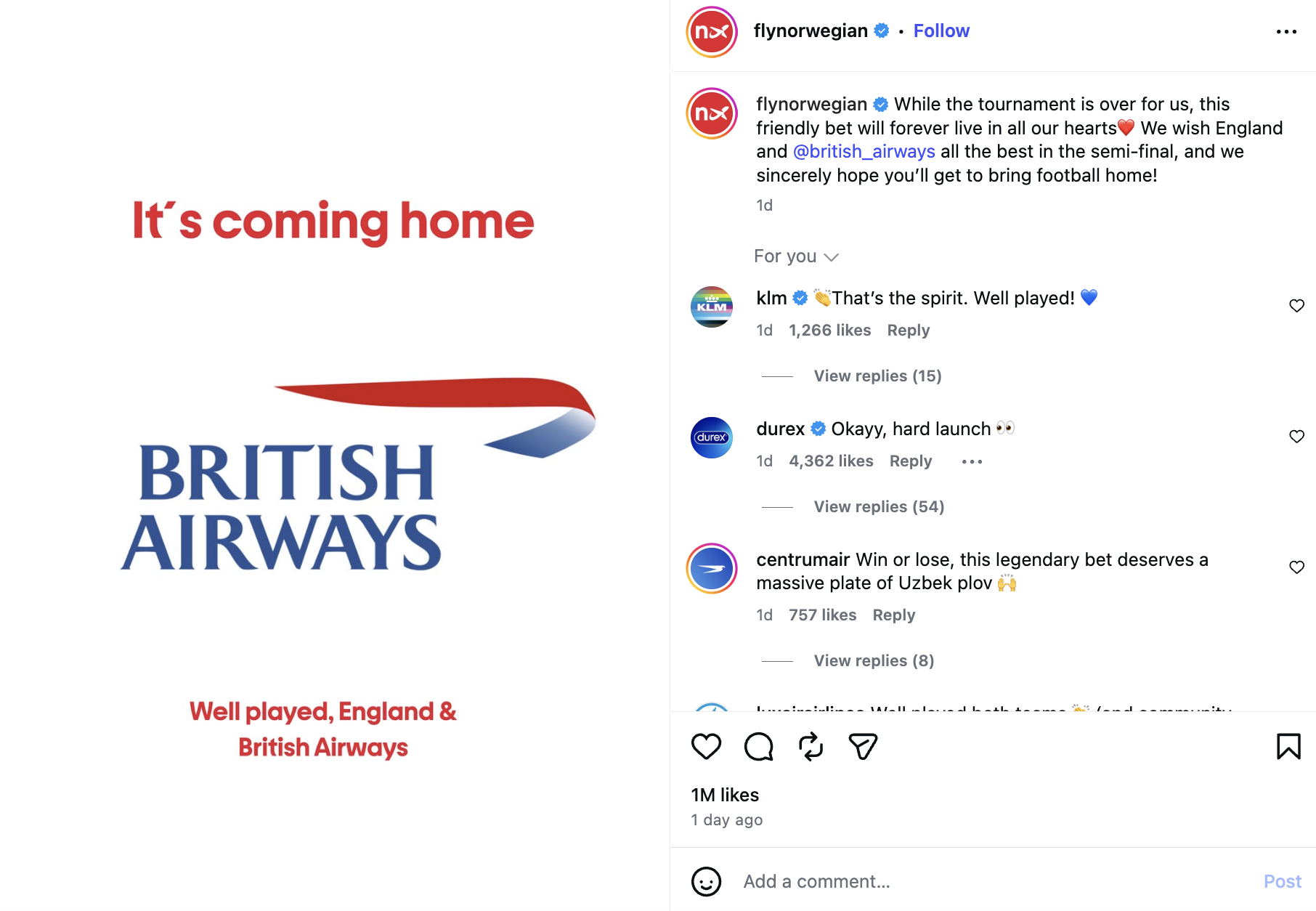
But far from being a humiliating defeat, this stunt might just be the most brilliant piece of reactive strategy we've seen all year. Let's deconstruct why losing this bet was the best thing that ever happened to their media budget.
The Psychology of the Public Defeat
Most brands guard their guidelines like sacred scripture. Swapping your logo for a competitor’s would horrify most CMOs. Norwegian did the opposite—embracing the loss with humor. By doing so, they tapped into the The Pratfall Law: admitting a flaw or setback makes a brand feel more human, authentic, and ultimately more likable.
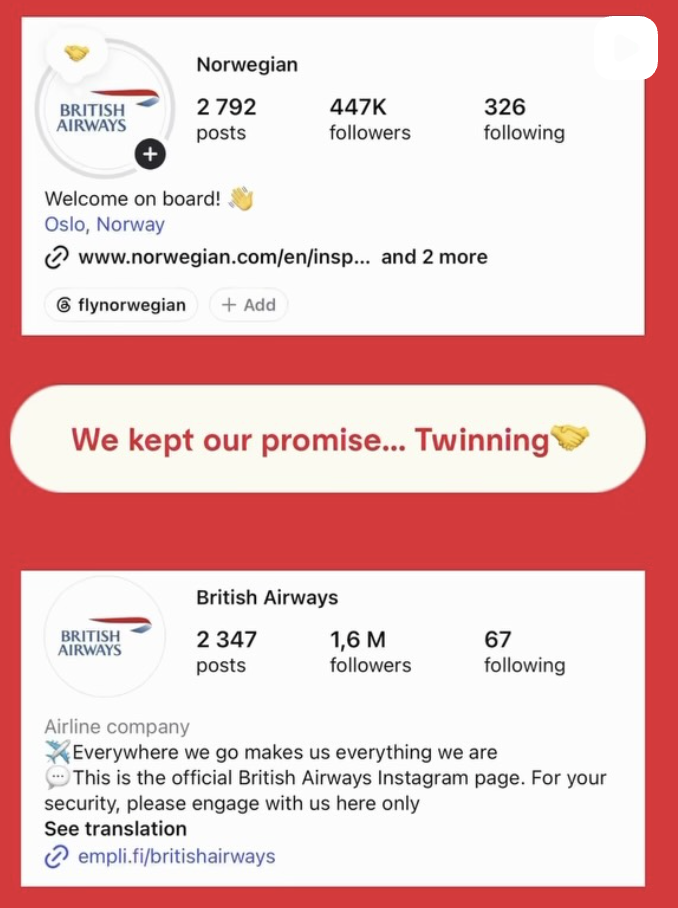
Instead of running a generic, focus-grouped ad congratulating the winning team - which is the corporate equivalent of plain oatmeal - they chose to make themselves the punchline.
"If you are going to lose, do it so spectacularly that the winner feels a bit guilty for beating you."
This is classic Turn Weakness Into Strength. They took a literal, physical loss on the pitch and converted it into instant cultural relevance.
The Anatomy of a Perfect Brand Hijack
While global brands spent millions on TV ads, Norwegian spent almost nothing—a Twitter thread and an Instagram post. Yet they generated more earned media than many Super Bowl commercials. This is the power of the hijack: turning someone else’s moment into your own, just like Burger King’s famous Burger King's McWhopper.
To understand why this works so much better than a standard campaign, let's compare the two approaches:
Strategy Dimension | The Standard Corporate Playbook | The Norwegian Hijack Playbook |
|---|---|---|
Budget Required | Millions in production and media buys | Zero media spend, just a clever copywriter |
Audience Reaction | Passive skimming, ad-blocking | Active sharing, laughing, booking flights |
Brand Tone | Polished, safe, slightly hollow | Witty, self-aware, brutally honest |
Core Mechanic | Interruption |
How to Apply This to Your Own Strategy
You don’t need a multi-million-dollar sponsorship to win attention. You need the courage to act human, not corporate.
The playbook:
Pick the right rival – someone with a clear contrast.
Make the stakes real – the risk should feel genuine.
Move fast – reactive marketing rewards speed.
End with action – turn the joke into a tangible business opportunity.
If you are tired of staring at empty slides and want to build your own high-stakes reactive campaigns, jump into our Creative Session to generate strategic angles, or use the Hooks Session to write social copy that actually earns a reaction. Because as Norwegian just proved, sometimes the fastest way to win is to lose on purpose.