ElevenLabs shipped a Portuguese ad with English text all over it - on purpose. The ladder from embarrassing test to approved budget, rung by rung.
ElevenLabs wanted localized video ads for Brazil. The proper version needs lip-sync, rewritten on-screen text, native QA - in other words, money and people. They had neither approved.
So they shipped a version most brand managers would veto on sight: Portuguese audio, English text still plastered across every frame.
On purpose. And it's the smartest budget move I've heard about all year.
Why the embarrassing version wins
In their recent localization workshop, ElevenLabs' head of paid marketing Tim Davis explained the logic. The dubbed-but-not-really-localized ad wasn't the product. It was the proof point - the cheapest possible test of the question "does Brazil respond to Portuguese?"
It did. A lift study confirmed the conversions were incremental, not cannibalized from elsewhere. And suddenly the conversation with leadership was no longer "trust me, localization matters." It was "here's the lift study; imagine what the properly localized version does."
Budget approved. Hires made. On-screen text now localized, lip-synced, and - his words - "doing extremely well" in market.
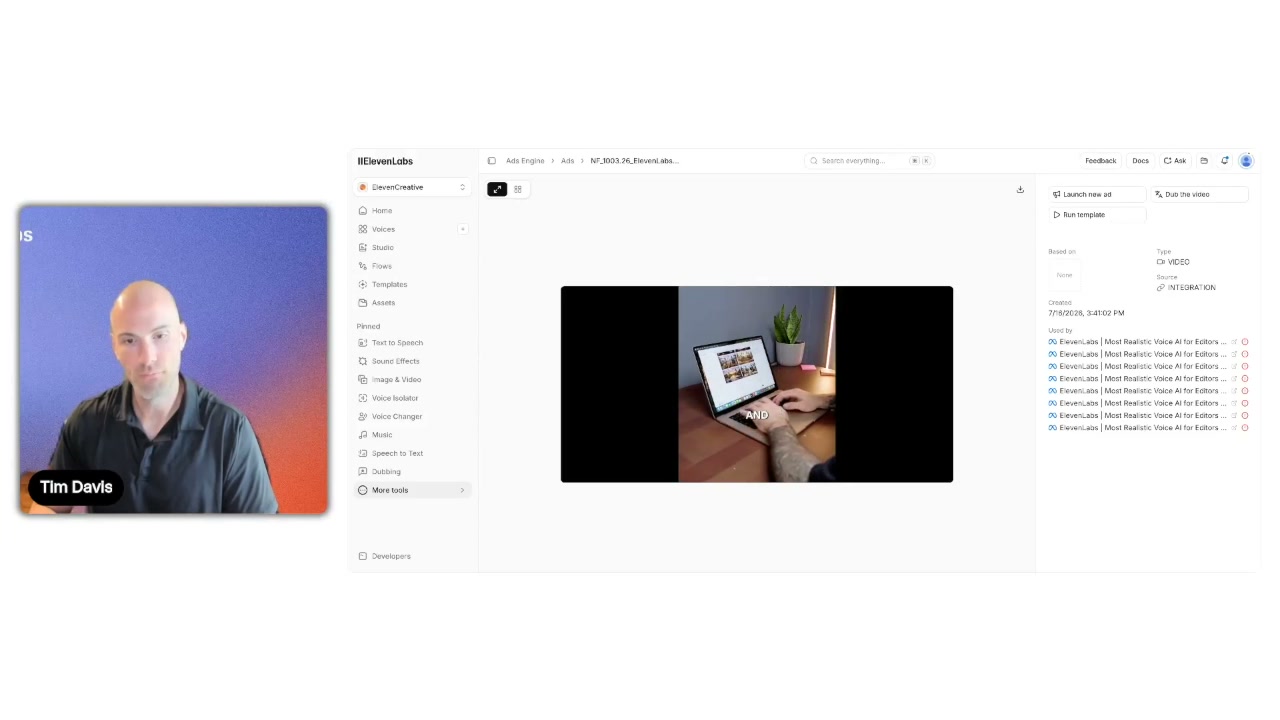
Source: ElevenLabs, "How ElevenLabs Runs Localized Ads in 50+ Countries with AI" workshop, 2026
The ladder, rung by rung
Strip the localization specifics away and what remains is a general-purpose machine for converting ideas into budgets:
Rung | What you do | What it buys you |
|---|---|---|
0. Check operational rigor | Confirm you can support what you're testing | Not drowning in consequences (see below) |
1. Make a strategic bet | Pick the market or channel where the data says your customers already are | A test worth running |
2. Ship the cheapest testable version | Dub the audio, keep the English text - imperfect but honest | A signal for pocket change |
3. Measure incrementality, not applause | Run a lift study, watch brand search and direct traffic - not just clicks | Evidence nobody can argue with |
4. Trade the case study for resources | Present the lift, ask for the budget the full version needs | Money, people, and a mandate |
5. Repeat with a bigger ask | Each win finances the next, larger bet | A compounding track record |
The elegance is in rung 2. Most teams stall because they think the test has to look like the finished thing. It doesn't. It has to answer the question. English text on a Portuguese ad answers "does the language matter?" perfectly well - it just does it without a production budget.
Rung zero, the one everyone skips
Davis' warning from a different scar: if you launch Hindi ads and your support team doesn't speak Hindi, congratulations - your support tickets are now in Hindi. Demand you can't serve isn't growth, it's a queue of angry people in a language you can't read.
Before any bet, ask: if this works, can we actually handle it working?
Know how fast your signal arrives
One more nuance worth stealing. Not every rung 3 reads out at the same speed:
Search campaigns tell you in days. Click, convert, done.
Video is sneaky. Clicking a YouTube ad pauses the video the person wanted to watch - so almost nobody does. The conversions surface later, disguised as brand search and direct traffic. Without a lift study you'll conclude the ad "didn't work" while it quietly fills your other channels.
Impatience misreads slow signals as no signal. Set the readout window before you launch, not after you panic.
This is not about localization
New channel, new market, new tool, new format - the ladder doesn't care. It's the same three moves every time: bet where the data points, ship the version that answers the question, and let the measurement do the persuading. (If you need the bet itself, that's a research problem - our research session exists for exactly that homework - and our campaign library is full of brands whose first version was also held together with tape.)
Ideas don't get budgets. Proof points do. Ship the version you're slightly embarrassed by, measure it honestly, and let the lift study write your business case.