Frameworks are proper strategy nerd stuff. I love them mostly for three practical reasons, which is why I built 50 Shapes of Strategy: a handbook, editable templates and a file for your AI.
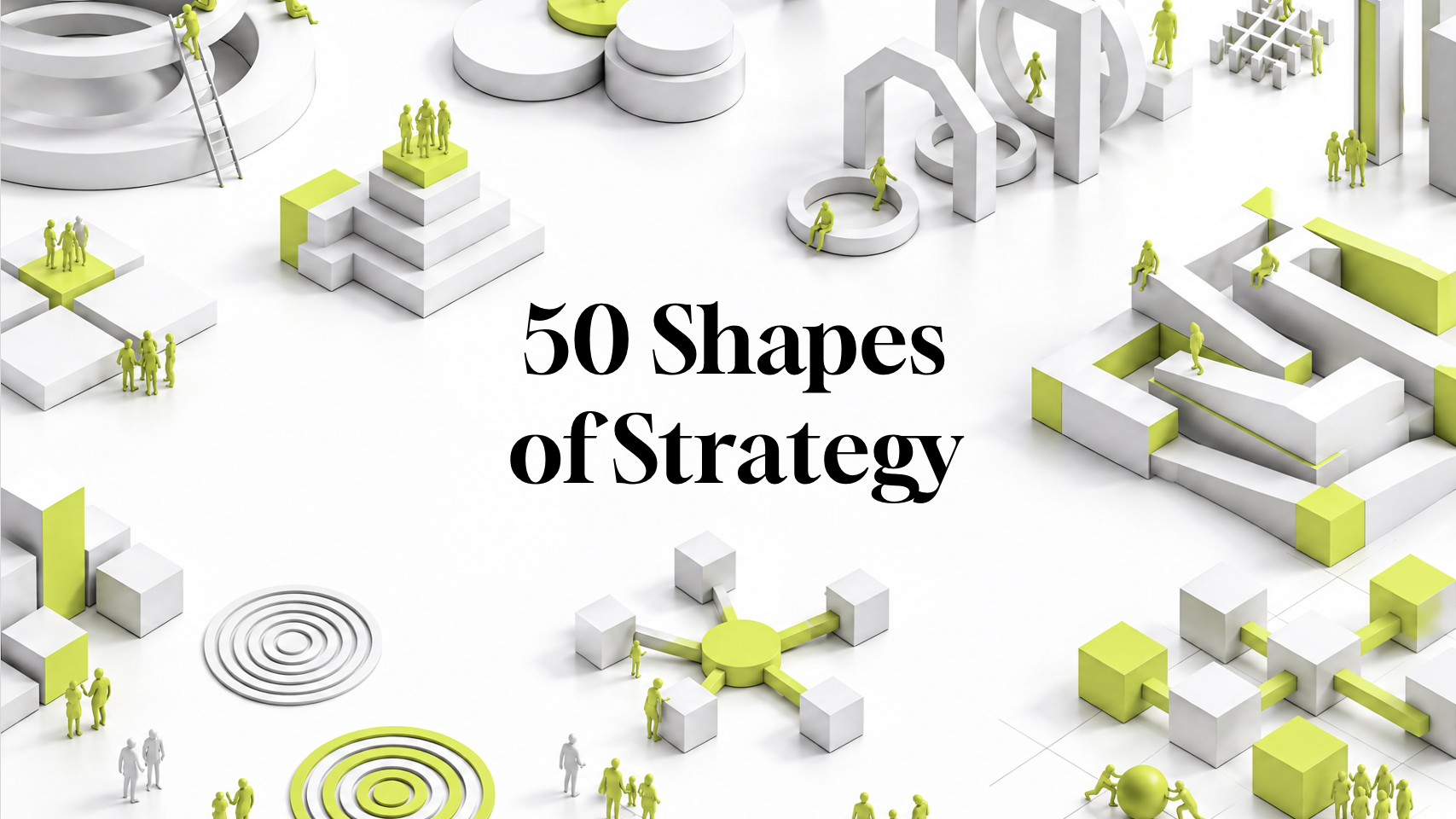
Some people collect vinyl. I collect diagrams with four boxes and famous campaigns, and I know how that sounds :D
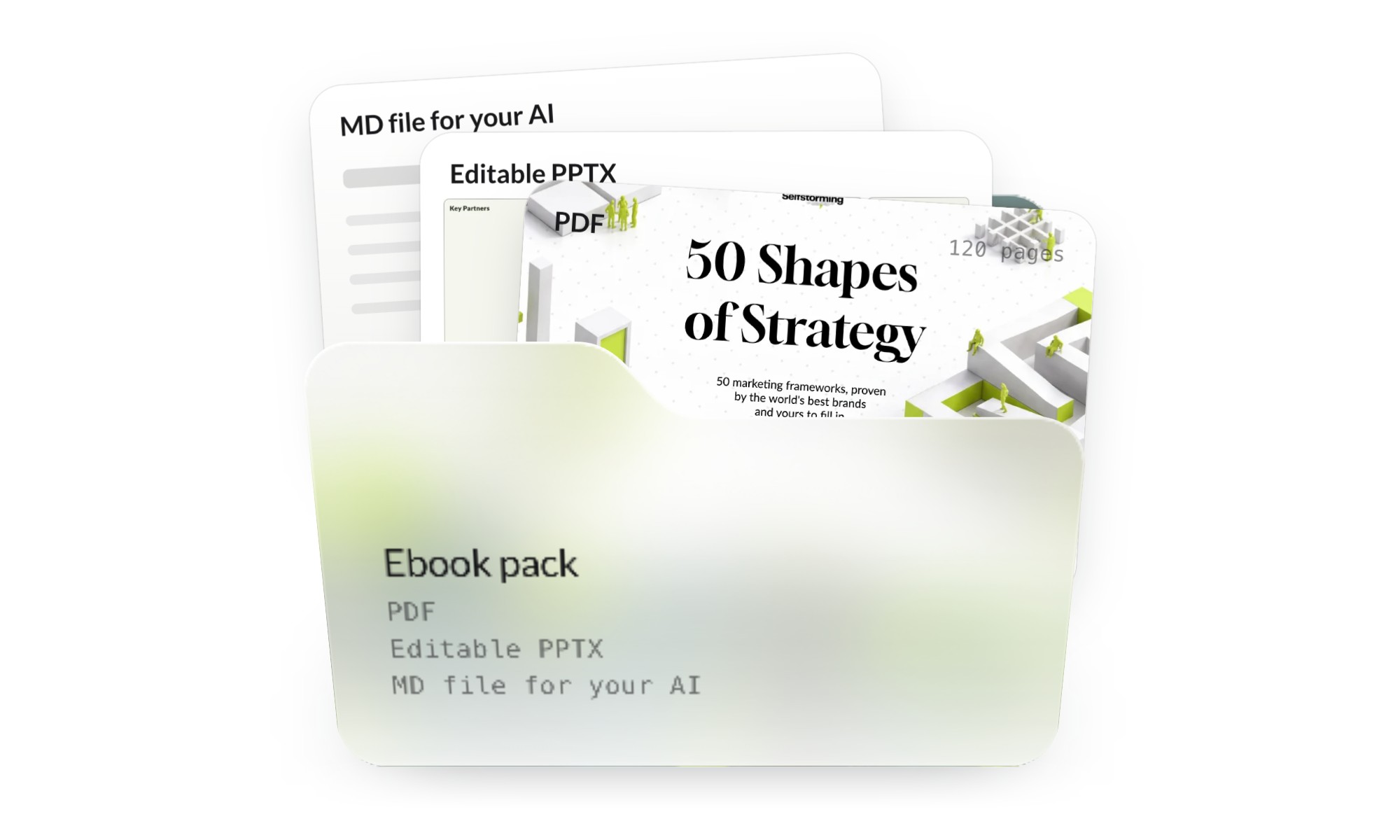
So I turned the diagrams into a book. 50 Shapes of Strategy is a 120-page handbook of 50 marketing frameworks, and it comes in a pack with editable PowerPoint templates and a Markdown file for your AI. And it's FREE with yearly subscription!
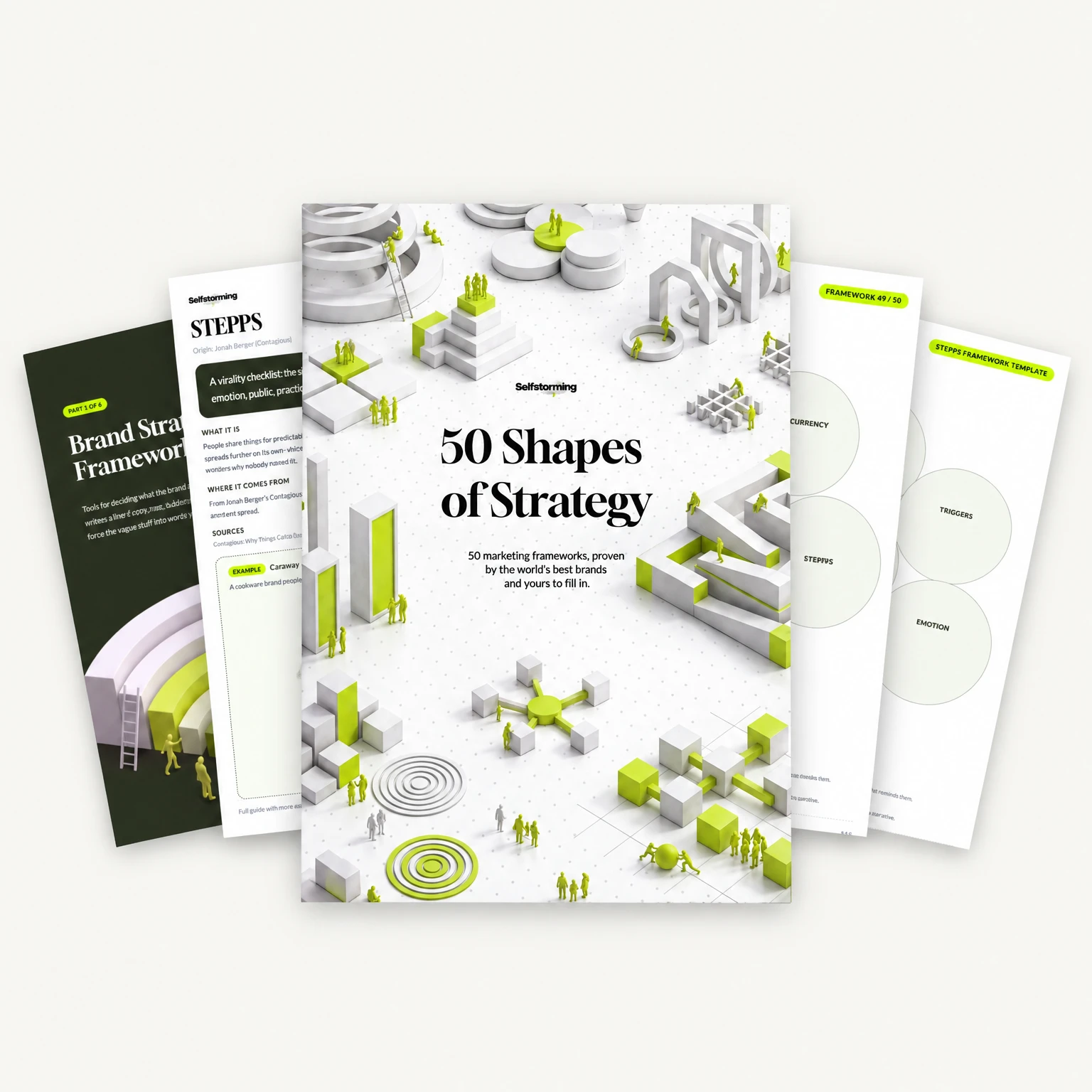
Frameworks are proper strategy nerd stuff, and part of me loves them for exactly that. But after 20+ years in marketing, I keep reaching for them for a more practical reason. A good framework does three things, and we open the book with them.
What a good framework does
It helps you decide. Four quadrants and one honest look at where you stand. Trade-offs are much harder to dodge once someone has drawn them on a page.
It turns a hunch into a strategy. The thing you "just know" about your brand becomes a sentence the whole team can repeat, and argue with.
It shows you what you don't know yet. The empty box is the point. If you can't fill in who the customer is or why they would switch, better to find out on paper than after the launch.
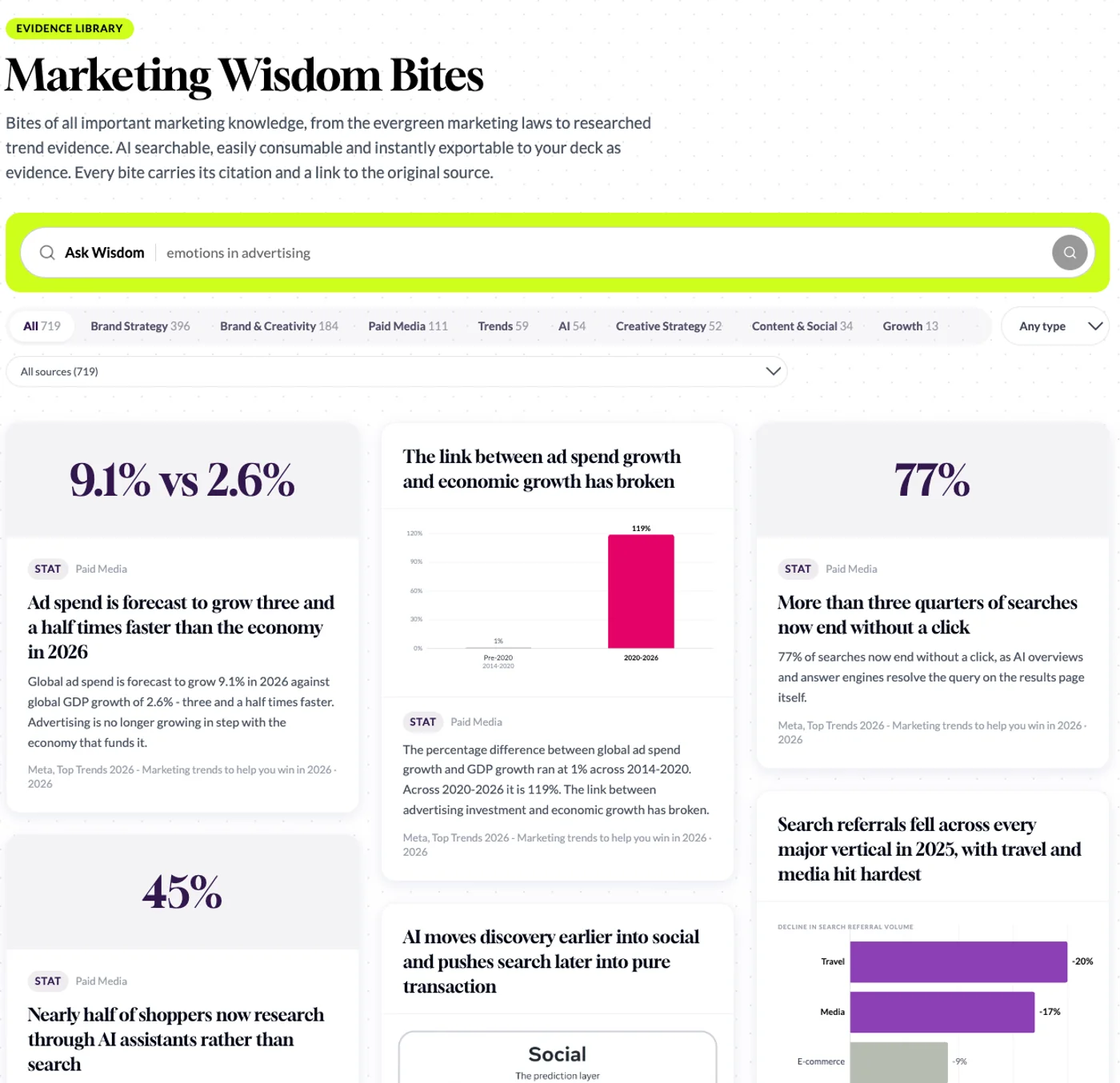
That's why I built our framework library, and now this pack. I use it in three ways.
1. See it on a brand you know
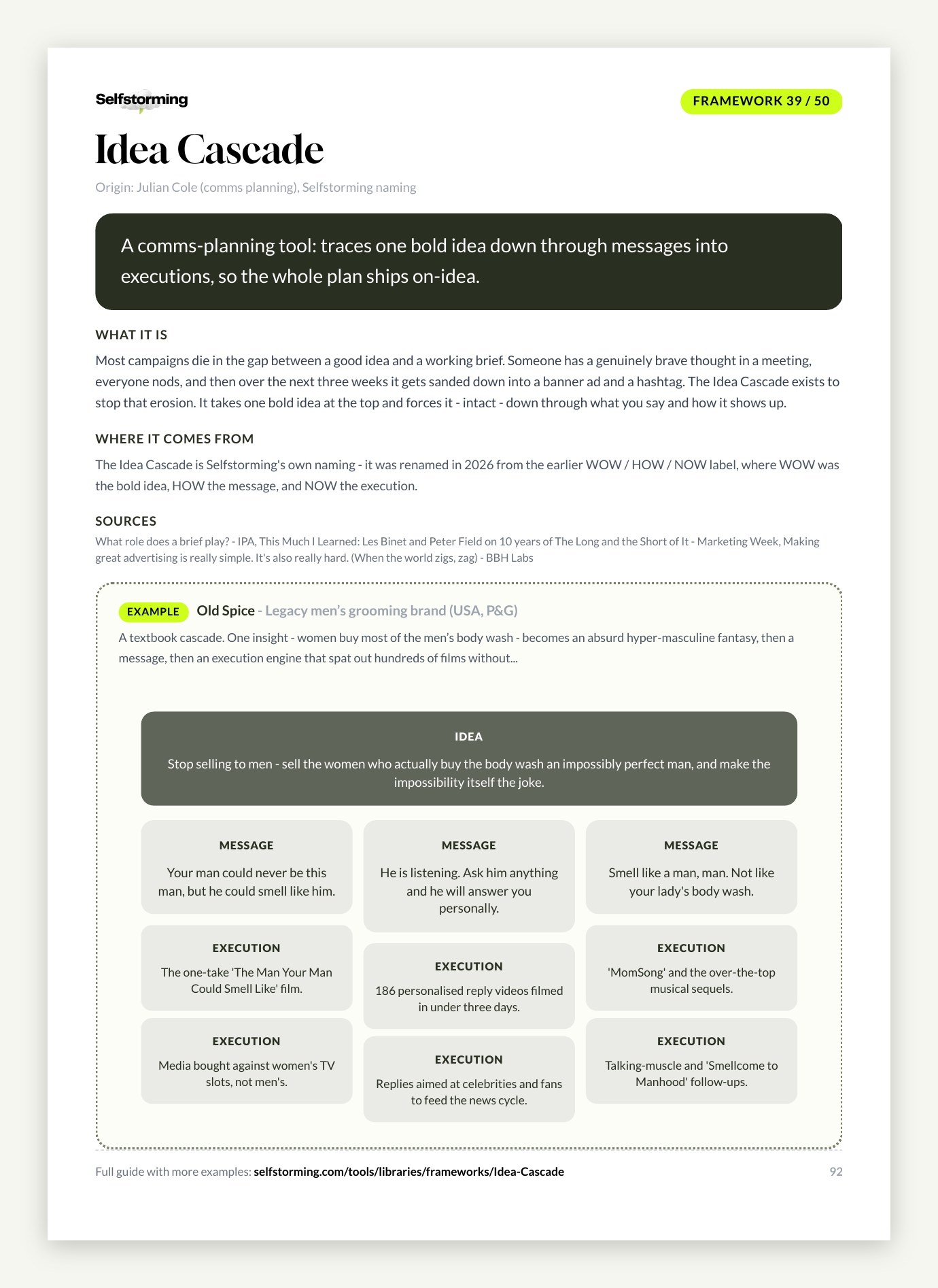
A framework explained in the abstract is a drawing of some boxes. So the handbook works each one through on an example, most of them famous brands: Dove on the Brand Ladder, Volvo in the Brand Identity Prism, Old Spice down the Idea Cascade. You can picture how it works, get inspired, and see how specific the answers need to be.
2. Put it on a slide, then on a table
I like using the templates in decks, because a filled-in framework shows a strategy clearly on one slide.
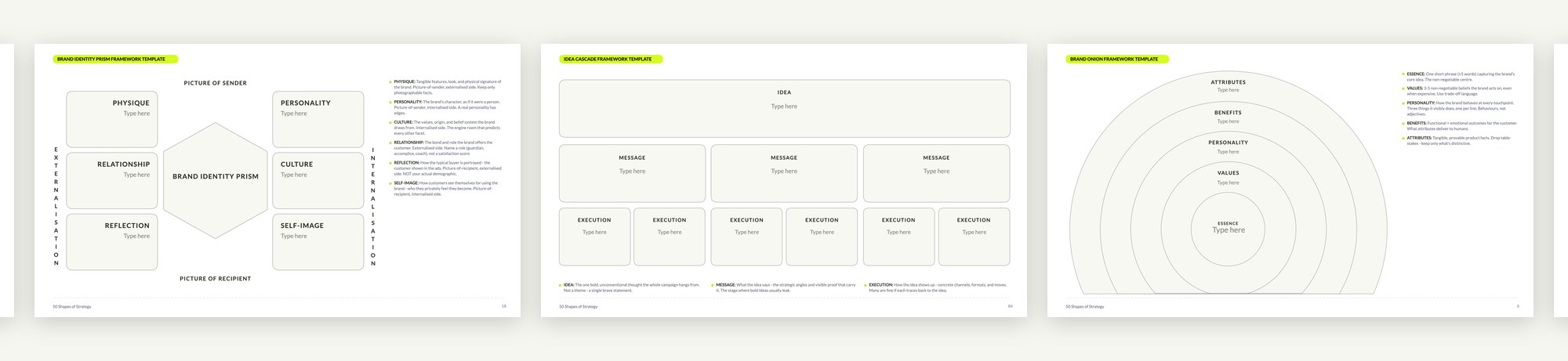
They are just as good printed out at a workshop. People fill them in by hand and then present them to the room, and an empty box is hard to talk your way around when everyone is looking at it.
3. Load it into your AI
This one is the newest habit. When I already have a project's context in Claude (and, for some reason I can't explain, no Selfstorming MCP connected :D), I just add the Markdown file.
Claude then works with the frameworks the way they are meant to be used. It helps you choose the right one, keeps to the right slots, takes its cue from the good examples, checks its answers against the bad ones, and you can tune the result with it from there.
They won't do the thinking
When you want a push towards different directions, our Strategy Session picks and fills a framework from your brief, so you have something to react to instead of a blank page.
Obviously, none of this replaces thinking. That part is still your job, the frameworks are just very good help.
The pack costs €39.90 on its own. It's free with the yearly plan, which gets you the generator and whole Selfstorming tools with libraries.
I'm really proud of this one. We already have strategists, creatives and marketers here from all over the world, and nothing would make me happier than seeing these pages help them, preferably with coffee stains on them.