Oren John casts brands like a series: seven character types, a calendar of moments, winning scripts multiplied across faces, and the Messages x Concepts x Hooks workshop.
I have sat in a lot of brainstorms that produced forty good ideas and zero videos. The ideas were fine. Nobody in the room could film them, nobody owned the calendar, and the founder had politely declined to be on camera in 2019. Then there's all the traditional advertising where filming each video as TV ad would cost between 150 - 500k and would involve around 200 people. That's a diffrerrent world - and a shrinking one.
Oren John's answer to that problem is to stop thinking in campaigns and start casting a world. In his talk at Chief Marketer San Francisco, he walked through how he builds one with brands, from the characters to the calendar to a workshop that turns a two-hour meeting into 30-40 pieces of creative. A campaign is an episode. What he describes is the series.
Start with the cast, not the concept
The old way, in John's own slide, was concept plus media buy pointed at a target. The new way starts with people. "We are in a persona-based era," he said, and listed seven character types a brand can put on a feed.
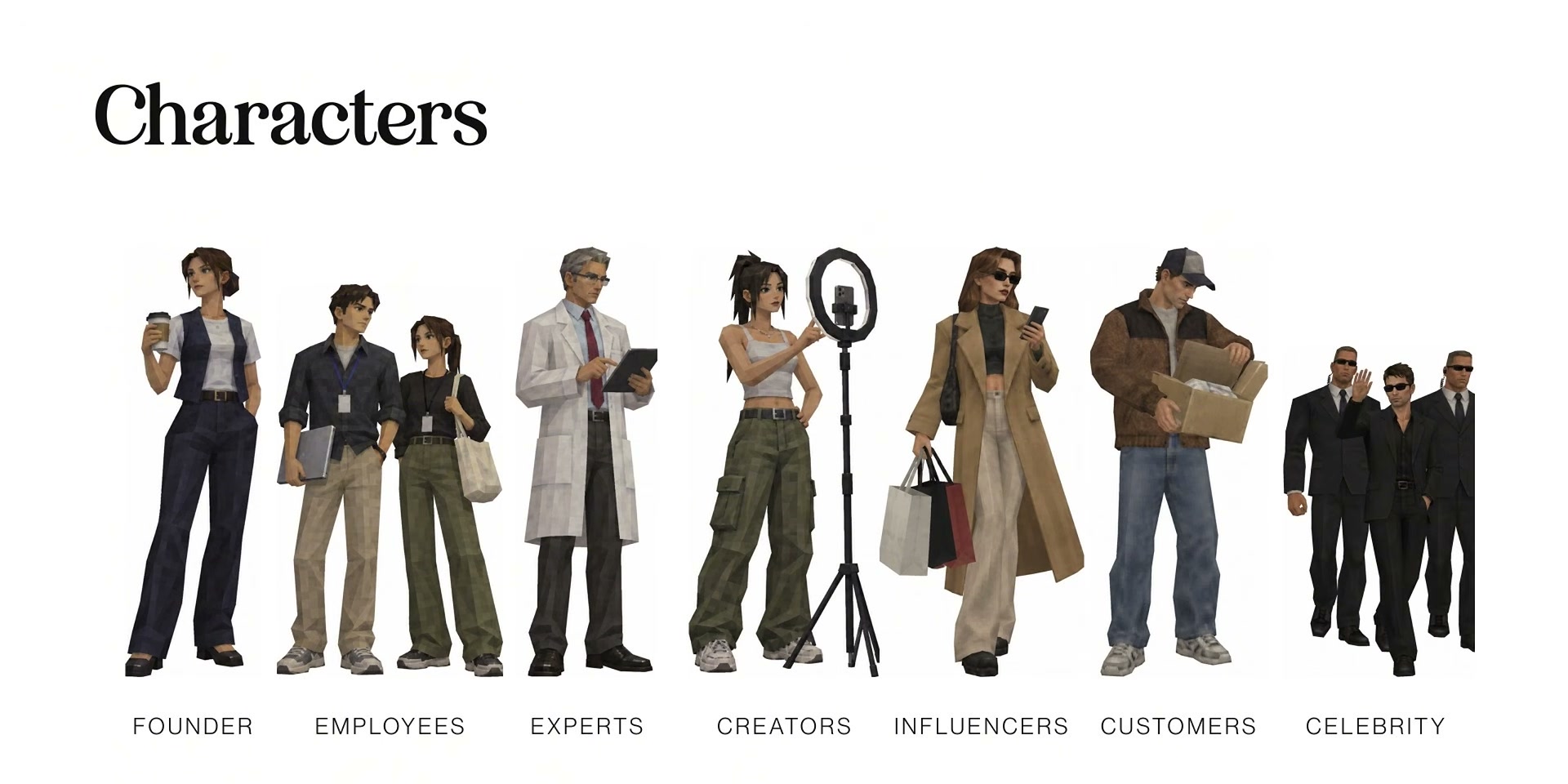
Source: Oren John, "The New Era of Social Media Marketing", Chief Marketer San Francisco 2026
Founder, employees, experts, creators, influencers, customers, celebrity. Ramp, in his telling, runs nearly all of them, from its fictional accountant Kumar to Tony Hawk to its own team. Ulta trains employees to create and lets brands hire them. Buffer had around 80% of its employees posting on LinkedIn. Kosas, a makeup brand, turned a founder who was not a creator into one, because the brand needed her to be.
The objection John hears most is "my brand is not interesting enough". His reply: people care about accounts payable software, so they will care about yours. Boring categories do not lack characters, they lack casting.
One practical shortcut from the talk: your customers are the cheapest place to start. Tools like Outer Signal scan an email list and flag who among your customers already makes content. A team searching for creators is usually sitting on a list of them.
Give the cast a set and a calendar
Characters need somewhere to stand and something to talk about. John's template has three blocks: characters, sets (office, shop, factory, studio, temporary spaces) and events by quarter, split into company, culture and industry.
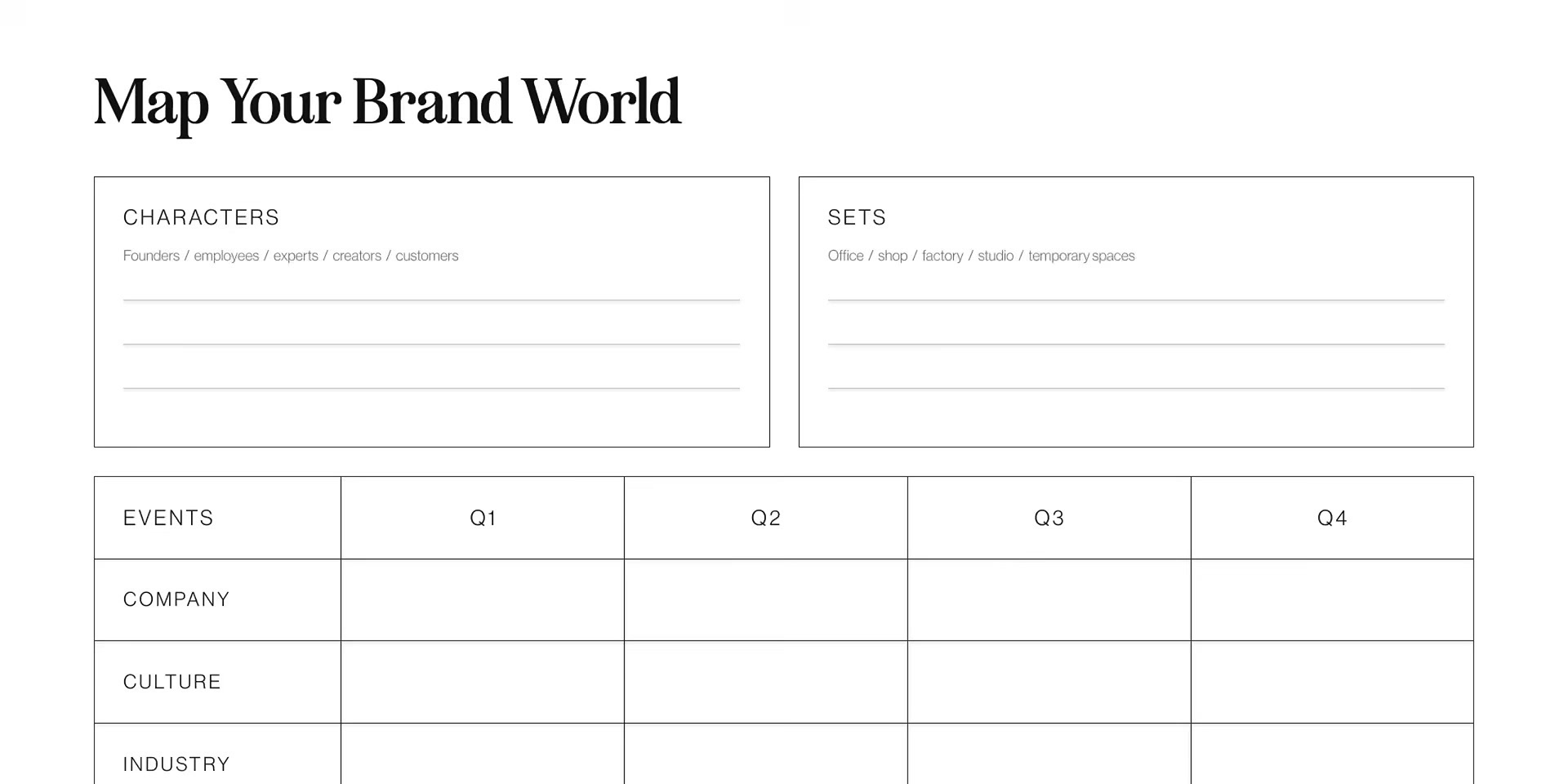
Source: Oren John, Chief Marketer San Francisco 2026
The calendar part is where his creator background shows. Summer is a dead zone for anything that smells of marketing. Early December is worse: "It's December 10th. No one gives a f***. They're trying to go home." Black Friday eats feeds, then holidays, then new-year-new-you, then Super Bowl and Valentine's Day land on top of each other, then Coachella. Industry moments count too. When Apple ships a new device, every app developer who posts about it on day one gets a free hook.
None of this is new to a media planner. What is new is assigning a character to each moment instead of a campaign.
Multiply the winner, do not replace it
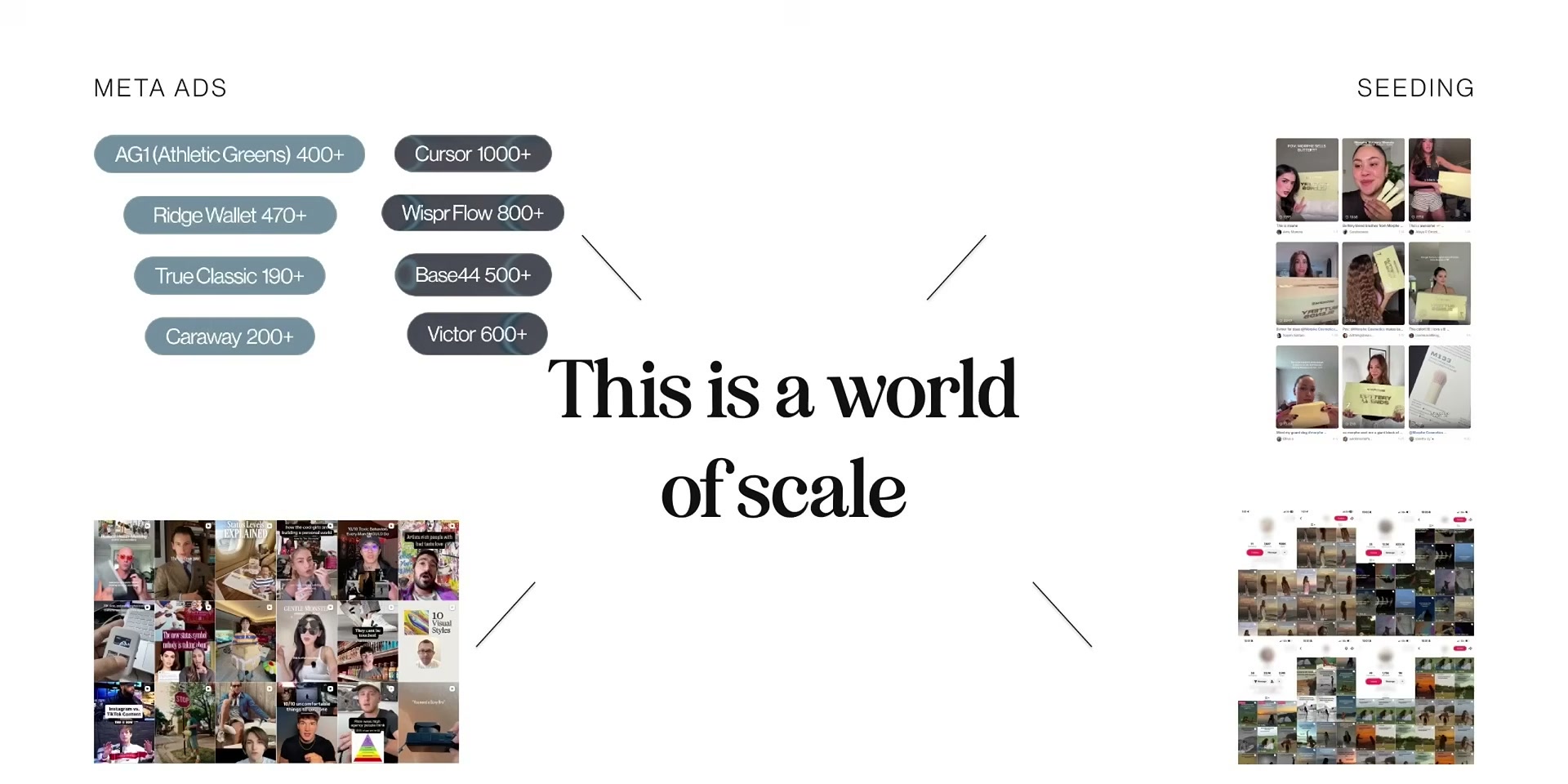
This was the part of the talk that made the room shift in its seats. John showed feeds of creators for a mid app, every race, gender and age, all running the same hooks and roughly 90% of the same script.
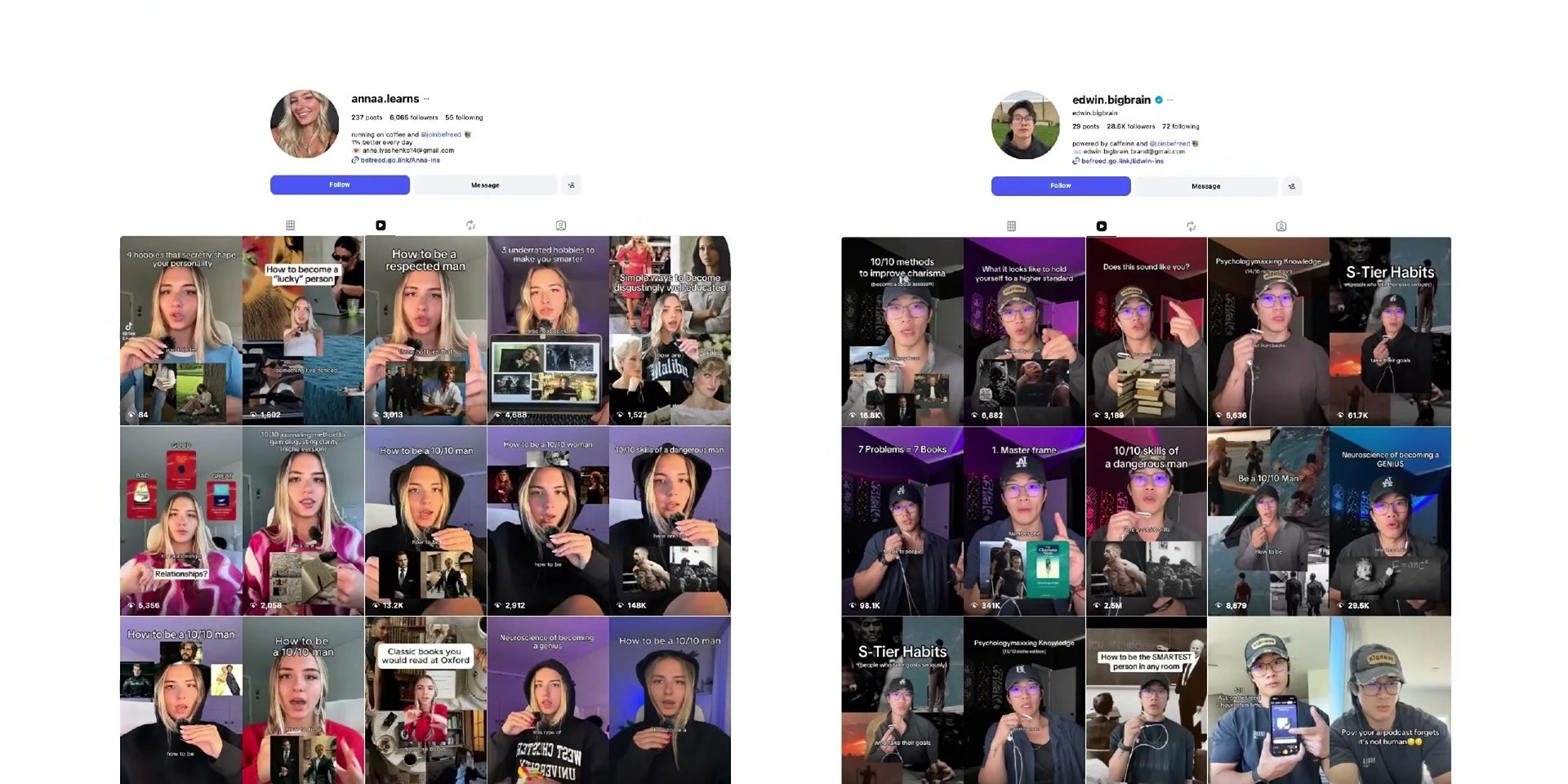
Source: Oren John, Chief Marketer San Francisco 2026
"Once you realize you have something winning, your easiest way to multiply reach is by demographic." Algorithms serve people to people, so the same idea needs many faces. He then cut it by generation: Gen Z as the doom-spend generation, Millennials as suckers for a better version of anything, Gen X as caretaker buyers who want to see Gen X creators, Boomers scrolling feeds where your ad competes with AI-generated slop.
You can argue with the stereotypes (he openly invites you to). The mechanism holds anyway. One good idea, multiplied by formats, faces and generations, beats five new ideas each shown once.
The workshop: messages x concepts x hooks
This is the bit I would steal first, because it fixes the brainstorm problem from the top of this post. John runs it as a two-hour session with the key stakeholders.
Source: Oren John, Chief Marketer San Francisco 2026
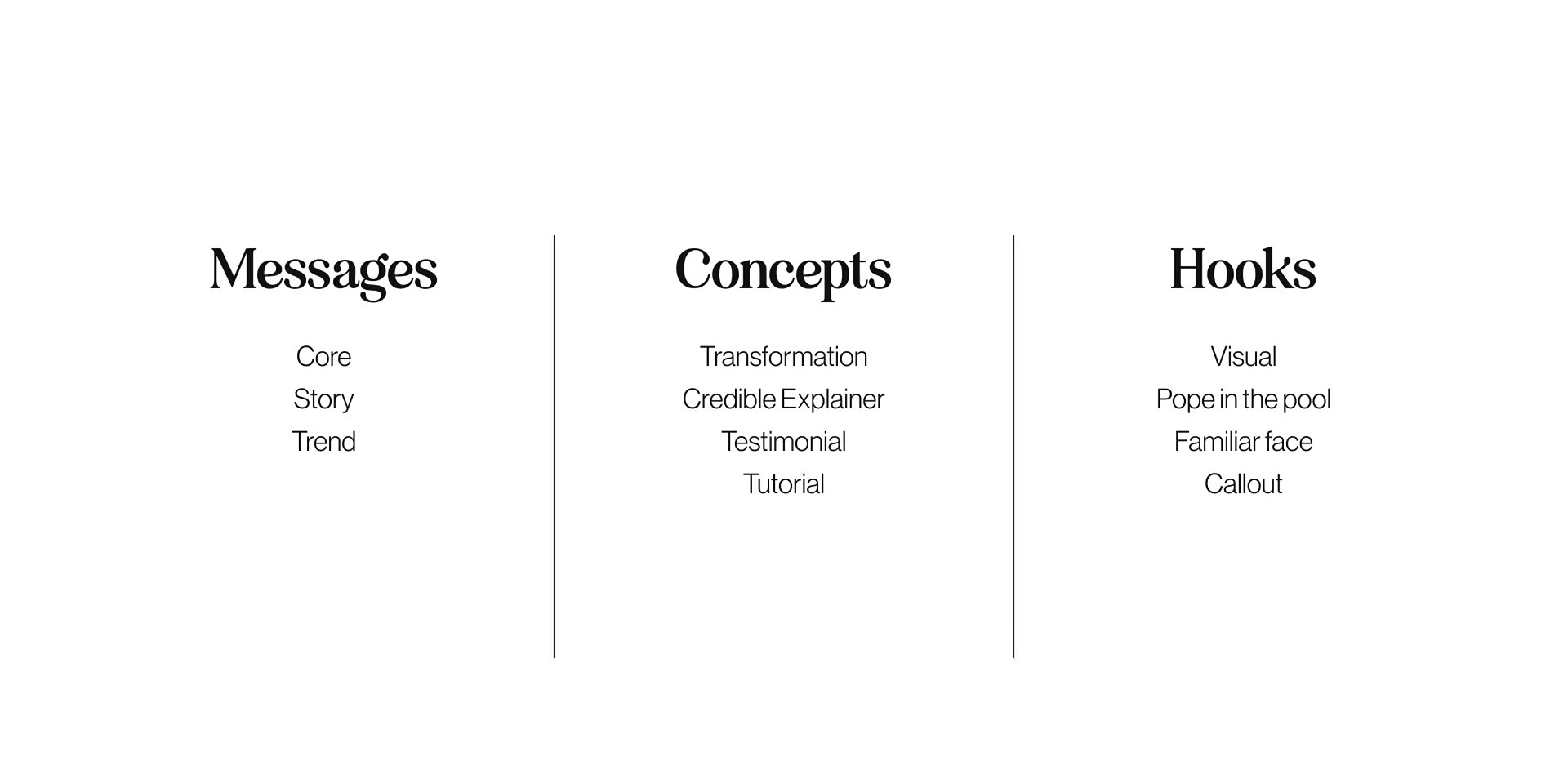
Messages come in three kinds. Core messages are the differentiators you repeat forever. Story messages are founder stories and customer stories. Trend messages come from what people are asking right now. His gym-owner friend found one in a member question about how workouts change on peptides, and another in the people who join a gym after moving cities because it is the easiest way to find a community.
Concepts are the honest filter: what can you actually make? One person who is good on camera gives you green-screen videos and tutorials. Some office B-roll gives you vlogs. A designer with a few hours a week gives you carousels and statics.
Hooks are what stops the thumb in the first three seconds: a visual hook, a "pope in the pool" (someone juggling a golf ball while talking, so you wait for it to drop), a familiar face, a callout.
Multiply the three columns and you have 30-40 starting pieces built from things the team can already do. That filter is what most brainstorms skip, and it is why their ideas die in the deck.
Source: Oren John, Chief Marketer San Francisco 2026
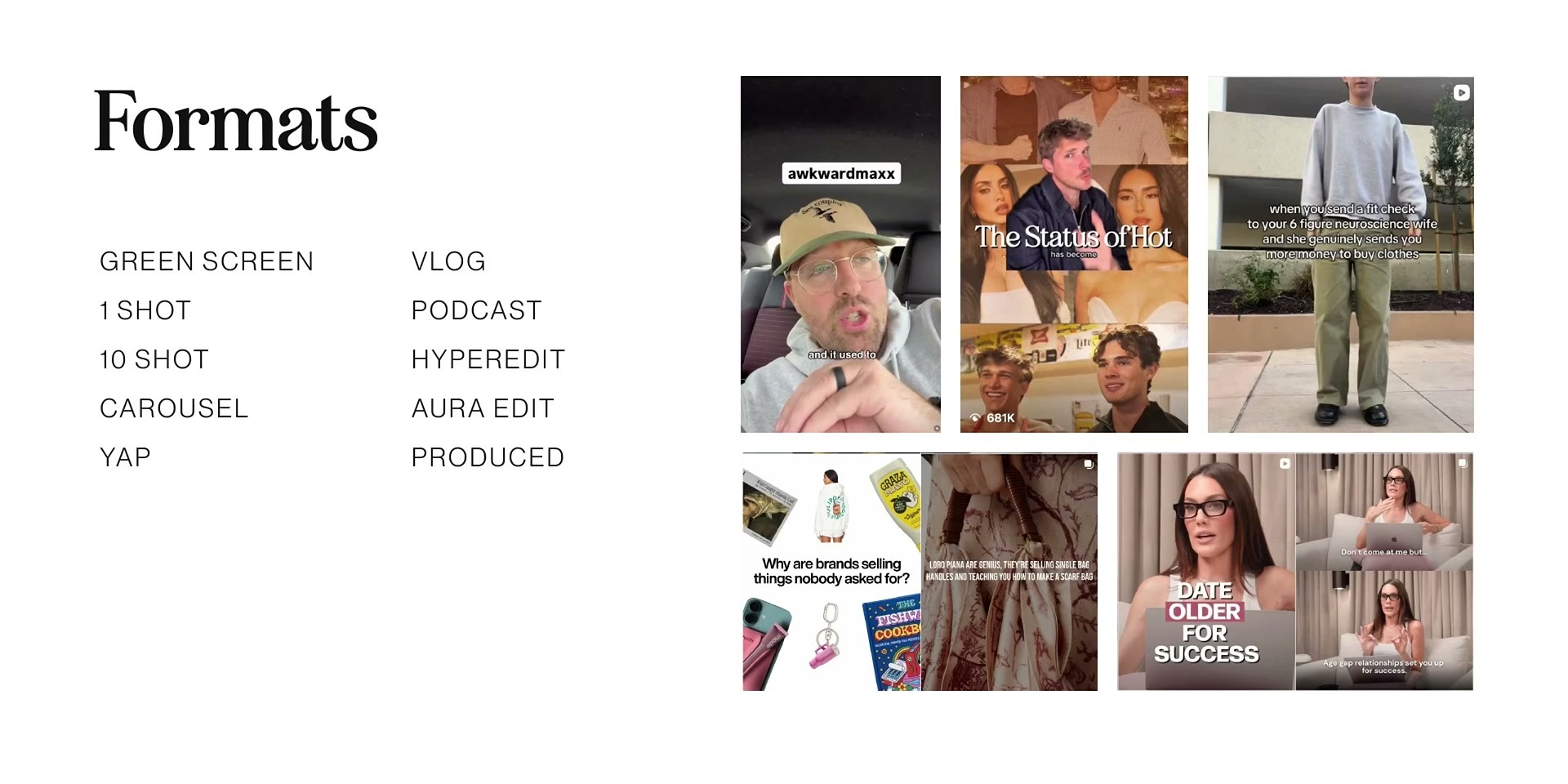
When a team gets stuck on formats, John hands them ten: green screen, one shot, ten shot, carousel, yap, vlog, podcast, hyperedit, aura edit, produced.
Run it on Friday
Block two hours. Fill the cast first, with real names. Put the next two quarters of company, culture and industry moments on one sheet. Then do messages x concepts x hooks, and refuse any concept nobody in the room can produce by the end of the month.
If you want more raw material for the messages column, a Creative Session in Selfstorming will give you angles, and the Hooks Session gives you openers to argue with, and the channel side of the same talk is covered in our breakdown of the normie-to-fringe map.
The brands that look everywhere at once did not have more ideas. They had more people allowed to say the same idea out loud.