Kantar analysed 15,000+ pieces of sponsored creator content: platform engagement and effectiveness align in only 1 in 3 cases, and just 6% of content is both highly engaging and strongly brand-building. Here is what to measure instead.
There's a special kind of meeting where a creator campaign gets declared a success. The deck shows views up, engagement rate above benchmark, comments full of fire emojis. Everyone nods. Nobody asks whether a single person now thinks differently about the brand - because nobody in the room has a number for that.
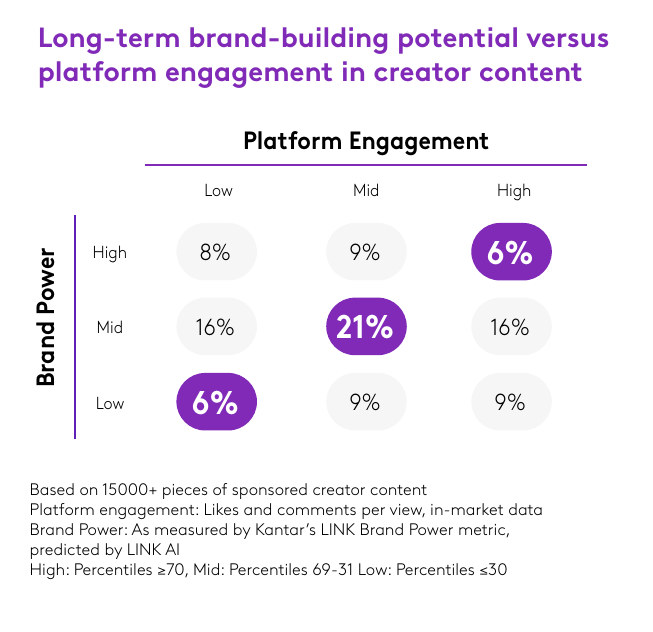
Kantar published that number, and it should end those meetings. In The Creator Game Plan (June 2026), they analysed 15,000+ pieces of sponsored creator content across TikTok, Instagram and YouTube in 19 countries, comparing platform engagement data against creative-effectiveness predictions from their LINK AI. The finding: platform engagement and effectiveness align in only one in three pieces of creator content. Steer by likes and views, and you're pointed the wrong way two-thirds of the time.
How deep the trap goes
The full matrix is worse than the headline. Only 6% of creator content scores high on both platform engagement and brand-building potential. Isolate your best-engaging content and it barely helps: of the pieces with high engagement, fewer than one in five shows strong potential to build the brand, and roughly one in eight strong short-term sales potential. Kantar's own summary: for every ten highly engaging posts, around eight are unlikely to move your business in any meaningful way.
Source: Kantar, The Creator Game Plan (2026)
This is not an argument that engagement is worthless. Engagement tells you what the algorithm rewards, which matters for distribution. The trap is treating a distribution signal as a business outcome. They are different quantities, and Kantar just measured how loosely they correlate.
The stakes are rising fast: a net 61% of marketers plan to increase creator spend in 2026, with some brands putting 30-40% of total ad budget into creator content. That's a lot of money steered by a metric that's wrong two times out of three.
The channel itself is not the problem
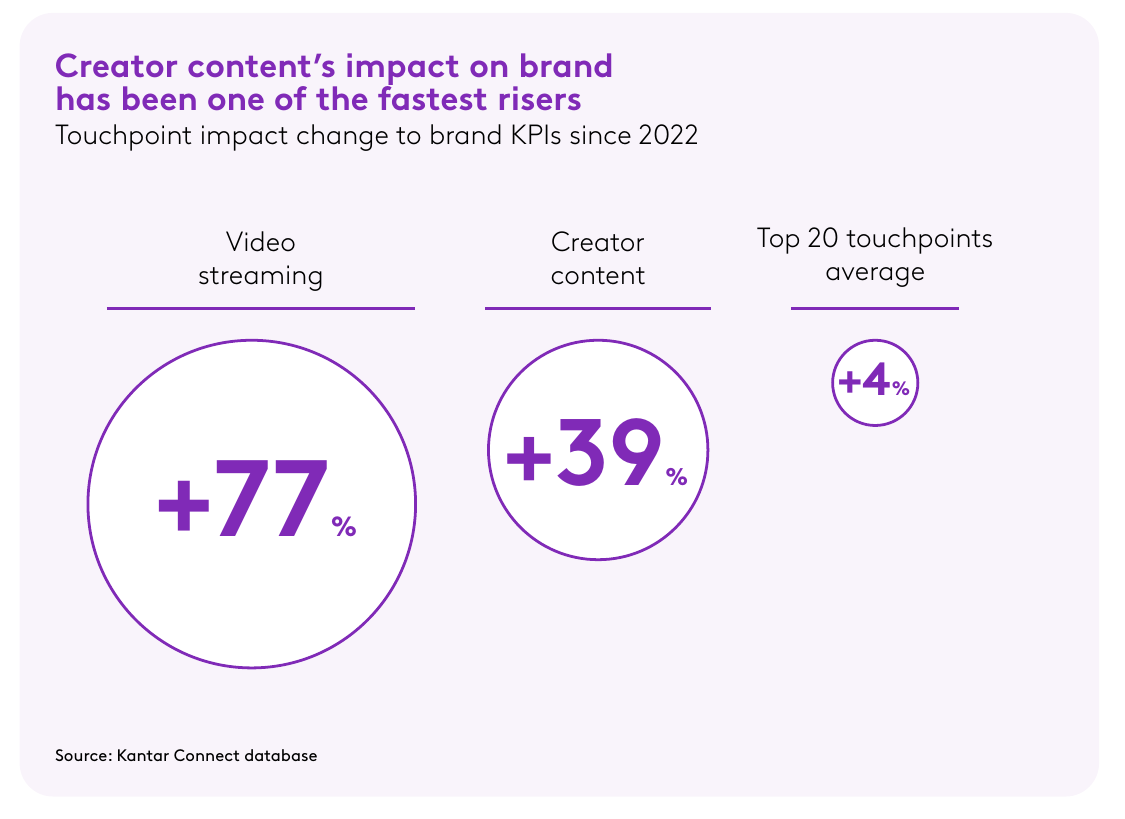
Here's the twist that saves the report from being a hit piece on creators: measured properly, creator content is genuinely strong. In Kantar's Context Lab data it out-lifts other digital advertising on top-of-mind awareness (+15.7 vs +14.0) and nearly doubles it on consideration (+3.4 vs +1.9). Its impact on brand equity has grown +39% since 2022 - the second fastest-rising touchpoint they track, behind only video streaming (+77%), while the average across the top 20 touchpoints moved just +4%.
Source: Kantar Connect database, via The Creator Game Plan (2026)
And the winners have noticed. The share of Effie Europe winners using creators as their primary touchpoint went from zero in 2022 and 2023 to 7% in 2024 and 13% in 2025. Effective marketing's most scrutinised award show is quietly rebuilding itself around this channel.
Creator content has its own fingerprint
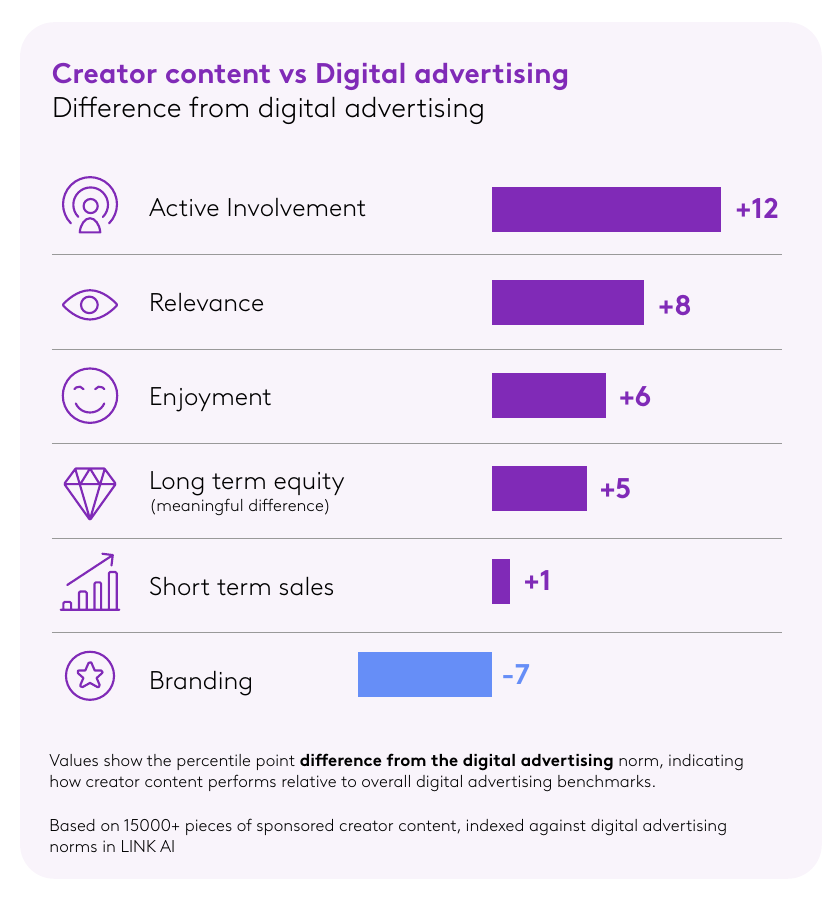
Against digital advertising benchmarks, creator content runs +12 percentile points on Active Involvement, +8 on Relevance, +6 on Enjoyment, +5 on long-term equity - and -7 on Branding. The same editorial style that makes people watch softens conventional brand signals. It is not a worse version of an ad; it is a different creative species that happens to look like one.
Source: Kantar, The Creator Game Plan (2026)
Which means judging creator work against standard ad norms penalises it for underdelivering on something it was never designed to do, while missing what it does exceptionally well. Kantar's answer is a five-part framework - Cultural Power, Algorithmic Power and Engagement Power feeding Brand Power and Sales Power - and the validation is convincing: content scoring high on their creator-adapted impact algorithm generates +45% more awareness than average; low scorers, -26% less.
What a CMO does with this
The report closes with three actions, and they're the right ones. Don't fall into the engagement trap - platform metrics can't tell you whether content builds your brand, so use decision intelligence that can. Match your creator strategy to your campaign goals - reach, relevance and cultural resonance each demand a different kind of partnership, and not every campaign needs creators playing the same role. And steer the brand presence and the brand message, not every creative choice.
Ligia Patrocinio, who runs Desperados globally at Heineken, puts the underlying logic better than any framework in the report: "Creator marketing doesn't play by the same rules as traditional advertising, it plays by the rules of trust. Ads interrupt attention; creators earn it. The moment you treat a creator like an ad placement, you lose what makes the channel work in the first place."
The uncomfortable takeaway for anyone reporting creator results this quarter: your engagement dashboard isn't measuring what your CFO thinks it's measuring. One in three is a coin flip with worse odds - and now that the number is public, "the post did numbers" stops being an effectiveness claim. It's what you say when you don't have one. The brands treating creator content with the same evidence standards as the rest of the media plan - the way we catalogue sourced marketing effectiveness claims rather than collecting vibes - are about to have a very unfair advantage over the ones still counting likes.