Only 36% of the Fortune 500 still use the CMO title, down from 49% in a year. Brand matters more than ever, but it now lives in thousands of touchpoints. The marketing engineer won't automatically inherit the CMO seat - yet no CMO keeps it without understanding what the engineer can do.
Marketing invents a new job title roughly every six weeks, and most of them are old jobs wearing a lanyard. "Growth alchemist" is a performance marketer. "Chief storytelling officer" is a copywriter who won an argument.
The title news of 2026 runs the other way. The chief marketing officer is quietly disappearing from the org chart, and two new job descriptions are showing up in the gap: the brand engineer and the marketing engineer. It is tempting to connect the dots in a straight line (old CMO out, engineer in). I think that line is wrong, and the reason it's wrong is the most useful thing a marketer can learn this year.
The title is shrinking. The remit shrank first.
Forrester's annual analysis of Fortune 500 marketing leadership (Ian Bruce, July 2026) has the numbers. Only 36% of those companies still use the title "chief marketing officer", down from 49% a year earlier. Marketing leaders on the executive team or reporting to the CEO fell from 58% to 52%. It is the third straight year of decline.
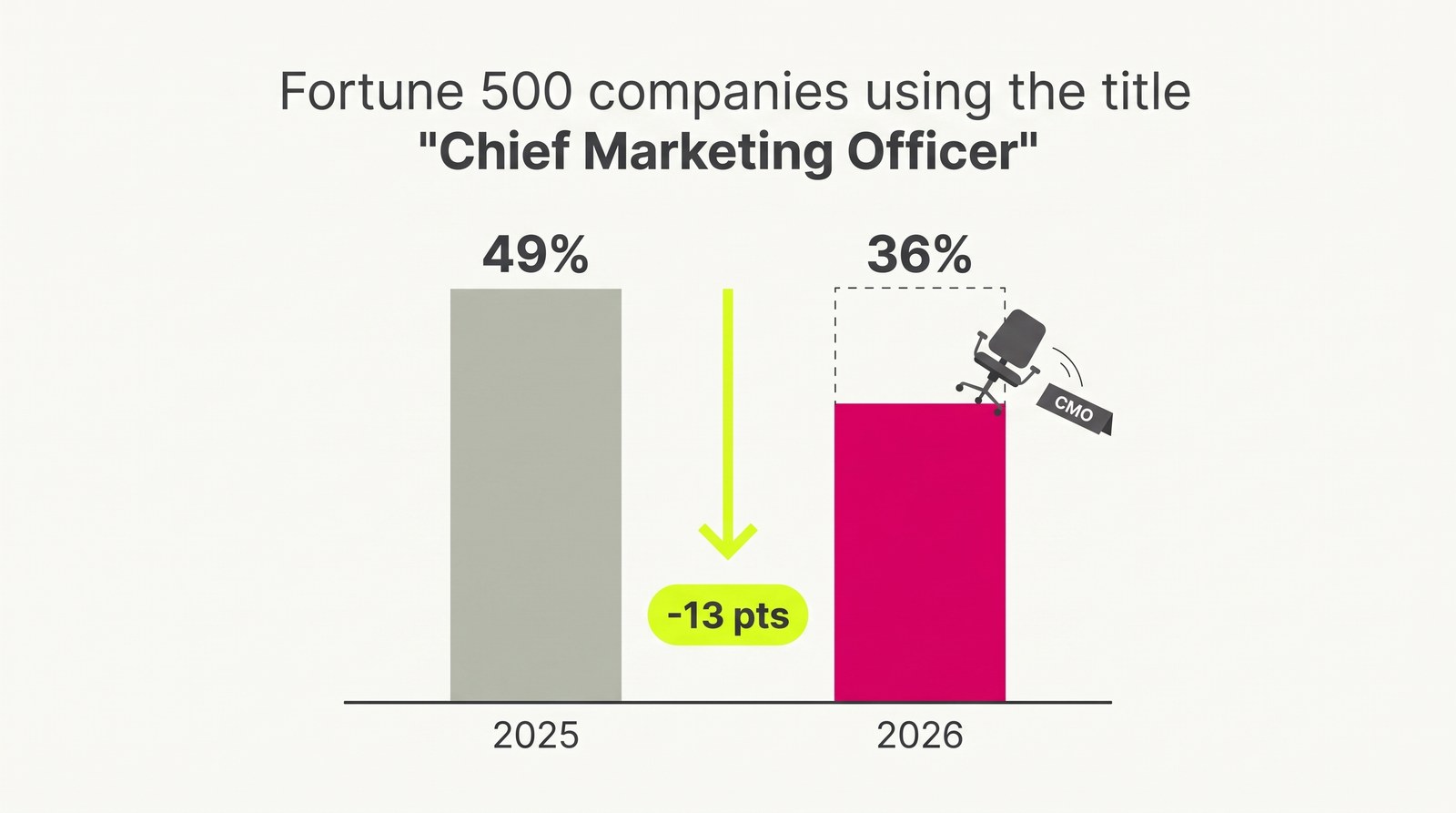
Data: Forrester, "New Analysis Suggests The CMO's Role In The Fortune 500 Is At A Crossroads" (July 2026)
Nobody abolished marketing, though. The seats were renamed: chief growth officer, chief commercial officer, chief customer officer. Mark Ritson reads the renaming less kindly in "CMO titles are getting longer as marketing gets smaller". Target's new marketing chief is the "chief marketing and guest experience officer", and Ritson's verdict is that the extra words are a chaperone, not a promotion: "Marketing can attend the executive committee dance, but only with a responsible adult at its side."
His explanation of how marketing needed a chaperone is one sentence long. The discipline that once covered product, price, distribution and promotion "slowly contracted into communications. Then comms became digital comms. Digital became content." Joe Burns would add that job titles are a lagging indicator: the work moves first and the title follows years later. The Forrester chart is the obituary. The cause of death happened a decade ago, when marketing handed away three of its four Ps.
More important, less trusted
Here is the paradox HubSpot's Kieran Flanagan and Kipp Bodnar keep circling in their episode on the dying CMO. Marketing has never been more important to a company, and that importance is exactly what is killing the role.
Founders they talk to see two disciplines pulling apart. Growth now demands someone more technical than ever. Brand demands someone more creative than ever. One person keeps failing at one of the two, so the founder splits them: brand into the product org, growth into sales. Flanagan's pushback is the best argument in the episode. Split marketing between a sales leader and a product leader and "now you have two people making mistakes instead of one", with no shared bar, on two clocks (sales thinks this week, product thinks next year), and nobody owning the link between this month's ads and what the company wants to be remembered for.
AI made the gap visible. Marketing used to be a black box, Bodnar says. Now a founder with a few AI skills has a baseline, and a marketer has to beat it by a wide margin. The week before, the hosts had reviewed an agent-run marketing team and concluded it beat an average human one. That is not a compliment to the agents.
Brand matters more, and it now lives in ten thousand places
This is the part of the story I care about most, because the "CMO is dead" crowd usually skips it. Brand is not getting less important. In a market where every competitor can generate the same competent ad in the same ten minutes, the brand is the only thing that doesn't come out of the same model. It's the part of marketing AI can't make a commodity.
What changed is where the brand has to live. A brand used to ship a campaign a quarter. Today it ships hundreds, sometimes thousands of activations a week: posts, ads, landing pages, emails, product screens, sales decks nobody in marketing has ever seen. Cody Schneider, who wires AI agents into ad accounts for a living, put the scale plainly on Marketing Against the Grain: no human can look at a thousand ads a month and still do their other job.
Brand strategist Eugene Healey, pitching the role of the brand engineer, describes old brand management as a relay race: a brief jogs through reviews and crosses the finish line as an approval. At today's volume, sequential approval is not quality control, it is a queue. His answer is to stop policing outputs and compile the inputs. Turn the brand into a source code (positioning, voice, proof, the tribal knowledge in the founder's head) that people, tools and agents can all read.
That is the real reason the new skills matter. The brand is fragmented across more channels, formats and machines than any approval chain can cover. The only way to keep it whole at that scale is to encode it and put it into the systems that produce the output.
The marketing engineer is not the next CMO
Which brings us to the marketing engineer, and to where I disagree with the straight-line story.
Schneider's results are real and hard to argue with. A portfolio of 250 locations cut its Facebook cost per lead from $82 to $15 in four weeks on the same budget, with agents shipping creative and pruning keywords faster than any team could. Bodnar's summary of his own profession is harsh: many CMOs "were more professional managers than they were marketers", and the super contributor with a data pipeline and a few cron jobs now does the work of the freelancer, the analyst and the coordinator they used to wait for.
But a cheaper lead is not a brand. An agent that optimises this week's CPL will happily optimise the company into a very efficient discount voice nobody remembers. Bodnar himself makes the case for why one person still has to sit on top. "Marketing is a game of magnitude," he says, and big swings don't come from diffused teams, or from a funnel tuning itself overnight. A marketing engineer without brand judgment produces well-targeted noise, at scale, for less money. That is progress, just not leadership.
So no, the marketing engineer doesn't automatically become the CMO. But a CMO who doesn't understand what a marketing engineer can do is already obsolete. Flanagan names the reason. The failure that sinks most marketing leaders is hiring. If you don't know the discipline, you can't hire the people who do it well, and you can't tell when their work is below the bar. In 2026 that discipline includes agents, pipelines and brand source code. A leader who can't judge an agent's output can't set the standard for a team that runs on them.
There is a nice irony in it for Ritson's lost territory. The brand engineer reaches into product, customer experience and training. The marketing engineer rewrites offers, landing pages and funnels, not just ads. Product, price, distribution and promotion are coming back into marketing through the side door, and the people carrying them in are the ones who understand the new tools.
What the job looks like now
The CMO who survives this is not an engineer and not a manager of specialists. They know what good marketing looks like, precisely enough to define it, and they know what today's tools can do with it once it is defined. Brand judgment on one side, working knowledge of the machinery on the other. Either half alone is last decade's job.
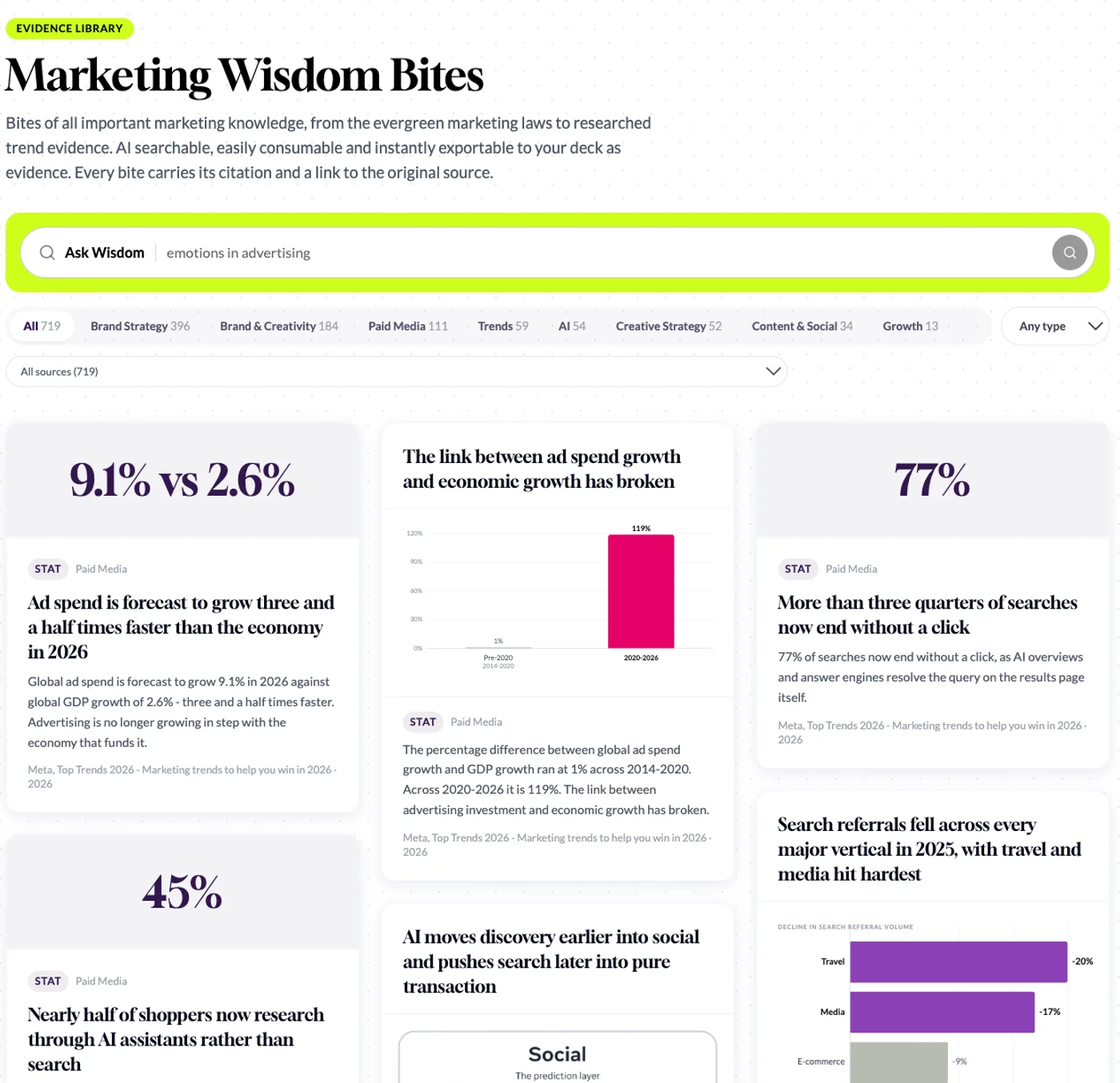
We built Selfstorming on that bet. A brand that exists as structured context, with positioning, voice and proof, is a brand tools can work with instead of guess at. It's the same reason our Marketing Wisdom library is built from sourced findings rather than a folder of PDFs.
If you want that seat, the entry cost is lower than it looks. Schneider's on-ramp is one API key in a local file and one task you would otherwise do by hand. Healey's is an honest audit of how your brand actually shows up against what the guidelines claim. Do both this month. You don't have to become the engineer. You have to understand the engineer well enough to hire one and tell them when they're wrong.
The title can keep shrinking on org charts. The job of defining good marketing precisely enough that a machine can do it is only getting bigger.
Machines will run more of the execution every year. They won't bring the three things the job actually runs on: a vision worth encoding, the taste to tell great from merely correct, and the skin in the game to own the big swing when it misses.
Execution is getting cheap. Judgment isn't. That's the job now.