Ad Council: Love Has No Labels
The Ad Council wanted a campaign to challenge unconscious bias among Americans. The brand needed to make people confront their snap judgments based on race, age, gender, or sexuality. The challenge was to encourage individuals to look beyond surface differences and recognize shared humanity, driving them to rethink their biases and visit lovehasnolabels.com for resources.
Creative Idea
An X-ray screen revealed diverse relationships as skeletons, then the real people.
The Ad Council created an innovative public service campaign called "Love Has No Labels" that used a unique installation to reveal people's hidden biases by showing diverse relationships and connections behind an X-ray screen, challenging viewers to look beyond surface-level differences and recognize our shared humanity.
The Tech Behind the Skeletons and the Rivalry That Paused
Real-Time X-Ray Puppeteering
The iconic skeletons were not added in post-production. To capture authentic reactions from the Santa Monica crowd, the team used Xsens MVN motion-capture suits hidden under the performers' clothes. These 17 sensors drove 3D avatars in real-time. Production teams even used MIDI controllers to manually "puppeteer" the skeletons' jaw and hand movements, ensuring the digital bones felt as human as the real-life couples, friends, and families behind the screen.
Competitors Uniting for Inclusion
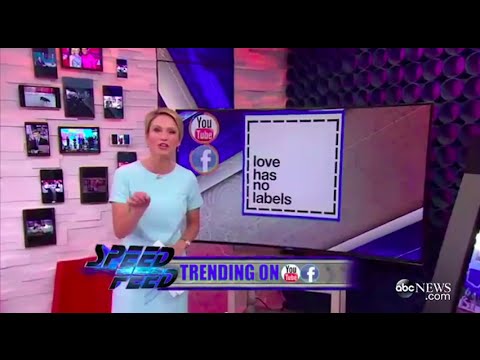
In a rare industry shift, the campaign was born from Coca-Cola approaching the Ad Council to unite fierce rivals. This led to an unprecedented coalition where PepsiCo, P&G, Unilever, State Farm, and Google set aside market competition to fund a single message. The strategy bypassed traditional TV, launching exclusively on Upworthy to target "social do-gooders." This digital-first approach generated over 160 million views in six months with zero paid media budget.
A Legacy of Mainstream Impact
The campaign is credited with moving the term implicit bias into the American lexicon. Research by Ipsos showed that adults believing they could create an inclusive environment rose from 61% to 75% following the launch. The initiative continued to evolve through high-profile collaborations, including a John Cena film celebrating American diversity and a short film written by Lena Waithe and directed by David Nutter. To date, the project has secured over $216 million in donated media value.
Creative Strategy Deconstructed
Company
As a non-profit leader in public service, Ad Council leverages its reputation for high-impact social messaging to tackle uncomfortable topics like implicit bias with authority. They possess the unique ability to mobilize massive media partnerships to ensure a provocative message reaches a national scale.
Category
Traditional diversity PSAs often rely on didactic lecturing, guilt-tripping, or dry statistics, which frequently trigger audience defensiveness or apathy. These campaigns often tell people how to think rather than allowing them to experience a shift in perspective.
Customer
Most individuals consider themselves unprejudiced but are unaware of their 'implicit bias'—the subconscious snap judgments they make based on physical appearance. There is a tension between their self-image as fair-minded and the reality of their internal biological shortcuts.
Culture
In a hyper-visual era dominated by identity politics and social media labels, there was a growing cultural appetite for radical empathy and unifying human-centric messages. The campaign tapped into a zeitgeist demanding more authentic inclusion across all marginalized groups.
Company
As a non-profit leader in public service, Ad Council leverages its reputation for high-impact social messaging to tackle uncomfortable topics like implicit bias with authority. They possess the unique ability to mobilize massive media partnerships to ensure a provocative message reaches a national scale.
Category
Traditional diversity PSAs often rely on didactic lecturing, guilt-tripping, or dry statistics, which frequently trigger audience defensiveness or apathy. These campaigns often tell people how to think rather than allowing them to experience a shift in perspective.
Strategy:
Expose the fallacy of visual prejudice by stripping away physical labels to reveal the universal humanity beneath.
Customer
Most individuals consider themselves unprejudiced but are unaware of their 'implicit bias'—the subconscious snap judgments they make based on physical appearance. There is a tension between their self-image as fair-minded and the reality of their internal biological shortcuts.
Culture
In a hyper-visual era dominated by identity politics and social media labels, there was a growing cultural appetite for radical empathy and unifying human-centric messages. The campaign tapped into a zeitgeist demanding more authentic inclusion across all marginalized groups.
Strategy:
Expose the fallacy of visual prejudice by stripping away physical labels to reveal the universal humanity beneath.
Strategy Technique
Make the Invisible Visible
The campaign made unconscious biases visible by first showing anonymous skeletons, then revealing diverse individuals. This forced viewers to confront their own snap judgments.
Explore Technique
Creative Technique
Expose the Hidden
The campaign used an X-ray screen to literally expose the hidden shared humanity beneath surface differences. This visually challenged viewers to confront their own unconscious biases.
Explore Technique