Aland Index: Baltic Sea Project
Aland Index wanted to engage all its clients to save the polluted Baltic Sea. The challenge was connecting everyday card transactions - common in the Nordics - to their environmental impact. The brand needed a solution that would create funding, understanding, and position the bank as responsible, ambitious, and personal, inspiring clients to act and the industry to follow.
Creative Idea
The bank's credit card tracked carbon emissions from every purchase to save the Baltic Sea.
Aland Bank created the Aland Index, a unique credit card feature that calculates the carbon footprint of each transaction, helping customers understand and offset their environmental impact while saving the Baltic Sea. By connecting everyday spending to ecological consequences, the bank transformed credit card statements into a tool for environmental awareness and action.
The Credit Card That Became a Global Climate Standard
From Sailing Trip to World Bank Data
The project was born from an "aha" moment during a sailing trip taken by Anne-Maria Salonius. After witnessing severe algae blooms in the Baltic Sea, she realized the bank needed to move beyond simple donations. To build the tool, RBK Communication collaborated with the UN Climate Secretariat (UNFCCC) and Mastercard to bridge the gap between financial data and environmental science. The system works by cross-referencing Merchant Category Codes with carbon pricing data from the World Bank, calculating the CO2 impact of every individual transaction in real-time.
A Biodegradable Tool for Cashless Societies
Because Finland is one of the world's most cashless societies, digital transaction data provided the perfect laboratory for this experiment. The physical "Baltic Sea Card" was also a technical milestone - it was the world’s first biodegradable credit card, manufactured from a corn-based material (PLA) rather than traditional plastic. Creative Director Johan Pihl noted that the goal was to reveal the "iceberg" of hidden environmental costs behind every price tag.
Scaling Through Open Innovation
Despite the Bank of Åland’s small size, the campaign achieved a global reach of 350 million people through earned media. A key factor in its success was CEO Peter Wiklöf’s decision to offer the Index as open innovation. Rather than keeping the technology proprietary, the bank shared it with the industry, leading to the founding of Doconomy in 2018. Today, the index is a global standard used by major institutions like HSBC and Barclays, and it has generated over €5.5 million for environmental projects. The project was eventually presented at the United Nations as a blueprint for private-sector climate action.
Creative Strategy Deconstructed
Company
Bank of Åland’s century-long heritage in the Baltic region and access to proprietary transaction data provided a credible platform for environmental monitoring. They leveraged their role as a financial intermediary to provide more than just banking.
Category
Banking is traditionally focused on financial metrics, offering customers visibility into their spending but not the ecological consequences. Sustainability efforts are often relegated to annual reports rather than being integrated into the core product experience.
Customer
Nordic consumers are early adopters of cashless living but face a disconnect between their digital convenience and its environmental impact. They need a simple, automated way to understand and mitigate their carbon footprint without changing their daily habits.
Culture
As the climate crisis intensifies, there is a rising demand for corporate transparency and individual empowerment through data. The deteriorating state of the Baltic Sea created a local urgency for actionable, data-driven environmental solutions.
Company
Bank of Åland’s century-long heritage in the Baltic region and access to proprietary transaction data provided a credible platform for environmental monitoring. They leveraged their role as a financial intermediary to provide more than just banking.
Category
Banking is traditionally focused on financial metrics, offering customers visibility into their spending but not the ecological consequences. Sustainability efforts are often relegated to annual reports rather than being integrated into the core product experience.
Strategy:
Leverage financial transaction data to provide a personal climate barometer that turns routine spending into environmental action.
Customer
Nordic consumers are early adopters of cashless living but face a disconnect between their digital convenience and its environmental impact. They need a simple, automated way to understand and mitigate their carbon footprint without changing their daily habits.
Culture
As the climate crisis intensifies, there is a rising demand for corporate transparency and individual empowerment through data. The deteriorating state of the Baltic Sea created a local urgency for actionable, data-driven environmental solutions.
Strategy:
Leverage financial transaction data to provide a personal climate barometer that turns routine spending into environmental action.
Results
Null
Strategy Technique
Build an Utility, Not an Ad
Aland Bank created the Aland Index, a credit card feature that calculates carbon footprints. This utility directly solves the problem of understanding environmental impact, making the idea the product itself.
Explore Technique
Creative Technique
Spotlight the Overlooked
The campaign reveals the hidden carbon footprint of everyday credit card transactions. It spotlights this previously overlooked environmental impact, making it visible and actionable for customers.
Explore Technique
Craft Breakdown
This campaign's craft is exceptional in its use of visual design and data visualization to translate a complex environmental issue and an innovative financial solution into an easily digestible and emotionally resonant story.
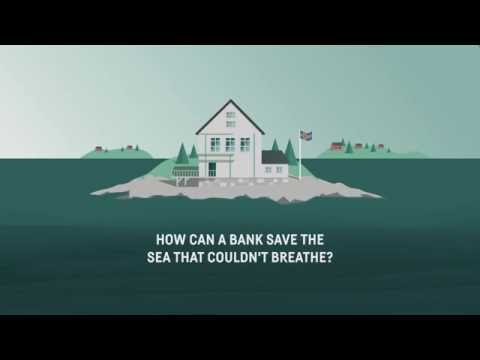
The minimalist 2D animation is highly effective in simplifying complex concepts and depicting both the beauty of the Baltic Sea and its alarming pollution, guiding the viewer through the narrative with clarity and aesthetic appeal.
The use of animated maps, glowing toxin indicators, and the circular diagram for the Åland Index effectively communicates intricate data points and system functionality in an engaging and understandable manner.
The voiceover script is concise yet impactful, establishing emotional connection, explaining the problem and solution clearly, and ending with an inspiring call to action, all while maintaining a professional and informative tone.
The consistent and thoughtful color palette, simple visual style, and lighting choices create a cohesive and appealing aesthetic that supports the campaign's message, distinguishing the bank as modern and environmentally conscious.
“The campaign's success stems from the seamless synergy between the clear, minimalist animation and the precise data visualization, making complex information accessible and emotionally impactful, further enhanced by the concise and compelling copywriting.”