ARSF: Life Saving Stickers
The ARSF wanted an innovative way to address the critical issue of drivers speeding in residential areas, especially during school season. The client needed to remind drivers to be more cautious and slow down around children. The challenge was to create a highly visible, community-driven solution that would effectively protect kids by prompting drivers to reduce speed and increase awareness.
Creative Idea
ARSF put safety stickers on wheelie bins to remind drivers to slow down for kids.
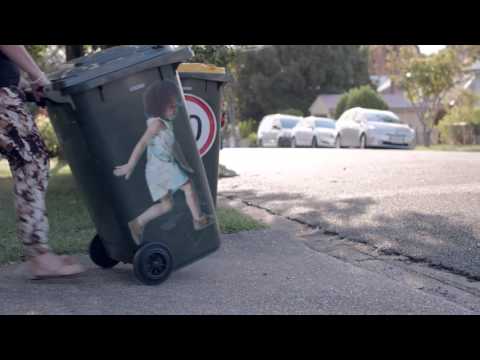
The Australian Road Safety Foundation created life-saving stickers that can be placed on wheelie bins in neighborhoods to remind drivers to slow down and be cautious around children. By turning everyday household bins into speed awareness signs, the campaign transforms a simple object into a community safety tool that helps protect kids during school season.
The Road Safety Idea Some Called The Worst Ever
Turning Trash Into Media Real Estate
Led by Creative Director Andrew Thompson and the team at GPY&R Brisbane, the campaign identified a "dead" media space: the humble wheelie bin. By producing high - resolution, life - sized stickers of children stepping toward the road, the agency turned a mundane household object into a visceral psychological trigger. The production team, including Copywriter Ash Kennedy and Art Director Carl Lough, specifically designed the stickers for the side of the bin facing oncoming traffic. Because bins are only curbside once a week, the "ads" appeared intermittently, a tactical choice intended to prevent drivers from becoming desensitized to the visual over time.
Phantom Braking and Public Backlash
 Despite its success, the initiative sparked a fierce national debate regarding driver psychology. Critics labeled it a dangerous distraction, fearing the hyper - realistic imagery would cause "phantom braking" - where drivers slam on their brakes in a panic, potentially causing rear - end collisions. There was even a legal concern that a driver who struck a real child might use the "sticker defense" in court. However, Russell White, CEO of the ARSF, defended the human - centric approach, noting that drivers are most complacent on the familiar streets of their own neighborhoods.
From Pilot to National Revenue Stream
What began as a localized pilot in Paddington, Brisbane, quickly scaled into a massive earned media success. The campaign generated over $400,000 AUD in free coverage within its first week and was adopted by 12 local councils. Beyond awareness, the stickers became a legitimate revenue stream for the foundation as households nationwide began purchasing them. The project is now cited as a landmark example of "Utility as Advertising," proving that a clever, contextually relevant medium can outperform traditional, expensive billboards.
Creative Strategy Deconstructed
Company
ARSF leverages its authority in road safety to provide practical, grassroots tools that allow citizens to directly participate in the foundation's mission. By providing physical stickers, they bridge the gap between abstract safety advocacy and tangible community action.
Category
Road safety advertising typically relies on high-budget shock tactics, graphic imagery, or abstract messaging that feels disconnected from the specific residential streets where drivers actually speed. These campaigns often treat the audience as passive observers rather than active participants.
Customer
Local residents feel a deep, protective instinct for neighborhood children but often feel powerless to influence driver behavior on their own doorsteps. They desire a non-confrontational yet highly visible way to reclaim their streets and enforce safety norms.
Culture
The shift toward hyper-local community vigilance and 'neighborliness' encourages individuals to use their personal property as a medium for public service. This taps into the trend of decentralized activism where citizens take responsibility for local issues.
Company
ARSF leverages its authority in road safety to provide practical, grassroots tools that allow citizens to directly participate in the foundation's mission. By providing physical stickers, they bridge the gap between abstract safety advocacy and tangible community action.
Category
Road safety advertising typically relies on high-budget shock tactics, graphic imagery, or abstract messaging that feels disconnected from the specific residential streets where drivers actually speed. These campaigns often treat the audience as passive observers rather than active participants.
Strategy:
Empower residents to turn personal property into hyper-local traffic signals that reclaim neighborhood streets as safe zones for children.
Customer
Local residents feel a deep, protective instinct for neighborhood children but often feel powerless to influence driver behavior on their own doorsteps. They desire a non-confrontational yet highly visible way to reclaim their streets and enforce safety norms.
Culture
The shift toward hyper-local community vigilance and 'neighborliness' encourages individuals to use their personal property as a medium for public service. This taps into the trend of decentralized activism where citizens take responsibility for local issues.
Strategy:
Empower residents to turn personal property into hyper-local traffic signals that reclaim neighborhood streets as safe zones for children.
Strategy Technique
Build an Utility, Not an Ad
The campaign creates a practical, community-driven tool - stickers on bins - that serves as a constant speed awareness reminder. It transforms everyday objects into a functional safety utility, not just a message.
Explore Technique
Creative Technique
Unexpected Utility
The campaign transforms ordinary wheelie bins into mobile speed awareness signs. It repurposes an everyday object to serve a critical, unexpected safety function in neighborhoods.
Explore Technique
Craft Breakdown
This campaign's craft excels in its simple yet highly effective concept and its empathetic portrayal of community safety, making a potentially complex issue feel actionable and personal.
The core idea of turning everyday wheelie bins into vigilant roadside guardians is brilliantly simple, memorable, and visually impactful, directly addressing the safety concern in an innovative way.
The voiceover's concise, reassuring, and direct language effectively communicates the problem and solution, making it easy for viewers to understand and act upon.
The use of real children's images on the stickers makes the message deeply personal and immediate, while the naturalistic outdoor setting reinforces relatability.
The seamless transitions between establishing the problem, introducing the solution, and showing its widespread application create a clear, coherent, and compelling narrative flow.
“The true strength of this campaign comes from the synergy between its brilliant, simple concept and the empathetic execution of its art direction and narrative, making road safety tangible and actionable for everyone.”