IBM Watson: Art With Watson
IBM Brazil wanted to showcase the practical power of Watson's AI to a broad audience. They partnered with Ogilvy Brazil to address the fact that most Brazilians felt disconnected from art museums. The goal was to increase museum attendance and demonstrate Watson's ability to understand and interact with human emotion and history in a meaningful way.
Creative Idea
IBM Watson gave famous paintings a voice, allowing museum visitors to talk to the art.
IBM Watson humanized art by enabling museum visitors to have real-time, voice-activated conversations with paintings. By turning silent masterpieces into interactive guides, it dismantled the intimidation barrier, making culture accessible and engaging for a population that previously felt excluded from museums.
Teaching Seven Masterpieces How To Talk
Six Months of Digital Literacy
To transform silent canvases into conversationalists, Ogilvy Brazil and IBM spent half a year training Watson on a massive dataset of archives, biographies, and historical newspapers. The team, led by Tech Lead Fabricio Barth, didn't just feed the AI facts; they prepared it for the unpredictability of human curiosity. Collaborators logged 1,750 unique questions which were mapped to 326 distinct intents, ensuring the AI could handle everything from technical art history to abstract emotional inquiries.
Beacons and Blueprints
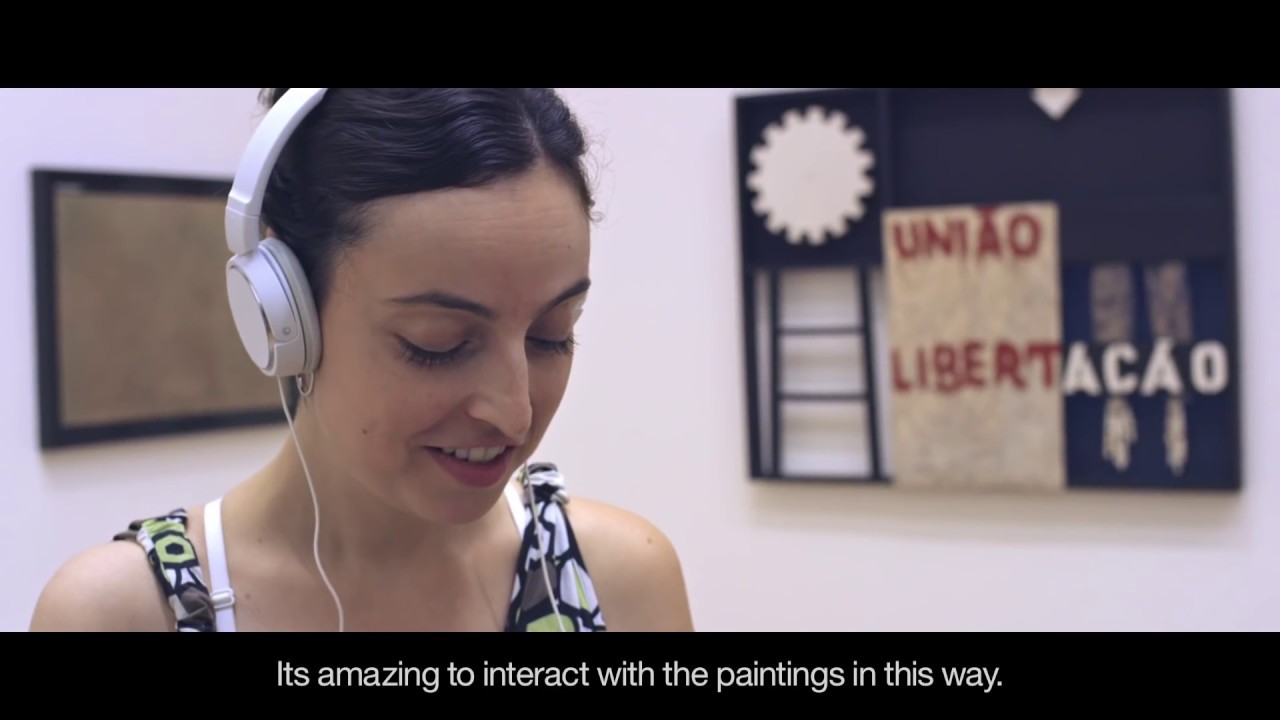 The technical execution relied on Bluetooth beacons installed near seven specific artworks, including Cândido Portinari’s *Mestiço* and Tarsila do Amaral’s *São Paulo*. As visitors approached a piece, the beacon triggered a custom app on a provided smartphone. Using IBM Watson APIs for Natural Language Understanding and Speech to Text, the system allowed for a "heads up" experience where visitors looked at the art rather than their screens. If Watson encountered a question it couldn't answer, it logged the query for reinforcement learning, allowing the AI to "grow smarter" with every visitor.
Breaking the Silence of Museums
The cultural barrier in Brazil was significant - 72% of the population felt they didn't understand art enough to visit a museum. This project dismantled that intimidation. The results were immediate: Pinacoteca de São Paulo saw a 200% surge in attendance, with some weeks seeing a 340% increase in foot traffic. Over the course of the campaign, Watson facilitated 142,463 conversation logs, proving that AI could serve as a bridge between high culture and the general public rather than a distraction from it.
Creative Strategy Deconstructed
Company
IBM possessed Watson, a powerful cognitive computing system capable of processing vast amounts of unstructured data and natural language.
Category
Museums are traditionally silent, intimidating spaces where art is viewed passively, often leaving visitors feeling disconnected or uneducated.
Customer
Most Brazilians felt art was an elite world they did not understand, leading to high rates of museum avoidance.
Culture
AI and voice technology were becoming ubiquitous, creating an opportunity to bridge the gap between high culture and everyday conversation.
Company
IBM possessed Watson, a powerful cognitive computing system capable of processing vast amounts of unstructured data and natural language.
Category
Museums are traditionally silent, intimidating spaces where art is viewed passively, often leaving visitors feeling disconnected or uneducated.
Strategy:
Democratize elite cultural experiences by providing a conversational interface that removes the intellectual barrier to entry.
Customer
Most Brazilians felt art was an elite world they did not understand, leading to high rates of museum avoidance.
Culture
AI and voice technology were becoming ubiquitous, creating an opportunity to bridge the gap between high culture and everyday conversation.
Strategy:
Democratize elite cultural experiences by providing a conversational interface that removes the intellectual barrier to entry.
Results
The campaign successfully increased museum engagement by making art accessible through technology. It reported that 72% of Brazilians had never been to a museum prior to such initiatives. The project involved 6 months of Watson learning. The video highlights a significant shift in visitor sentiment, moving from feeling that museums are 'not a place that speaks to me' to active, emotional participation. While specific reach numbers aren't listed in the video text, it emphasizes a 100% increase in interactive potential compared to traditional audio guides.
72%
Brazilians who had never visited a museum
6 months
Watson training period
100%
Interactive engagement shift
Strategy Technique
Build an Utility, Not an Ad
Instead of just claiming Watson is smart, IBM built a functional tool that solved a real social problem - museum intimidation. The utility itself became the proof of the brand's sophisticated AI capabilities.
Explore Technique
Creative Technique
Technology
It utilizes IBM's cognitive computing to give inanimate objects a voice, transforming a passive viewing experience into an active dialogue. This demonstrates the AI's power through a relatable, emotional human interaction.
Explore Technique
Craft Breakdown
The campaign's excellence lies in its seamless integration of complex AI technology into a simple, human-centric museum experience.
Using IBM Watson to process decades of art history into a real-time conversational interface is a masterclass in utility-driven tech.
The physical interaction design removes the 'fourth wall' of art, turning a passive viewing experience into an active dialogue.
The AI's responses are written with a poetic yet accessible tone that matches the personality of each specific artwork.
The use of wide, symmetrical shots of the museum architecture emphasizes the scale and beauty of the space being reclaimed.
“The synergy between high-end data processing (Technology) and the human-centric museum layout (Experiential Design) makes the art feel alive rather than just explained.”