KFC: Christmas Pocket Store
KFC China faced the challenge of reaching a massive population despite high physical rental costs. Isobar Shanghai was tasked with driving holiday sales and expanding the brand's footprint without opening new physical locations. They needed to engage digitally savvy consumers on WeChat, leveraging social connections to turn the traditional fast - food transaction into a viral, peer - to - peer commerce experience during the competitive Christmas season.
Creative Idea
Turned every WeChat user into a virtual KFC franchise owner to drive social sales.
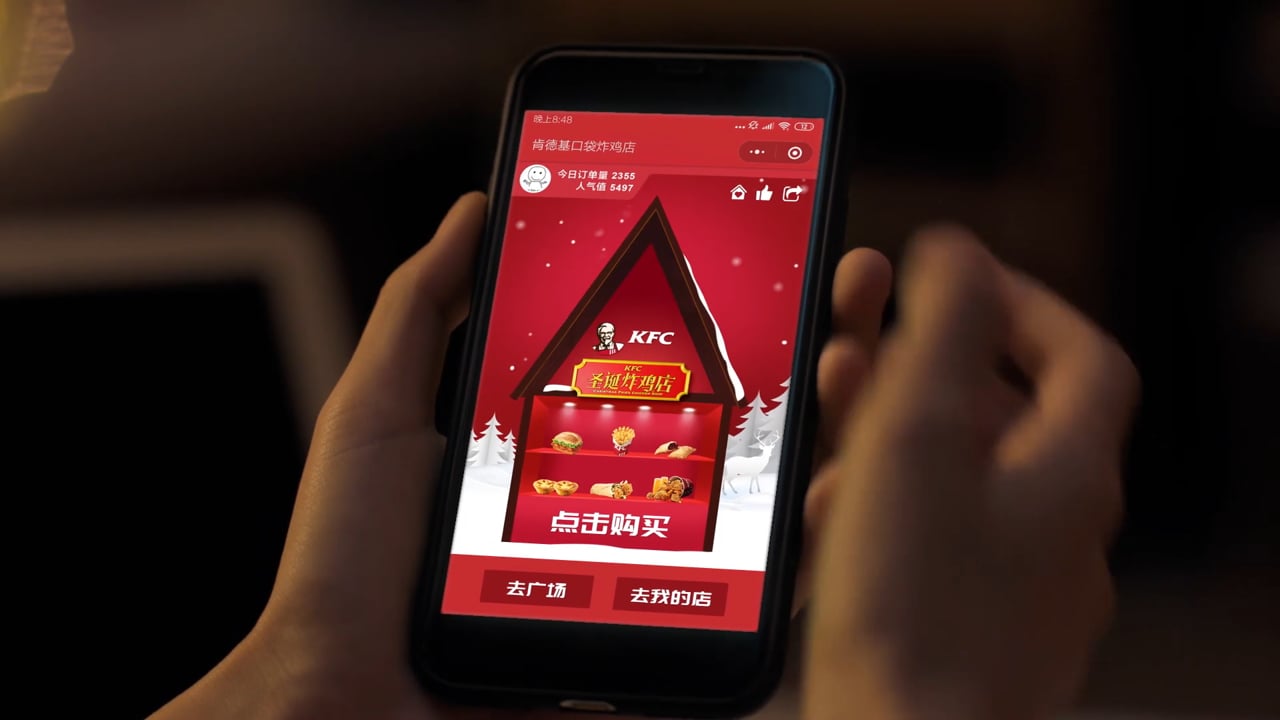
KFC bypassed China's high rental costs by launching virtual 'Pocket Stores' on WeChat, turning millions of customers into franchise owners who could design shops and sell to friends, transforming brand commerce into a personalized, social 'Me Commerce' experience.
Turning Eight Million Customers Into Franchise Owners
The 345x Virtual Expansion
The campaign effectively increased KFC’s store count in China by 345 times without a single cent spent on physical real estate. By leveraging a 2.5D isometric design within a WeChat Mini Program, Isobar Shanghai bypassed sky - high rental costs to generate CNY 42 million in direct sales. The scale was unprecedented: over 560,000 stores opened on day one, eventually growing to 8 million virtual franchisees. One top - performing "owner" managed to sell $1 million worth of fried chicken through their personal digital storefront alone.
Gamifying the Fan Economy
A New Model for Me Commerce
Chief Creative Officer Chris Chen noted that the project turned "brand customers into brand co - owners," shifting the industry from B2C to a C2C (Customer - to - Customer) social commerce model. The technical loop was seamless: every transaction rewarded both the buyer and the owner with Red Packets or coffee vouchers. Despite having no traditional TV commercials, the campaign exceeded sales targets by 900% and was eventually integrated as a permanent feature of the KFC Super App.
Creative Strategy Deconstructed
Company
A massive physical footprint and a robust digital ecosystem integrated with China's leading social platform, WeChat.
Category
Fast - food brands typically rely on expensive physical real estate expansion and traditional mass - media advertising to drive foot traffic.
Customer
Socially connected consumers who value personalization, digital convenience, and the status of being an 'insider' or influencer.
Culture
The rise of social commerce and the 'fan economy' in China, where peer recommendations outweigh brand advertisements.
Company
A massive physical footprint and a robust digital ecosystem integrated with China's leading social platform, WeChat.
Category
Fast - food brands typically rely on expensive physical real estate expansion and traditional mass - media advertising to drive foot traffic.
Strategy:
Decentralize brand ownership by empowering consumers to become virtual franchisees within their own social circles.
Customer
Socially connected consumers who value personalization, digital convenience, and the status of being an 'insider' or influencer.
Culture
The rise of social commerce and the 'fan economy' in China, where peer recommendations outweigh brand advertisements.
Strategy:
Decentralize brand ownership by empowering consumers to become virtual franchisees within their own social circles.
Results
The campaign achieved massive scale and engagement: 560,000 pocket stores were opened on the first day alone. The platform reached 2.6 million peak daily active users. Individual success was notable, with one user selling $1,000,000 worth of KFC products. Overall sales exceeded targets by 900%. Within a few months, 2 million pocket stores were opened, effectively increasing KFC's total store presence in China by 345 times. The campaign successfully converted customers into brand co-owners through social commerce.
900%
over sales target
2M
pocket stores opened
345x
increase in total store presence
Strategy Technique
Build an Utility, Not an Ad
Instead of a traditional holiday commercial, KFC built a fully functional social commerce platform. This utility solved the physical expansion problem by creating millions of digital points of sale through existing social networks.
Explore Technique
Creative Technique
Gamification
The campaign used a 2.5D isometric design and interactive management features to let users customize storefronts and 'cook' items. This turned the shopping experience into a social game that rewarded engagement with real-world discounts.
Explore Technique
Craft Breakdown
The campaign's excellence lies in its seamless integration of social technology and user-driven design, turning a logistical hurdle into a gamified retail experience.
The creation of a fully functional, customizable e-commerce ecosystem within a third-party social app is a masterclass in platform utility.
The UI/UX of the pocket stores is intuitive and visually consistent with the brand while allowing for high levels of user personalization.
Leveraging WeChat's social graph to turn customers into a decentralized sales force was a brilliant strategic use of existing digital infrastructure.
The transition from 'Brand Commerce' to 'Me Commerce' provides a powerful and concise conceptual framework for the entire campaign.
“The synergy between the digital platform's functionality and the strategic media placement on WeChat created a self-sustaining growth loop.”