2025The Chicago International Film FestivalMedia & EntertainmentCase video
The Chicago International Film Festival: Find Your Genre
The Chicago International Film Festival tasked Ogilvy Chicago with modernizing its image for the 61st annual event. The goal was to move away from being perceived as a distant institution and instead connect with a broader audience. The client needed a campaign that would resonate with locals by highlighting the festival's role as a home for diverse storytelling, ultimately driving attendance through increased emotional engagement.
Creative Idea
Everyday life moments were rewritten as cinematic loglines to mirror the audience's personal experiences.
By reframing everyday Chicago life as cinematic tropes, the festival transformed the city into a living trailer. This approach turned mundane human experiences into relatable film genres, inviting the public to see their own lives through a cinematic lens.
Michael Shannon Narrates the Chicago Experience
A Voice for the Windy City
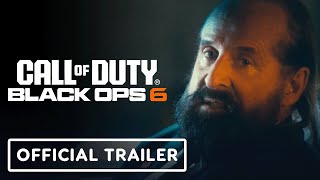
To ground the campaign in authentic local culture, Ogilvy Chicago tapped Oscar-nominated actor Michael Shannon. A veteran of the Steppenwolf Theatre Company, Shannon brought his signature gravelly delivery to the campaign’s radio, TV, and festival pre-roll spots. His performance leaned into a humorous, self-aware tone, posing questions like "Do you like subtitles?" or "Were you in high school theater?" to encourage audiences to identify their own cinematic genre.
Typography as a Narrative Tool
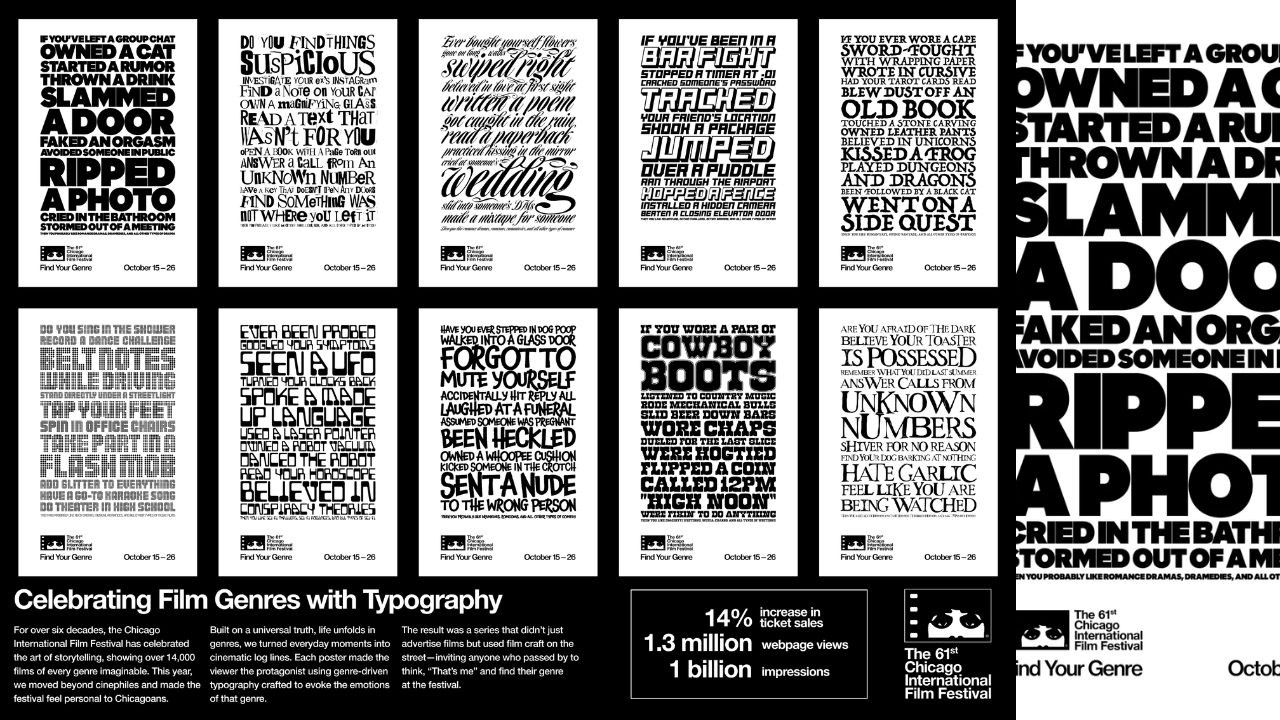
The visual identity, developed in partnership with the motion graphics studio Sarofsky, prioritized text over traditional imagery. By avoiding movie stills or celebrity photography, the team proved that graphic typography alone could convey complex moods. The design system utilized specific font choices to signal genre instantly: swoopy serifs for romance, dark, edgy serifs for noir and thriller suspense, and bold, blocky sans-serifs for horror and comedy. This "fluent cinema without a single frame" approach allowed the festival to act as a wayfinding system for the viewer's mood.
A Legacy of Creative Evolution
This campaign represents the latest in a long-standing pro-bono partnership between Ogilvy Chicago and the festival. The agency has consistently reinvented the festival’s visual language, moving from the aspect-ratio-focused typography of the 60th anniversary to the genre-coded, narrative-driven system of the 61st. The long-form animated spot produced by Sarofsky served as the official trailer, playing in theaters immediately before every screening, ensuring that the "Find Your Genre" concept remained the final touchpoint for attendees before the lights dimmed.
4C Framework deconstruction
Company
The festival leveraged its 60-year legacy as a champion of storytelling to position itself as a mirror for everyday life.
Category
Film festivals typically focus on promoting specific movie titles or celebrity talent rather than the audience's personal experience.
Customer
Attendees wanted to feel that cinema is not just an elite institution, but an accessible reflection of their own daily reality.
Culture
The rise of social media trends like 'main character energy' allowed people to view their personal lives through cinematic tropes.
Company
The festival leveraged its 60-year legacy as a champion of storytelling to position itself as a mirror for everyday life.
Category
Film festivals typically focus on promoting specific movie titles or celebrity talent rather than the audience's personal experience.
Strategy:
Reflect the audience's daily life as a cinematic narrative to drive personal relevance.
Customer
Attendees wanted to feel that cinema is not just an elite institution, but an accessible reflection of their own daily reality.
Culture
The rise of social media trends like 'main character energy' allowed people to view their personal lives through cinematic tropes.
Strategy:
Reflect the audience's daily life as a cinematic narrative to drive personal relevance.
Strategy Technique
Make the Brand a Mirror
The campaign reflects the audience's own daily experiences back to them as movie plots. By framing life as a series of genres, it makes the festival feel personally relevant.
Explore Technique
Creative Technique
Wordplays
The campaign uses typographic wordplay to transform mundane daily activities into cinematic loglines. This technique instantly signals specific film genres through visual tone and language.
Explore Technique
Craft Breakdown
This campaign excels through bespoke typographic design and copywriting that cleverly reinterprets everyday human behaviors through iconic cinema tropes.
Custom typefaces distinctively emulate classic film genres while maintaining elegant hierarchy across out-of-home posters.
Extremely sharp and witty micro-copy categorizes ubiquitous real-life moments into relatable cinematic genres.
“The brilliant pairing of observational copywriting with genre-specific typography creates an immediately recognizable visual language.”