Mankind Initiative: Violence is Violence
The ManKind Initiative needed to raise awareness that domestic violence affects men too, challenging the pervasive societal assumption that only women are victims. They aimed to shift public perception and encourage empathy for male survivors, targeting a broad audience to spark a national conversation about overlooked victims.
Creative Idea
A social experiment exposed public bias towards male victims of domestic violence.
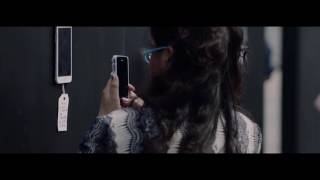
A hidden camera social experiment dramatically revealed societal bias by contrasting public intervention in a male-on-female domestic dispute with indifference when the roles were reversed, powerfully highlighting that male victims of violence are often overlooked.
The Social Experiment That Exposed an Empathy Gap
The Solange Knowles Catalyst
The campaign was sparked by the cultural fallout of the Solange Knowles and Jay-Z elevator incident. While the world treated that footage as a meme, the team at Dare recognized a dangerous double standard. Creative Director Andrew Bevan and CCO Sean Thompson decided to test this "empathy gap" in real-time. Bevan even appears in the final cut, acting as a bystander eating lunch while the professional actors staged the abuse just feet away.
Authentic Reactions on Zero Budget
Despite having £0 media spend, the film achieved a staggering 20 million views across platforms. While the couple were trained actors, the public reactions were 100% unscripted. In the first scenario, bystanders threatened to call the police to protect the woman; in the second, they were filmed smirking and laughing as the man was attacked. This stark contrast turned the film into a viral phenomenon, shared by the BBC, Huffington Post, and Fuji TV.

Shifting the National Conversation
The impact extended far beyond social media metrics. The ManKind Initiative reported a sustained increase in helpline traffic, averaging over 1,500 calls per year following the launch. Beyond public awareness, the film has been integrated into police training modules and academic studies to help officers recognize gender bias in domestic calls. The campaign’s "Violence is Violence" mantra successfully reframed domestic abuse from a gendered issue into a universal human rights concern.
Creative Strategy Deconstructed
Company
ManKind Initiative credibly delivered this by being an organization dedicated to supporting male victims of domestic abuse, giving them authority to speak on the issue.
Category
Anti-domestic violence campaigns typically focus on female victims, often portraying men as perpetrators, reinforcing a narrow view of the problem.
Customer
The audience felt a discomforting realization that their own biases might contribute to overlooking male victims of domestic violence.
Culture
A growing cultural conversation around gender equality and challenging traditional gender roles created an openness to this nuanced perspective.
Company
ManKind Initiative credibly delivered this by being an organization dedicated to supporting male victims of domestic abuse, giving them authority to speak on the issue.
Category
Anti-domestic violence campaigns typically focus on female victims, often portraying men as perpetrators, reinforcing a narrow view of the problem.
Strategy:
Challenge ingrained societal biases to broaden the understanding of who can be a victim of violence.
Customer
The audience felt a discomforting realization that their own biases might contribute to overlooking male victims of domestic violence.
Culture
A growing cultural conversation around gender equality and challenging traditional gender roles created an openness to this nuanced perspective.
Strategy:
Challenge ingrained societal biases to broaden the understanding of who can be a victim of violence.
Strategy Technique
Attack a Cultural Blind Spot
The campaign directly challenged society's unacknowledged bias regarding domestic violence victims. It forced viewers to confront the uncomfortable truth that male victims are often overlooked.
Explore Technique
Creative Technique
Conduct an Experiment
The campaign conducted a social experiment with two scenarios to reveal a hidden societal bias. It effectively demonstrated how public perception of domestic violence differs based on the victim's gender.
Explore Technique
Craft Breakdown
This campaign's exceptional craft lies in its powerful social experiment and the raw, authentic execution that makes the audience confront an uncomfortable truth. The believability of the acting and the effective use of 'hidden camera' cinematography are crucial to its impact.
The performances of the 'abusive' couple are intensely believable and distressing, crucial for evoking genuine reactions from the public and conveying the seriousness of the situation.
The use of hidden cameras and the raw, observational style effectively create a sense of realism, making the audience feel like direct witnesses to unscripted events.