Sol Cement: Sightwalks
Sol Cement challenged Circus Grey Lima to strengthen its brand leadership in Peru by demonstrating a commitment to social progress. They needed to move beyond functional product benefits to address a significant urban challenge, specifically improving the daily lives and independence of the visually impaired community in Lima through a scalable, permanent infrastructure solution.
Creative Idea
Redesigned tactile tiles into a coded vocabulary that identifies specific locations for visually impaired pedestrians.
Sol Cement transformed urban infrastructure into a navigation tool by redesigning tactile tiles with a coded system, allowing visually impaired people to identify specific businesses and navigate independently using the very product the brand manufactures.
The Low Tech Code That Redefined Outdoor Media
Two Years of Bureaucratic Demolition
While the final product appears seamless, the production required nearly two years of research and development. The team at Circus Grey Peru had to navigate the complex bureaucracy of two different municipal administrations to secure permission to replace existing infrastructure in the Miraflores district. Beyond the legal hurdles, the agency collaborated directly with the three largest associations for the visually impaired in Peru to co-create and validate the tactile "vocabulary." This ensured the system was intuitive for the 500,000 people it would immediately impact.
A Five Line Navigation System
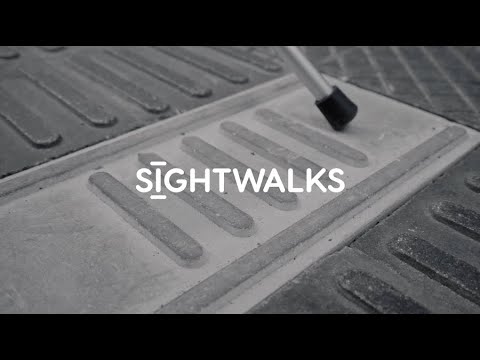 The innovation lies in a simple, physical code that functions without batteries or internet. By varying the number of lines on the cement tiles, the brand created a universal language: 2 lines signify a bank, 3 lines a grocery store, 4 lines a pharmacy, 5 lines a restaurant, and 6 lines a bus stop. Vertical markers placed above or below these lines indicate which side of the street the establishment is located on. To ensure adoption, Cemento Sol launched a dedicated program featuring Braille brochures and audio guides to teach users how to "read" the sidewalks.
Open Source Infrastructure
In a rare move for a commercial brand, UNACEM waived all copyright and patent rights, making the designs open-source. This allows any city or global competitor to replicate the system for free. By installing over 75,000 square meters of tiles, the brand shifted the definition of "Outdoor" advertising from temporary signage to permanent, life - saving utility. As Gabriel Barrio of UNACEM noted, the project was designed to prove that building goes beyond concrete - it is about leaving a permanent mark on human mobility.
Creative Strategy Deconstructed
Company
Sol Cement's market-leading position and physical presence in Peru's urban infrastructure.
Category
Construction brands usually focus on durability and strength rather than the human experience of the built environment.
Customer
Visually impaired citizens felt trapped by a city that provided direction but no destination information.
Culture
A global shift toward inclusive design and open-source solutions that prioritize social impact over proprietary profit.
Company
Sol Cement's market-leading position and physical presence in Peru's urban infrastructure.
Category
Construction brands usually focus on durability and strength rather than the human experience of the built environment.
Strategy:
Transform essential infrastructure into an information system to empower marginalized groups through inclusive urban design.
Customer
Visually impaired citizens felt trapped by a city that provided direction but no destination information.
Culture
A global shift toward inclusive design and open-source solutions that prioritize social impact over proprietary profit.
Strategy:
Transform essential infrastructure into an information system to empower marginalized groups through inclusive urban design.
Results
The 'Sightwalks' campaign achieved significant impact, with over 75,000 m² of tactile tiles implemented in the district of Miraflores during the first stage. This initiative is expected to benefit more than 500,000 people. The project was made open-source to encourage other cities to implement the system, fostering greater independence for the visually impaired. The campaign received positive reception from both the community and local government, as evidenced by the involvement of the district of Miraflores and various organizations for the blind.
+75,000 m²
tactile tiles implemented in Miraflores
+500,000
people expected to benefit
Open Source
project availability for other cities
Strategy Technique
Build an Utility, Not an Ad
Instead of just talking about building a better Peru, the brand literally built a tool that solves a daily navigation crisis, making the product the solution itself.
Explore Technique
Creative Technique
Unexpected Utility
It turns a static construction material into a functional information system, providing a life-changing utility for the visually impaired that goes far beyond the product's traditional role in infrastructure.
Explore Technique
Craft Breakdown
The campaign's craft is exceptional due to its innovative design of a simple, universal coding system for tactile tiles and its strategic use of open-source data to drive social change.
The creation of a new, intuitive tactile language for urban navigation is a masterclass in functional design.
The decision to make the project open-source ensures the campaign's impact extends far beyond its initial implementation.
“The synergy between the innovative tile design and the open-source media strategy transforms a local initiative into a global solution for urban accessibility.”