St. John Ambulance: Save the Boy
St. John Ambulance needed to increase sign-ups for first aid courses. They faced the challenge of public complacency regarding personal first aid skills. The client wanted to motivate the general public to learn first aid by demonstrating its critical, life-saving importance.
Creative Idea
It showed that even trained volunteers can't be everywhere, so you must learn.
St. John Ambulance powerfully dramatized the terrifying reality that even dedicated volunteers like Alice can't be everywhere, urging viewers to learn first aid by highlighting the isolation and helplessness when a loved one's life hangs in the balance, making personal preparedness an urgent, life-saving necessity.
The Neighbor Who Did Not Come To Help
The Bait and Switch Narrative
The campaign is renowned for its "twist" storytelling, designed to combat the bystander effect. It leads viewers to believe a woman is rushing to save a boy who fell from a tree, only to reveal she is actually just a neighbor rushing to save her laundry from the rain. This highlighted the terrifying reality that a St. John volunteer isn't always around. The production achieved the "sickening thud" of the fall using a mix of a stunt double and a "ragdoll" effect created by MPC. Director Dougal Wilson reportedly offered his services for free because he felt so strongly about the cause after a personal experience where he felt helpless in an emergency.
TV Meets Digital Integration
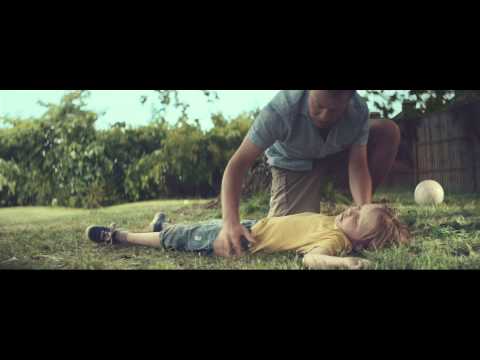 The TV spot acted as a cliffhanger, forcing viewers to go online to complete the story. This interactive YouTube experience allowed users to "save the boy" by performing first aid tasks - such as swiping to put him in the recovery position - on their smartphones. The campaign reached over 15 million people and addressed a grim reality: pre-campaign research showed 41% of people admitted it would take the death of a loved one to motivate them to learn first aid.
Medical Guidelines and Controversy
The ad sparked a minor industry debate among first-aiders regarding the safety of moving a child who fell from a height. St. John Ambulance defended the creative choices by stating they followed Resuscitation Council UK guidelines: an unconscious, breathing casualty must be placed in the recovery position to maintain an airway, which takes priority over potential spinal injury. This clinical accuracy was vital, as 57% of people surveyed initially said they would do nothing and wait for an ambulance, which is the incorrect procedure.
Creative Strategy Deconstructed
Company
St. John Ambulance credibly delivers life-saving first aid training and deploys skilled volunteers.
Category
Charity campaigns often focus on the heroics of volunteers; this campaign shifts focus to individual responsibility.
Customer
The audience deeply feared helplessness in a loved one's emergency, seeking empowerment to protect their family.
Culture
A cultural truth that while emergencies are common, personal preparedness for them is often overlooked.
Company
St. John Ambulance credibly delivers life-saving first aid training and deploys skilled volunteers.
Category
Charity campaigns often focus on the heroics of volunteers; this campaign shifts focus to individual responsibility.
Strategy:
Leverage the universal fear of helplessness in emergencies to empower individual action.
Customer
The audience deeply feared helplessness in a loved one's emergency, seeking empowerment to protect their family.
Culture
A cultural truth that while emergencies are common, personal preparedness for them is often overlooked.
Strategy:
Leverage the universal fear of helplessness in emergencies to empower individual action.
Strategy Technique
Make the Invisible Visible
The campaign makes visible the constant, unseen emergencies happening daily, and the critical gap in public first aid knowledge. It exposes the vulnerability when a trained person isn't present.
Explore Technique
Creative Technique
Dramatize the Problem
The campaign vividly dramatizes the immediate, terrifying consequences of a child's accident. It highlights the father's isolation and helplessness, making the problem of untrained bystanders deeply personal and urgent.
Explore Technique
Craft Breakdown
This campaign's craft excels in its powerful storytelling and emotional impact, driven by exceptional cinematography and sound design that heighten the narrative's tension and urgency, culminating in a poignant call to action.
The framing, lighting, and camera movement effectively convey the narrative's emotional shifts, from the tranquil family scene to the abrupt terror and isolation, with the final wide shot being particularly impactful.
The strategic use of ambient sounds, character dialogue, the chilling thud of the fall, and the boy's whimpers builds unbearable tension and underscores the father's escalating desperation.
The performances of the mother and father are highly convincing, conveying raw emotion and making the unfolding tragedy feel incredibly real and relatable.
The subtle yet impactful transformation of clothes on the line into spectral figures powerfully visualizes the mother's internal anxieties and the prevalence of potential emergencies.
“The emotional power of the ad is largely due to the seamless synergy between compelling cinematography, evocative sound design, and realistic acting, which together create a deeply immersive and harrowing experience.”