2026KalapuriConsumer GoodsCase video
Kalapuri: The Kolhapuri
Kalapuri faced a major challenge after luxury brand Prada showcased uncredited Kolhapuri sandal designs at Milan Fashion Week. Kalapuri asked VML India to address this cultural appropriation publicly while protecting their heritage. The goal was to demand global recognition and open doors for sustainable, equitable partnerships with international luxury fashion houses, ensuring generational Indian artisans received official credit and economic opportunity.
Creative Idea
They bound a history book using authentic Kolhapuri sandal leathercraft to educate Prada.
To confront Prada's uncredited Milan Fashion Week design, Kalapuri used authentic sandal-making materials and leather-stitching techniques to craft a hardcover history book detailing their 1,000-year legacy, sending it directly to Milan as an invitation for official collaboration.
A History Book Crafted Like a Kolhapuri Sandal
Red Soil Dyes and Leather Cords
To construct "The Kolhapuri", local artisans built a history book crafted like a Kolhapuri sandal - turning authentic shoemaking materials into a physical volume documenting the craft's 1,000-year legacy. Printed by Reproscan with photography by Anai Bharucha, the book featured hand-stitched binding made with traditional leather cords, real artisan portraiture, and historical maps. Artisans colored the physical volume using natural dyes derived directly from the red soil of Kolhapur. Produced alongside Ducktape Productions and Believe / Believe TV, the physical artifact was mailed directly to Prada's creative leadership team in Milan as an invitation to meet local makers and build equitable partnerships.
A Response to Milan Fashion Week
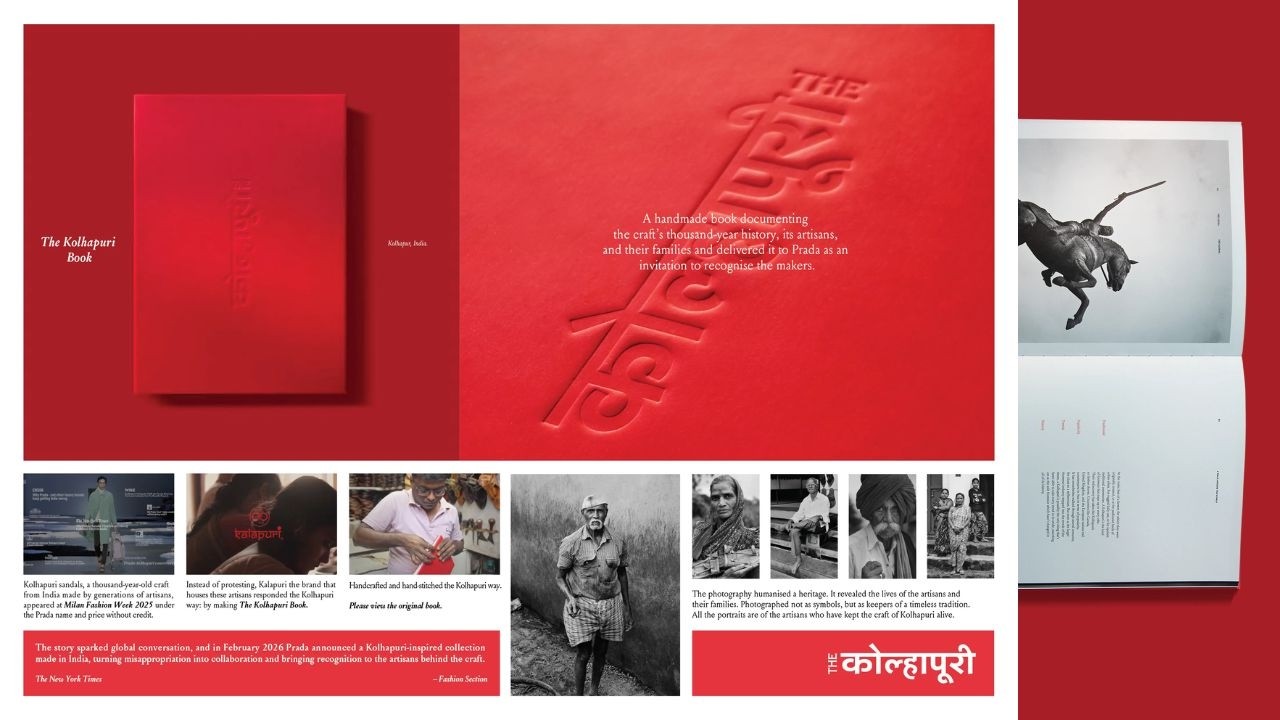 The campaign responded to Prada's Spring/Summer 2026 Menswear show at Milan Fashion Week 2025, where models walked the runway in sandals strikingly identical to traditional Kolhapuri chappals without crediting the craft's generational Indian artisans. Instead of executing an angry protest, Kalapuri founders Aparnnaa Atish Chavan and Aatish Chavaan partnered with VML India CCO Kalpesh Patankar and CEO Babita Baruah to shift the conversation from cultural appropriation to formal recognition.
Million Views and Economic GI Protection
The campaign generated over 10 million video views across platforms, driving a 2X increase in direct brand searches for Kalapuri and a 71.8% increase in average engagement time. Beyond achieving a 3X growth in incremental brand revenue during the campaign period, the advocacy momentum secured official Geographical Indication (GI) tag registration for 20 traditional artisan families. Copies of the physical book were later exhibited at global forums, including the Next Billion Forum 2025, to serve as a permanent cultural record.
4C Framework deconstruction
Company
A 1,000-year leathercrafting heritage and authentic artisan techniques rooted in the rich soil of Kolhapur.
Category
Luxury fashion houses frequently appropriate traditional cultural designs for runways without crediting or compensating the original creators.
Customer
Global design audiences and local artisans wanted respectful cultural recognition rather than hostile legal battles or quiet compliance.
Culture
Growing global intolerance for uncredited cultural appropriation pushed luxury brands toward accountability and fair-trade craft partnerships.
Company
A 1,000-year leathercrafting heritage and authentic artisan techniques rooted in the rich soil of Kolhapur.
Category
Luxury fashion houses frequently appropriate traditional cultural designs for runways without crediting or compensating the original creators.
Strategy:
Turn an uncredited runway design into a constructive dialogue by offering an exquisite, handcrafted historical artifact.
Customer
Global design audiences and local artisans wanted respectful cultural recognition rather than hostile legal battles or quiet compliance.
Culture
Growing global intolerance for uncredited cultural appropriation pushed luxury brands toward accountability and fair-trade craft partnerships.
Strategy:
Turn an uncredited runway design into a constructive dialogue by offering an exquisite, handcrafted historical artifact.
Results
The initiative turned global controversy into an official brand collaboration. Prada representatives visited Kolhapur to learn about the heritage and artisans firsthand, leading to an official credited collaboration. Additionally, 'The Kolhapuri' book was submitted in Germany to support legal patent filings protecting traditional Kolhapuri sandals.
Strategy Technique
Find the Missing Conversation
Rather than resorting to a standard public protest over intellectual property theft, Kalapuri addressed the underlying gap in luxury fashion: the total lack of direct engagement with traditional, generational artisans.
Explore Technique
Creative Technique
Borrow a Familiar Format
The campaign took a traditional hardcover history book format and re-engineered it physically using authentic leather, natural soil dyes, and cobbler stitching techniques typical of Kolhapuri sandal crafting.
Explore Technique
Craft Breakdown
The campaign's strength lies in physical book design and editorial storytelling, executing an intellectual property dialogue through museum-grade artisanal craft.
The publication is constructed using authentic leather, cobbler stitching, and natural soil dyes sourced directly from Kolhapur.
The editorial prose balances cultural pride with diplomatic elegance, reframing an uncredited design as an invitation to collaborate.
Bilingual editorial layouts blend Latin typefaces with Devanagari script seamlessly across historical timeline spreads.
Rich crimson leather covers contrast sharply with black-and-white portraiture of generational artisan families.
“The synthesis of physical leather design and editorial copywriting turns a brand dispute into a permanent, physical work of art.”