Faber-Castell: The Never-Ending Forest App
Faber-Castell tasked DAVID São Paulo with reinforcing their EcoPencil sustainability positioning during the competitive back - to - school season. They needed to differentiate their pencils from cheaper competitors by making their reforestation efforts relevant to children. The goal was to increase brand preference among Brazilian families by proving that buying these pencils helps protect the forest and its inhabitants.
Creative Idea
Turned physical pencils into AR triggers that brought the forest's endangered animals to life.
Faber-Castell transformed their EcoPencils into interactive AR triggers, allowing children to bring 3D forest animals to life. It worked by turning a commodity product into an educational storytelling platform that made the brand's reforestation commitment tangible and engaging.
Bringing the Reforestation Animals to Life
A Crew of One Hundred
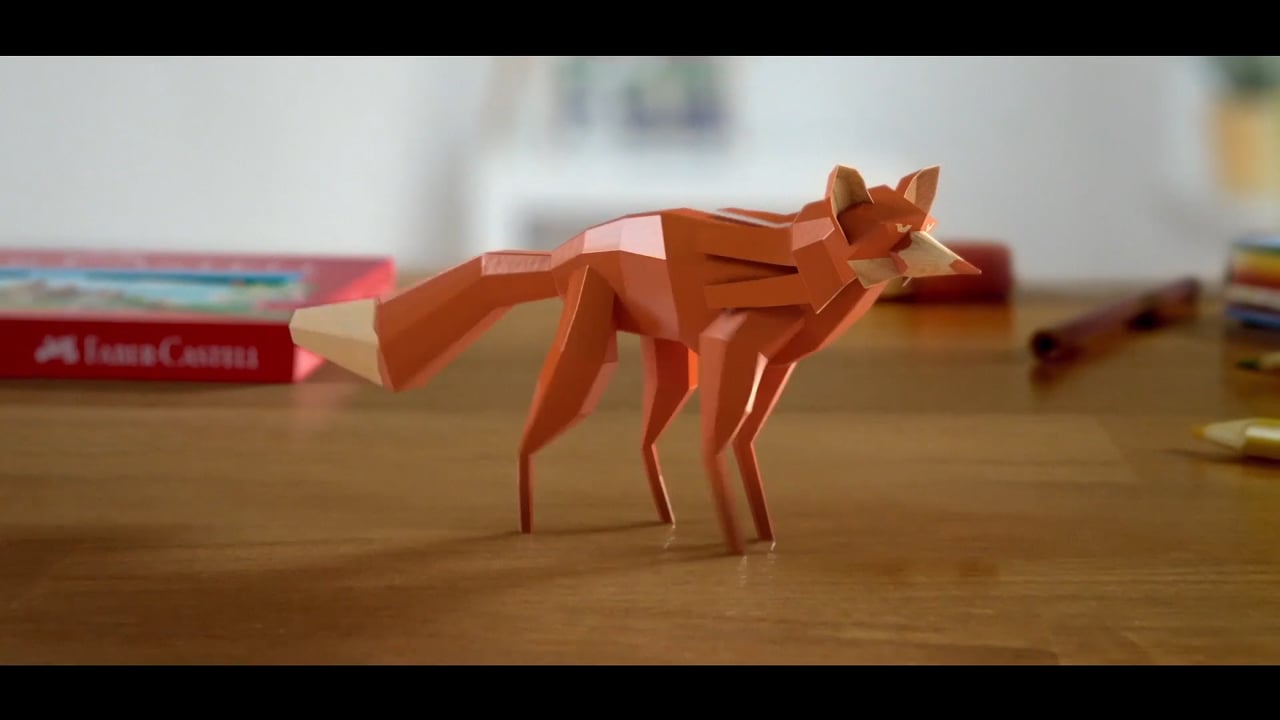
The production of the Never - Ending Forest app was a massive technical undertaking led by Vetor Zero and DAVID São Paulo. A crew of over 100 people worked to bridge the gap between physical stationery and digital interaction. The team meticulously designed 13 high - fidelity 3D models of native Brazilian fauna, including the Jaguar, Sloth, and Maned Wolf. Each animal was animated to move naturally within an AR environment, ensuring the experience felt like a living window into the brand’s actual 10,000 - hectare forest in Prata, Minas Gerais.
The Pokémon Go for Sustainability
Turning Commodities into Classrooms
Creative leadership, including Anselmo Ramos and Edgard Gianesi, aimed to move beyond "green" claims by making the forest tangible. Copywriter Rodrigo Sant'Anna noted that the goal was to show children that their pencils come from the exact same habitat where these animals live. The app became a viral educational tool, used by both parents and teachers to discuss environmental preservation. By the end of the cycle, it was ranked among the Top 50 Mobile Projects of 2017 globally, proving that traditional brands could successfully compete for attention in a digital - first world.
Creative Strategy Deconstructed
Company
Faber-Castell's massive reforestation projects and high-quality EcoPencils made from 100% sustainable wood.
Category
Stationery brands usually focus on functional product features or basic back - to - school price promotions.
Customer
Parents and children wanted digital engagement that felt meaningful and educational rather than just passive screen time.
Culture
The rise of AR technology and mobile gaming created a perfect window to gamify environmental education.
Company
Faber-Castell's massive reforestation projects and high-quality EcoPencils made from 100% sustainable wood.
Category
Stationery brands usually focus on functional product features or basic back - to - school price promotions.
Strategy:
Transform physical product consumption into an interactive educational ecosystem to prove corporate sustainability claims through play.
Customer
Parents and children wanted digital engagement that felt meaningful and educational rather than just passive screen time.
Culture
The rise of AR technology and mobile gaming created a perfect window to gamify environmental education.
Strategy:
Transform physical product consumption into an interactive educational ecosystem to prove corporate sustainability claims through play.
Results
The campaign achieved significant reach and engagement: 600,000 downloads of the app, 76 million impressions, and 18 million views. It generated 4.5 million engagements across social media platforms like Facebook and Instagram. Additionally, children created and shared more than 1200 minutes of tutorials and gameplay on YouTube, demonstrating high levels of brand interaction and educational value.
600,000
App downloads
76M
Total impressions
4.5M
Social engagements
Strategy Technique
Build an Utility, Not an Ad
Instead of just claiming sustainability, the brand built a functional educational tool that turned the product itself into a medium for learning about the environment.
Explore Technique
Creative Technique
Gamification
The campaign uses augmented reality to turn physical pencils into collectible digital assets, encouraging children to interact with the product through play, discovery, and educational rewards.
Explore Technique
Craft Breakdown
The campaign excels by bridging the gap between physical play and digital engagement through high-quality AR design that maintains a consistent 'paper' aesthetic.
The seamless integration of AR animals that respond to specific pencil colors creates a magical user experience.
The low-poly, wood-textured aesthetic of the 3D animals perfectly mirrors the physical product's materiality.
The consistent visual language between the physical pencils, the app UI, and the 3D world feels unified.
The 'Never-Ending Forest' concept cleverly links reforestation to the infinite possibilities of digital play.
“The synergy between the physical product design and the digital AR execution makes the technology feel like a natural extension of the pencil.”