Renault: Utrecht Energized
Renault and Publicis Amsterdam were tasked with demonstrating the practical value of electric mobility beyond personal transport. The client needed to address the growing energy grid instability in Utrecht caused by sustainable energy adoption. The goal was to prove that electric vehicles could act as a solution to urban infrastructure challenges, positioning Renault as a leader in the energy transition for city residents.
Creative Idea
The car stopped being a vehicle and became a city-wide power plant.
Renault transformed its electric fleet into a decentralized power plant, using bidirectional charging to stabilize Utrecht's overloaded energy grid. By turning cars into mobile batteries, the campaign solved a critical infrastructure crisis while proving the utility of sustainable mobility.
Turning Shared Cars Into Urban Batteries
Scaling From Pilot To Powerhouse
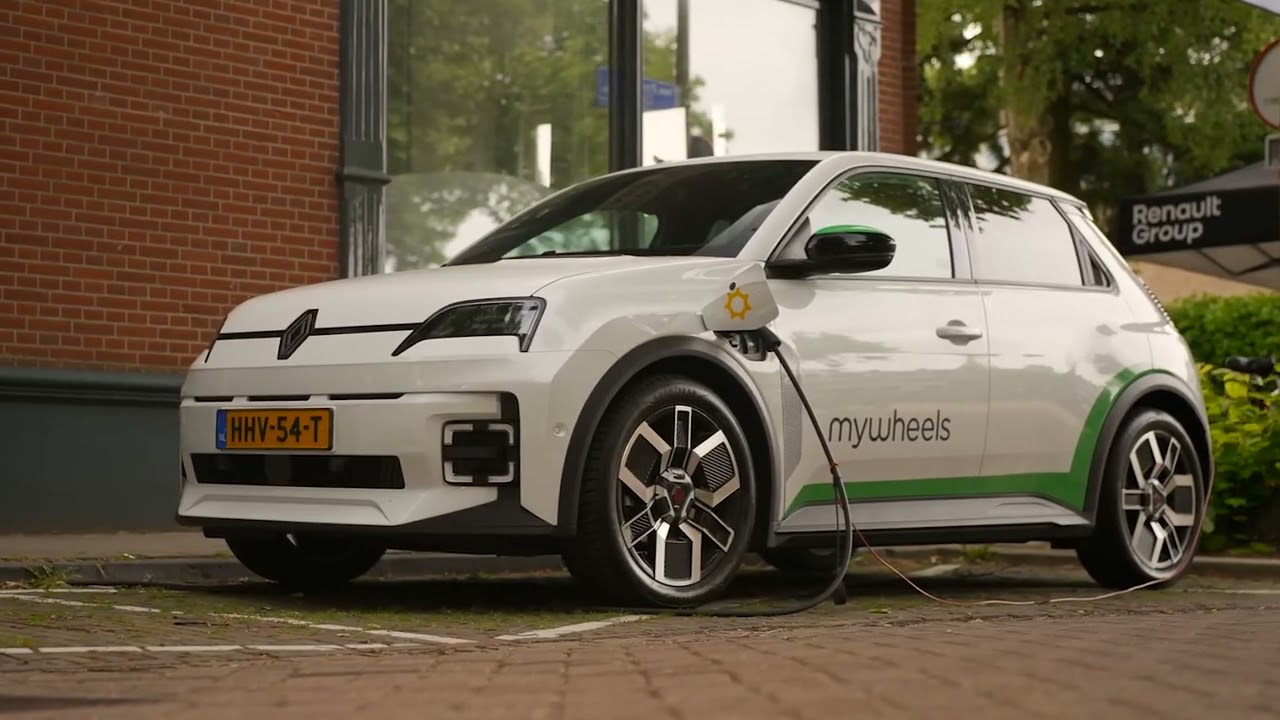
The project evolved rapidly from a localized experiment into a critical piece of Dutch infrastructure. Starting with a modest fleet of 50 Renault 5 E-Tech vehicles, the initiative proved that bidirectional charging could effectively mitigate grid strain. By the one-year anniversary in June 2026, the fleet had scaled to 350 vehicles across Utrecht and Eindhoven. This expansion achieved a significant technical milestone: 2 MW of grid discharge capacity, providing enough energy to support 2,000 households during peak evening hours.
Technical Orchestration Behind The Scenes
The production of the case study required close coordination between Publicis Amsterdam and 10/10 Amsterdam to capture the complex interplay between software and hardware. The project relied on the Last Mile Solutions platform, which managed over 120,000 charging transactions to ensure the grid remained balanced. Robin Berg, CEO of We Drive Solar, was instrumental in the technical deployment, designing the bidirectional posts that allowed the cars to function as mobile energy storage units.
Long Term Grid Resilience
The campaign moved beyond traditional advertising by integrating into the city's energy strategy. The data collected during the first five months showed a 300 kW reduction in evening peak demand, with each vehicle contributing an average of 1,300 kWh back to the network. Looking ahead, the project aims to reach a 500-car fleet, which is projected to provide 10% of the total flexibility required to stabilize the Utrecht regional grid. This shift positions Renault not just as an automotive manufacturer, but as a primary stakeholder in the transition to renewable urban energy systems.
Creative Strategy Deconstructed
Company
Renault leveraged its advanced V2G bidirectional charging technology to turn electric vehicles into mobile, grid-stabilizing energy storage units.
Category
Automotive brands typically market performance, luxury, or status, ignoring the role of vehicles as active components of urban energy infrastructure.
Customer
Residents felt anxiety regarding grid instability and the environmental impact of rapid electrification, seeking solutions that provide tangible community benefits.
Culture
The global energy transition and the urgent need for sustainable, flexible power solutions made bidirectional charging a highly relevant, timely innovation.
Company
Renault leveraged its advanced V2G bidirectional charging technology to turn electric vehicles into mobile, grid-stabilizing energy storage units.
Category
Automotive brands typically market performance, luxury, or status, ignoring the role of vehicles as active components of urban energy infrastructure.
Strategy:
Solve systemic infrastructure failures by repurposing consumer products into essential public utilities.
Customer
Residents felt anxiety regarding grid instability and the environmental impact of rapid electrification, seeking solutions that provide tangible community benefits.
Culture
The global energy transition and the urgent need for sustainable, flexible power solutions made bidirectional charging a highly relevant, timely innovation.
Strategy:
Solve systemic infrastructure failures by repurposing consumer products into essential public utilities.
Results
The campaign successfully deployed a fleet of 500 Renault 5s equipped with V2G technology. This initiative turned cars into mobile power sources, capable of storing and returning megawatts of clean energy to stabilize the grid for 190,000 households. The project achieved 6,100 discharging cycles, returning 37,000 kWh of electricity back to the grid. The technology is set to expand to 4 more cities.
500
Renault 5s deployed
190,000
households stabilized
37,000 kWh
returned to the grid
Strategy Technique
Build an Utility, Not an Ad
The brand moved beyond traditional advertising by creating a functional solution to a real-world energy crisis. This approach proves the product's value through tangible, large-scale infrastructure impact rather than just messaging.
Explore Technique
Creative Technique
Unexpected Utility
The campaign reframes the Renault 5 from a simple vehicle into a functional piece of city infrastructure. It highlights the car's hidden capacity to provide energy, turning a product feature into a vital public service.
Explore Technique
Craft Breakdown
The campaign excels by turning a complex infrastructure problem into a tangible, community-driven solution through seamless partnerships. The visual integration of technology and real-world utility elevates the narrative.
Transforming an entire city's infrastructure and a fleet of shared cars into an active, bidirectional power grid is a masterclass in utility-led brand experience.
The integration of local government, car-sharing networks, and public PR created a highly effective 360-degree ecosystem.