The Law Of B2B Category Entry Points
Be there when the buyer starts.
After six months on that brand purpose workshop, this might sting: your buyers don't care about your mission to empower synergy. They care about not getting fired. In B2B, your brand isn't a relationship; it's a mental shortcut. If you aren't the first name that pops into a stressed-out VP's head when their current vendor shits the bed, you're not just losing - you're non-existent. Category Entry Points are the only reason anyone remembers you exist in the first place. Stop trying to be different and start trying to be there when the problem arises. It's time to stop huffing your own supply and look at the cognitive science of how B2B buying actually happens.

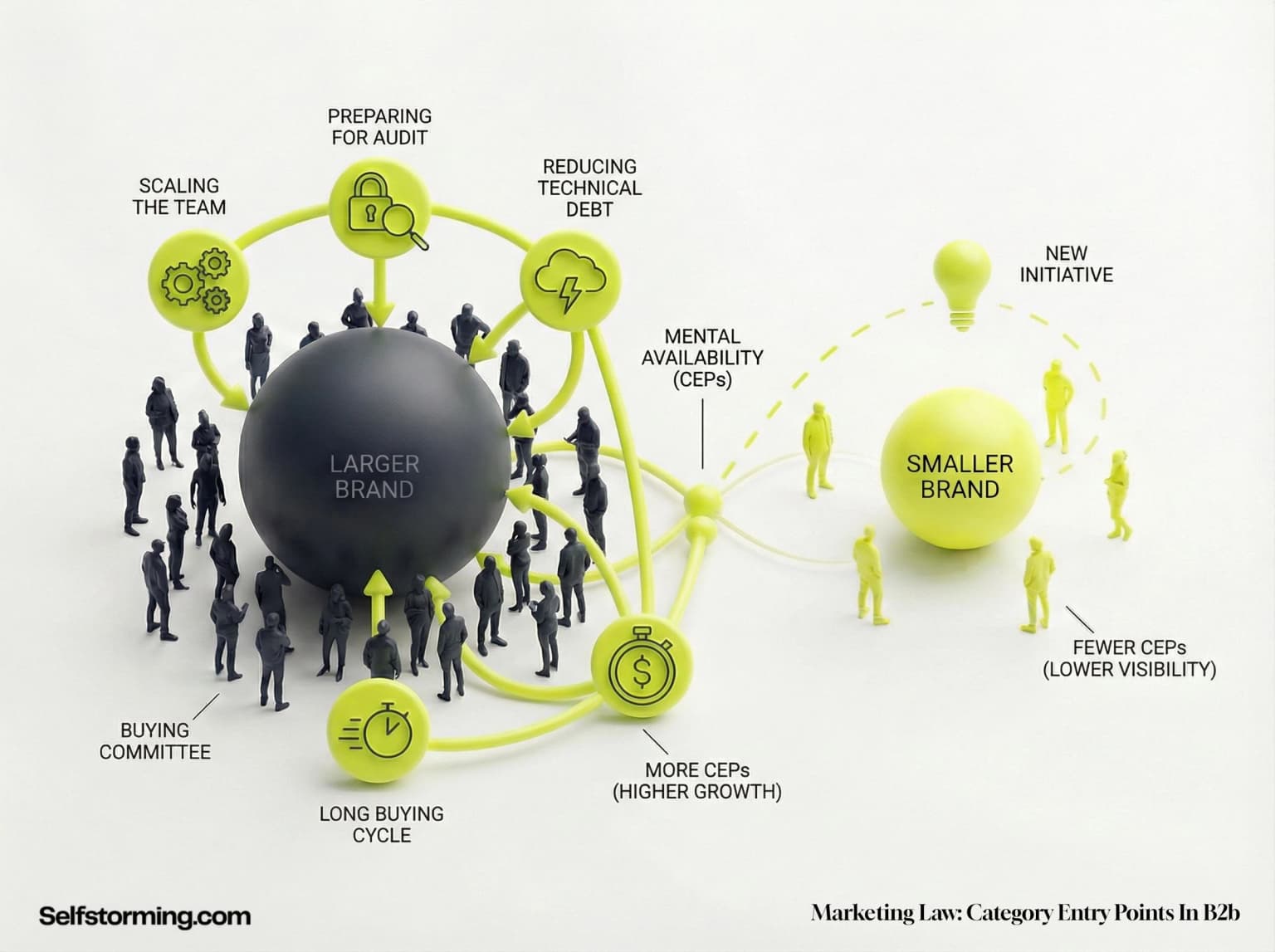

THE LAW OF B2B CATEGORY ENTRY POINTS
“[PLACEHOLDER] This is not the real definition. We wrote this fake one just to fill the space. Subscribe to see what the law actually says.”
[PLACEHOLDER TEXT] Nice try. We see you squinting through the blur. This is filler — the actual insights are subscriber-only. No amount of CSS hacking will reveal the real content.
[PLACEHOLDER TEXT] Look, we're not mad. Just mildly disappointed. The real breakdown is waiting — you just need to stop trying to cheat and subscribe like everyone else.
Key Takeaways
- [PLACEHOLDER] This is fake takeaway text. The real ones are actually useful. This is just here so the blur looks right.
- [PLACEHOLDER] Another placeholder bullet. The actual insights would help your strategy. This won't.
- [PLACEHOLDER] Still reading? These are literally filler bullets. The paid version has real research-backed points.
- [PLACEHOLDER] Last fake bullet. Subscribe to see what actually matters. Or keep squinting - your call.
Consequences Of Applying The Law
| Aspect | When Applied | When Not Applied |
|---|---|---|
| [PH] | Fake content placeholder. | Still placeholder text. |
| [PH] | More filler text here. | Subscribe to see real data. |
| [PH] | Last fake row here. | Real table has insights. |
Genesis & Scientific Origin
[PLACEHOLDER TEXT] This is not the origin story. This is lorem ipsum with attitude. The real history — who discovered this, when, and the research that backs it — is for subscribers only.
[PLACEHOLDER TEXT] We applaud the effort with inspect element. Truly. But that blur isn't hiding the real text — this IS the placeholder. The actual content lives on our servers, not in your DOM.
[PLACEHOLDER TEXT] Want to actually impress your CMO with sourced evidence? Yeah, you'll need to pay for that.
“[PLACEHOLDER] This stat is fake. The real one has actual research numbers. Nice try though.”
The Mechanism: How & Why It Works
[PLACEHOLDER TEXT] Nice try. This is literally filler text designed to look like content. The actual mechanism breakdown — the stuff that would actually help your career — is for paying members.
[PLACEHOLDER TEXT] We wrote this placeholder knowing you'd try to read it. So here's a wave: 👋 Hi there, scrappy marketer. We respect the hustle, but this ain't it.
[PLACEHOLDER TEXT] The real section explains WHY this works psychologically and HOW to apply it. But you're reading gibberish instead. Your choice.
[PLACEHOLDER TEXT] Scroll up, hit subscribe, and stop wasting time decoding blur. Or don't — the free sample laws are genuinely good too.
Real-World Example:
Major Global Brand
Situation
[PLACEHOLDER] This isn't a real case study. The actual version names the brand and describes what they actually did. You're reading corporate lorem ipsum right now.
Result
[PLACEHOLDER] The real results have actual percentages and revenue numbers. This is just text that kinda looks like content. Subscribe if you want the receipts.
Strategic Implementation Guide
[PLACEHOLDER] Fake Step One
This is placeholder text. The real implementation guide has actual actionable steps. This is just content-shaped filler.
[PLACEHOLDER] Another Fake Step
Still squinting through the blur? These steps won't help you — they're literally made up to fill space.
[PLACEHOLDER] More Filler
The actual guide breaks down exactly how to apply this law. This text just looks like it does.
[PLACEHOLDER] Last Fake Step
Nice try. Subscribe to see the real thing. Or keep reading placeholder text — we won't judge. Much.
Frequently Asked Questions
Is Mental Availability the same as Brand Awareness?
to see the answer
Does this mean B2B buyers aren't rational?
to see the answer
Can we create a brand-new Category Entry Point?
to see the answer
How do CEPs interact with the Long and Short of It?
to see the answer
Should we focus on just one CEP to be a specialist?
to see the answer