PrincipleBrand Strategy
Mental availability = mental penetration x mean network size, depth times breadth
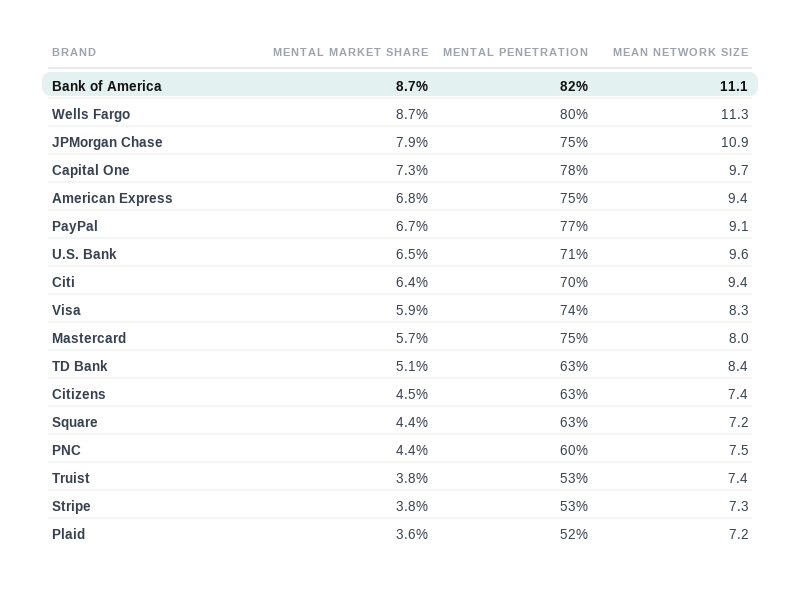
A brand's share of mental availability is its mental penetration multiplied by its mean network size, divided by total category linkages. Mental penetration is depth: the percentage of buyers who think of the brand for at least one category entry point. Mean network size is breadth: the average number of entry points those buyers link to the brand. Building mental availability means raising both.
The evidence
PrincipleMental Penetration x Network Size = Mental Market ShareCategory Entry Points In A B2B World - Linking Buying Situations To Brand Sales, The B2B Institute at LinkedIn x Ehrenberg-Bass Institute+13pp penetration, 5.2 → 6.5 networkA growth target translated into memory metricsCategory Entry Points In A B2B World - Linking Buying Situations To Brand Sales, The B2B Institute at LinkedIn x Ehrenberg-Bass Institute9.8% vs 4.4%Mental market share separates banks as sharply as real market share doesCategory Entry Points In A B2B World - Linking Buying Situations To Brand Sales, The B2B Institute at LinkedIn x Ehrenberg-Bass Institute+9ppWhat a real mental advantage looks like in a brand-by-CEP matrixCategory Entry Points In A B2B World - Linking Buying Situations To Brand Sales, The B2B Institute at LinkedIn x Ehrenberg-Bass Institute
We wrote about this

More from this source
StatOnly about one in six SMBs is in market for a financial product in a given quarterStatSMBs use more financial providers than they consider when buying something newPrincipleNeeds, not ads, bring buyers into the category, so ads should build memories rather than chase clicksPrincipleSMB banking has 30 category entry points across eight kinds of needStatMental penetration and buyer penetration move together across SMB banking brandsStatEven the category leader is linked to barely a third of the buying situationsCaseSmaller brands trail on both depth and breadth of memory and should deepen penetration on one entry point firstCaseWells Fargo is thought of as widely as the leader but bought far less, held back by rejectionCaseU.S. Bank is as well known as Citi among SMBs but converts far fewer into customersStatNearly half of a bank's SMB customers also bank with it personally, and the personal relationship usually comes first or togetherCaseBig banks own the local-bank feel while fintechs own online and mobile, and local turns out to be a state of mindWarningAttribute scores are moot if the brand never makes the shortlist