ANZ Bank: Pocket Money
ANZ Bank wanted a campaign to highlight the gender pay gap, a critical issue impacting financial equality. The challenge was to create widespread awareness and provoke a national conversation among adults about this systemic inequality. They sought an innovative approach to expose the absurdity of unequal pay, aiming to position ANZ as a brand committed to fairness and social change. The desired outcome was significant media attention and public engagement.
Creative Idea
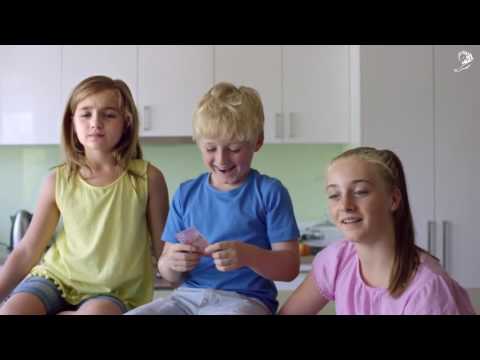
ANZ paid boys more than girls for identical chores in a filmed social experiment.
The campaign conducted a social experiment where boys and girls were given the same chores but boys were paid more for the exact same work. The children's genuine shock and confusion at the unfair pay vividly exposed the absurdity of the gender pay gap, challenging adults to question why such inequality is tolerated in society. It effectively used innocent reactions to highlight a systemic issue.
Paying Kids Less to Prove a Point
Documentary Roots and Hidden Cameras
To capture the raw, emotional core of the experiment, Whybin\TBWA Melbourne recruited documentary filmmaker Celeste Geer. Known for her authentic storytelling, Geer utilized hidden cameras to ensure the children - who were not actors - provided 100% genuine reactions. This unscripted approach was vital to the campaign's success, particularly the viral "if I don't forget" moment from a young boy, which became a poignant symbol for the fragility of social progress. The production team, including DOP Katie Milwright and Creative Director Tara Ford, focused on moving the conversation from abstract statistics to a relatable "kitchen table" issue.
Global Scale and Purpose Led Branding
 The initiative was a massive global success, reaching 1.5 billion people and trending globally on International Women’s Day. Within just 12 days, it engaged 112 million people, cementing ANZ’s reputation as a "purpose - led" bank following their previous success with GAYTMs. The campaign was a sequel to a 2015 film directed by Academy Award winner Jane Campion, and the broader launch featured high - profile figures like Julia Gillard and Martina Navratilova.
Bridging the 18.8 Percent Gap
At the time of launch, Australia’s national gender pay gap sat at 18.8%. ANZ Group GM Marketing Louise Eyres noted the experiment was specifically designed to provoke an emotive response to this statistic. To drive tangible impact beyond awareness, ANZ pledged to donate $1 to the International Women’s Development Agency (IWDA) for every use of the #EqualFuture hashtag, successfully turning social media engagement into direct financial support for women's advocacy.
Creative Strategy Deconstructed
Company
ANZ, as a leading financial institution, has the authority and platform to address significant financial inequalities. They could credibly initiate a public conversation about economic fairness.
Category
The finance category typically promotes individual financial growth or services, often avoiding direct engagement with systemic social inequalities. This campaign broke from the norm by tackling a deep-seated societal issue.
Customer
The audience often feels the gender pay gap is a complex, abstract issue. Seeing children react with pure indignation to unfair pay made the issue simple, relatable, and emotionally resonant, tapping into a universal desire for fairness.
Culture
The campaign landed amidst increasing global dialogue and activism around gender equality and pay equity. There was a growing cultural appetite for brands to take a stand on social justice issues, making the timing impactful.
Company
ANZ, as a leading financial institution, has the authority and platform to address significant financial inequalities. They could credibly initiate a public conversation about economic fairness.
Category
The finance category typically promotes individual financial growth or services, often avoiding direct engagement with systemic social inequalities. This campaign broke from the norm by tackling a deep-seated societal issue.
Strategy:
Leverage children's reactions to expose the gender pay gap's absurdity, making financial inequality undeniable for a fairness-seeking culture.
Customer
The audience often feels the gender pay gap is a complex, abstract issue. Seeing children react with pure indignation to unfair pay made the issue simple, relatable, and emotionally resonant, tapping into a universal desire for fairness.
Culture
The campaign landed amidst increasing global dialogue and activism around gender equality and pay equity. There was a growing cultural appetite for brands to take a stand on social justice issues, making the timing impactful.
Strategy:
Leverage children's reactions to expose the gender pay gap's absurdity, making financial inequality undeniable for a fairness-seeking culture.
Results
The campaign achieved a total reach of over 1.5 billion people. It gained traction in 93 Countries. It was covered by numerous media outlets including The Huffington Post, Daily Mirror, New York Magazine, Vogue, Daily Mail, MSN, Yahoo, Fox hit 101.9, 3AW News Talk, and various other social media and news platforms.
1.5 billion
Total reach
93
Countries reached
Strategy Technique
Attack a Cultural Blind Spot
The campaign directly challenged the quietly accepted absurdity of the gender pay gap. It forced adults to confront a systemic inequality often rationalized or ignored.
Explore Technique
Creative Technique
Conduct an Experiment
The campaign literally conducted a social experiment, paying boys more for the same chores as girls. This vividly exposed the absurdity of the gender pay gap through innocent reactions.
Explore Technique
Craft Breakdown
This campaign's craft is exceptional for its ingenious idea, which leveraged the authentic, unscripted reactions of children to powerfully expose a complex societal issue, amplified by direct visual and textual communication.
The unscripted, genuine reactions of the children—from initial joy to confusion, dismay, and powerful advocacy—are the emotional lynchpin, making the abstract concept of unfair pay viscerally relatable and profoundly moving.
The succinct and impactful on-screen text, particularly lines like "Just like in the real world," effectively frames the social experiment, clarifies its message, and reinforces the call to action with undeniable directness.
“The campaign's magic truly emerges from the ingenious idea being brought to life through the authentic, unscripted performances of children, captured with raw honesty, and powerfully framed by concise on-screen messaging.”