2024Desierto VestidoNot-for-Profit & GovernmentCase video
Desierto Vestido: Atacama Fashion Week
Desierto Vestido needed to force global fashion stakeholders to acknowledge the massive textile waste crisis in the Atacama Desert. The client sought to move beyond local activism and capture international attention to demand systemic accountability. Artplan was tasked with creating a high-impact initiative that would bridge the gap between fashion's aspirational image and the environmental reality of the industry's discarded garments.
Creative Idea
Staged a high-fashion runway show inside a massive illegal clothing landfill.
By staging a high-fashion runway show inside a massive, illegal textile landfill in the Atacama Desert, the campaign forced the global fashion industry to confront the environmental disaster of fast-fashion waste through the very glamour it creates.
Turning A Fashion Disgrace Into A Runway
From Satellite Imagery To Runway
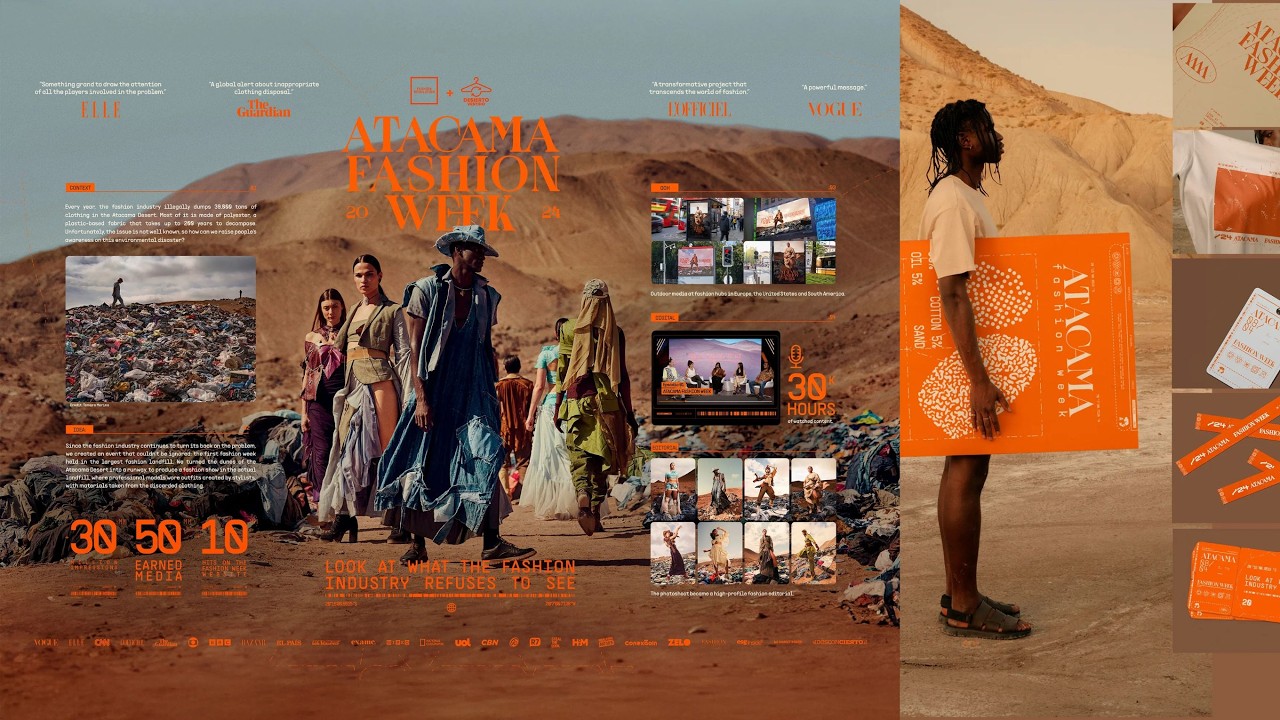
The campaign was born from a harrowing reality: the textile dump in Alto Hospicio is so massive that it is clearly visible from space. Satellite imaging companies like SkyFi captured the scale of the 59,000-ton mountain of waste, providing the visual proof needed to anchor the project. To bring the concept to life, stylist Maya Ramos upcycled garments rescued directly from the landfill to create the eight runway looks modeled by local Chilean talent, including Sadlin Charles.
Forcing A Global Reckoning
The strategy utilized the aesthetic codes of major fashion weeks in Paris, Milan, and London to infiltrate the industry's own ecosystem. This approach triggered a 550% surge in search volume for "clothes landfill in Chile" and drove over 50,000 emails from consumers directly to fashion executives. The initiative also launched the Atacama RE-commerce platform, which allowed users to "purchase" rescued items for $0, paying only the logistics costs to remove the waste from the desert.
A Reactive Cover-Up
The campaign’s impact was so immediate that it provoked a physical response from local dump operators. Shortly after the show gained international media traction, unidentified entities deployed tractors to bury large sections of the clothing mounds under sand in an attempt to hide the evidence from drone and satellite cameras. This desperate act of concealment served as final proof that the industry’s "silent crisis" could no longer be ignored. The project was led by Artplan creative leadership including Rodrigo Almeida, Rafael Gil, and Marcello Noronha, with photography by Mauricio Nahas.
4C Framework deconstruction
Company
Desierto Vestido leveraged its local expertise and access to the Atacama textile dump to expose the industry's hidden waste crisis.
Category
The fashion industry typically hides its waste, focusing exclusively on glamour, trends, and seasonal consumption to drive constant sales.
Customer
Consumers and stakeholders felt a growing, yet unaddressed, anxiety regarding the environmental impact of their fast-fashion purchasing habits.
Culture
The global rise of climate justice awareness and the visibility of the Atacama dump from space created the perfect moment.
Company
Desierto Vestido leveraged its local expertise and access to the Atacama textile dump to expose the industry's hidden waste crisis.
Category
The fashion industry typically hides its waste, focusing exclusively on glamour, trends, and seasonal consumption to drive constant sales.
Strategy:
Expose the industry's destructive externalities by forcing them to inhabit the physical reality of their waste.
Customer
Consumers and stakeholders felt a growing, yet unaddressed, anxiety regarding the environmental impact of their fast-fashion purchasing habits.
Culture
The global rise of climate justice awareness and the visibility of the Atacama dump from space created the perfect moment.
Strategy:
Expose the industry's destructive externalities by forcing them to inhabit the physical reality of their waste.
Results
The campaign achieved massive global visibility and engagement: over 10 million website hits, +20 million earned media reach, and over 20 million total impressions across major international outlets like BBC, Vogue, The Guardian, and CNN. The digital platform saw +50,000 emails sent by consumers to fashion brands demanding accountability, though it received 0 official brand replies.
20M+
Earned Media Reach
10M+
Website Hits
50K+
Emails Sent to Brands
Strategy Technique
Create a Tension Between Product & World
By placing haute couture in a garbage dump, the campaign creates a visceral tension between fashion's aspirational image and its destructive reality. This friction makes the environmental crisis impossible to ignore.
Explore Technique
Creative Technique
Unexpected environment
The campaign juxtaposes the high-glamour aesthetic of a fashion week with the grim reality of a textile dump. This jarring contrast forces the audience to confront the environmental consequences of their consumption habits.
Explore Technique
Craft Breakdown
This campaign's craft stands out through its brilliant experiential production and high-fashion art direction, transforming toxic waste dumps into a compelling haute couture runway statement.
Staging an authentic, high-end fashion show directly on a remote desert landfill created an unmissable physical spectacle that forced global attention.
The editorial styling of upcycled trash garments and striking futuristic orange HUD graphics perfectly married high fashion visual language with environmental activism.
Converting extreme desert landfill conditions into a professional, high-fashion runway environment required complex logistical execution.
The interactive website design transformed fashion garments into quantified environmental cost indicators with seamless brand-tagging functionality.
“The combination of high-fashion art direction with raw experiential stunt execution elevates a local environmental issue into a captivating global cultural dialogue.”