2023Fundación Peruana de CáncerNot-for-Profit & GovernmentVideo ad
Fundación Peruana de Cáncer: Cancer Before Cancer
The Fundación Peruana de Cáncer needed to increase donations for their annual Ponle Corazón drive. They tasked Fahrenheit DDB with creating a campaign that would resonate with the public and highlight the severe challenges faced by low-income patients living outside the capital. The objective was to shift the narrative from simple medical funding to the broader, systemic crisis of healthcare accessibility for vulnerable rural families.
Creative Idea
The journey to reach treatment was reframed as a deadly, pre-existing condition.
The campaign reframes the grueling, poverty-stricken journey rural patients endure to reach Lima as a 'cancer before cancer,' highlighting that systemic geographic and economic barriers are often as lethal as the disease itself to drive urgent donations.
From Rural Struggle to Global Recognition
A Script Rooted in Reality
Director Roddy Dextre prioritized authenticity by conducting extensive field research before filming. He interviewed nurses, doctors, and families who had personally navigated the arduous journey from remote provinces to the Instituto Nacional de Enfermedades Neoplásicas in Lima. This deep immersion allowed the team to craft a narrative that captured the genuine anguish and resilience of those facing systemic healthcare barriers. The production was a true labor of love, executed with a modest budget of approximately $25,000 USD by Rebeca Producciones and Fahrenheit DDB on a pro bono basis.
The Power of a Song
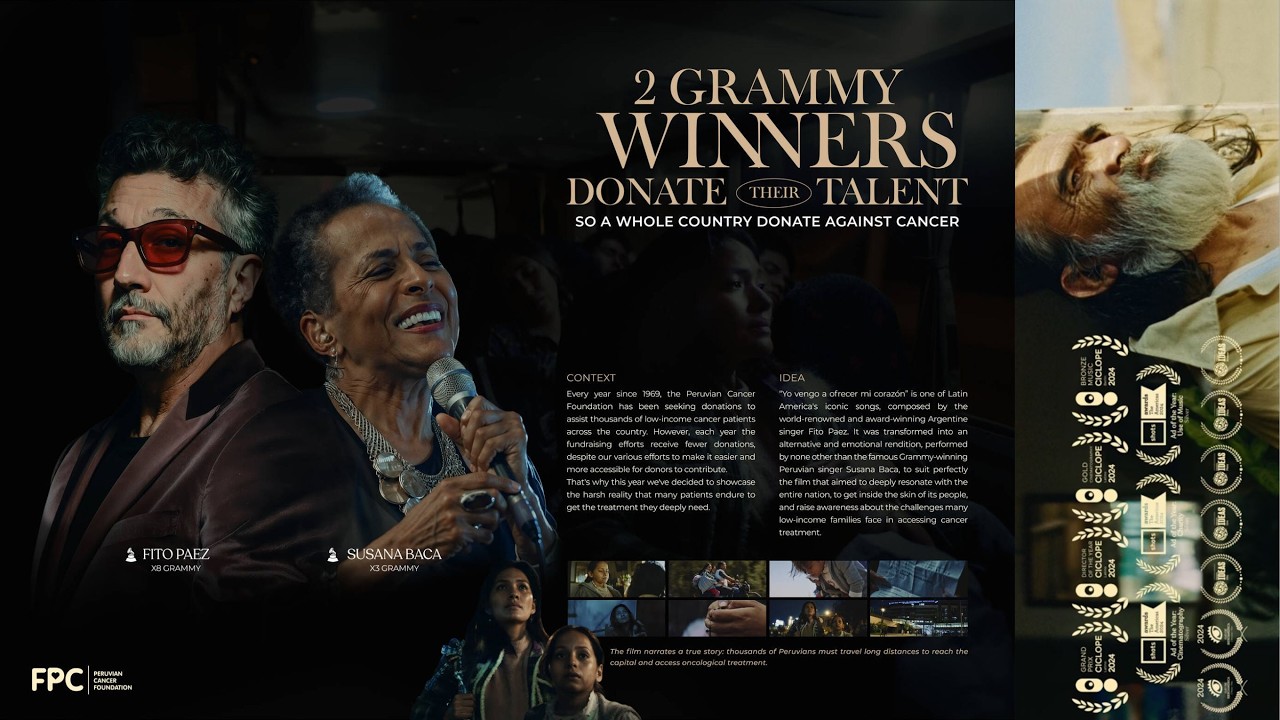
The emotional core of the film is anchored by a haunting, a cappella cover of "Yo vengo a ofrecer mi corazón" by legendary Afro-Peruvian singer Susana Baca. The team sought a song that could transcend borders and encapsulate the collective pain and hope of Latin American families. Both Susana Baca and the song's original writer, Argentine icon Fito Páez, donated the rights to the track, ensuring the message could reach the widest possible audience to support the Albergue Frieda Heller shelter.
A Milestone for Peruvian Creativity
The campaign achieved significant industry milestones, most notably becoming the first project from Peru to secure a Grand Prix at CICLOPE Latino. By reframing the healthcare crisis as a "cancer before cancer," the agency successfully shifted the public conversation in Peru. The work moved the focus from simple medical funding to the urgent need for addressing geographic and economic inequality, proving that a high-impact, research-driven narrative can achieve global resonance even with limited financial resources.
4C Framework deconstruction
Company
The Foundation possessed the moral authority and direct connection to patient reality to reframe the national healthcare narrative.
Category
Charity campaigns often focus solely on the medical treatment phase, ignoring the logistical trauma of simply accessing care.
Customer
The public felt detached from the issue, needing a visceral, human connection to understand the urgency of the crisis.
Culture
Growing national awareness of regional inequality and the centralization of public services in Lima created a receptive environment.
Company
The Foundation possessed the moral authority and direct connection to patient reality to reframe the national healthcare narrative.
Category
Charity campaigns often focus solely on the medical treatment phase, ignoring the logistical trauma of simply accessing care.
Strategy:
Expose hidden systemic barriers to transform a logistical struggle into a compelling moral imperative.
Customer
The public felt detached from the issue, needing a visceral, human connection to understand the urgency of the crisis.
Culture
Growing national awareness of regional inequality and the centralization of public services in Lima created a receptive environment.
Strategy:
Expose hidden systemic barriers to transform a logistical struggle into a compelling moral imperative.
Strategy Technique
Make the Invisible Visible
It exposes the hidden, systemic struggle of rural patients that is usually ignored by the public. By labeling this ordeal as a pre-condition, it forces a shift in perspective regarding healthcare accessibility.
Explore Technique
Creative Technique
Story-Driven Campaign
The campaign uses a linear, emotionally charged narrative to document the physical and psychological toll of the journey. This storytelling approach makes the abstract concept of 'cancer before cancer' tangible and deeply personal for the audience.
Explore Technique
Craft Breakdown
This campaign is elevated by exceptional cinematography and powerful acting that visually convey the silent, grueling struggle of poverty before medical treatment even begins.
Visually stunning landscape compositions combined with intimate close-ups capture both the vast scale of the journey and intense human emotion.
The lead actress delivers an intensely raw and heart-wrenching performance, particularly in the silent breakdown in the bathroom.
Susana Baca's rendition of Fito Páez's classic anthem provides a haunting, soulful backdrop that perfectly matches the film's emotional weight.
Authentic locations across rural and urban Peru anchor the film in tangible reality.
“The seamless harmony between realistic cinematography, raw performances, and expressive music creates a deeply moving cinematic narrative.”