International Olympic Committee: OLYMPIC PASTA RING
The International Olympic Committee, working with LePub Milan, sought to engage a younger, digital-native audience for the Milano Cortina 2026 Winter Games. They needed to move beyond traditional sports broadcasting to humanize the brand and generate authentic buzz. The goal was to create a memorable, shareable experience that connected the Olympic spirit with Italian heritage, ultimately driving global social conversation and excitement leading up to the competition.
Creative Idea
The IOC turned its iconic logo into edible pasta to spark viral social engagement.
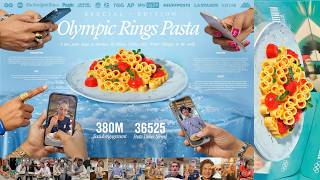
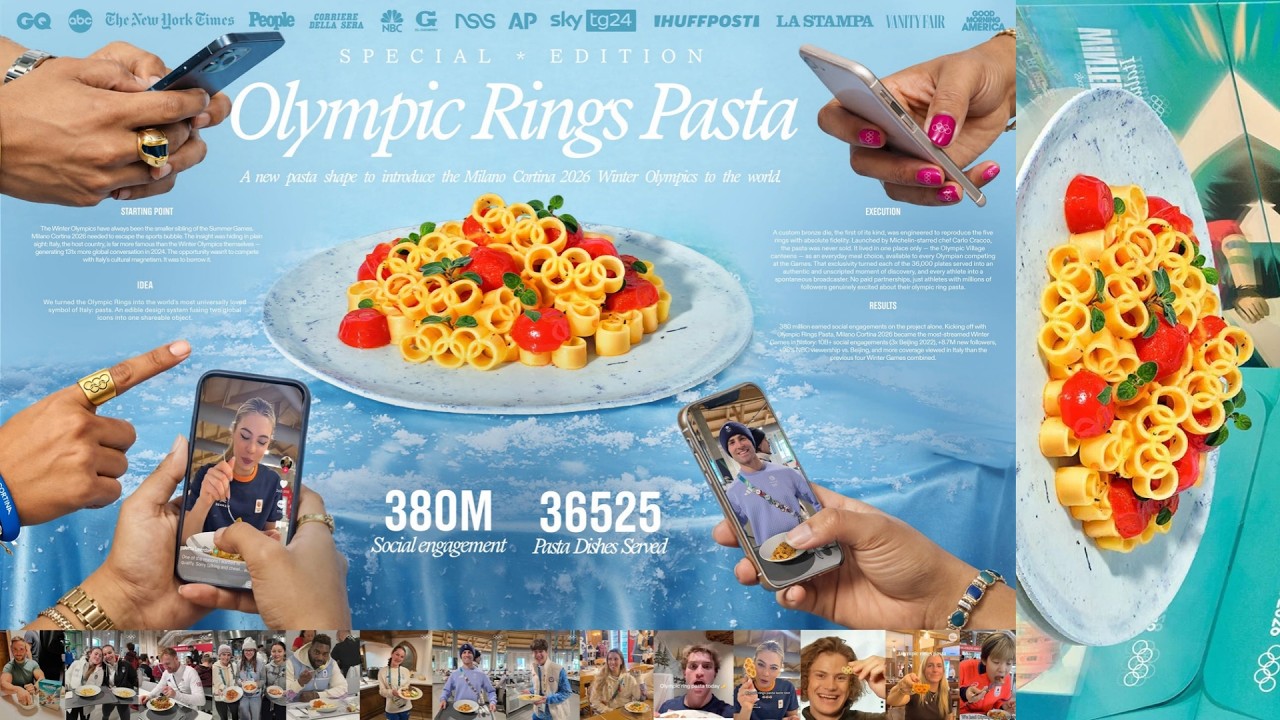
The IOC transformed the Olympic rings into a physical, edible pasta shape served in the Athletes' Village, turning a universal symbol of unity into a viral, organic social media phenomenon that bridged the gap between elite sports and everyday culture.
Engineering The Perfect Olympic Pasta Ring
From Concept To Culinary Engineering
Designing the pasta required significant technical innovation. The agency had to engineer custom industrial pasta dies to ensure the five interlocking rings remained connected during the boiling process without breaking apart. The final product was manufactured entirely in Italy using 100% Italian durum wheat. To ensure cultural authenticity, the campaign featured 6-Michelin-starred chef Carlo Cracco, who developed a signature recipe titled Pasta alla Crudaiola, utilizing raw tomato pesto and anchovy essence to mirror the colors of the Italian flag.
Athletes As The Primary Media Channel
The campaign bypassed traditional paid social advertising by leveraging the Olympic Village dining hall as an organic content engine. More than half a ton (1,000+ lbs) of the pasta was served daily, becoming the most requested item by athletes from nations including the US, France, and Great Britain. This peer-to-peer sharing generated over 380 million social engagements globally. Because the product was never sold in retail stores, it achieved instant cult status, with limited-edition boxes appearing on secondary resale platforms for as much as $2,026.00 USD.
A Legacy Of Design
The collectible packaging was designed by renowned illustrator Marianna Tomaselli. Her artwork paid homage to historical Olympic graphic design, specifically referencing Franco Rondinelli’s 1956 Cortina poster and the work of Alex Walter Diggelmann. Beyond the elite athletes, the campaign engaged local Italian grandmothers in the Marche region, who recorded themselves preparing traditional regional ragùs with the pasta shape, grounding the global event in local heritage. This strategy of building a physical utility rather than a standard ad helped the IOC successfully connect with a younger, digital-native demographic.
Creative Strategy Deconstructed
Company
The IOC leveraged its iconic five-ring logo to create a unique, culturally resonant physical product.
Category
Sports organizations typically rely on traditional, passive broadcast advertising to build hype for major events.
Customer
Fans and younger audiences craved authentic, shareable moments that made the Olympics feel personal and accessible.
Culture
The rise of social media food culture and the desire for behind-the-scenes athlete content drove massive viral adoption.
Company
The IOC leveraged its iconic five-ring logo to create a unique, culturally resonant physical product.
Category
Sports organizations typically rely on traditional, passive broadcast advertising to build hype for major events.
Strategy:
Transform brand symbols into functional utilities to drive organic, peer-to-peer cultural participation.
Customer
Fans and younger audiences craved authentic, shareable moments that made the Olympics feel personal and accessible.
Culture
The rise of social media food culture and the desire for behind-the-scenes athlete content drove massive viral adoption.
Strategy:
Transform brand symbols into functional utilities to drive organic, peer-to-peer cultural participation.
Results
The campaign became an overwhelming social media and cultural sensation. It achieved over 380M social engagements across platforms like TikTok and Instagram. Unobtainable for public retail, exclusive pasta boxes were resold on online marketplaces for up to $2,026.00. It received massive global press coverage from major media outlets including People, The New York Times, GQ, ABC, NBC, HuffPost, La Stampa, and Vanity Fair, making Milano Cortina 2026 the most talked-about Winter Games in history.
380M
social engagements
$2,026
resale price per box
Strategy Technique
Build an Utility, Not an Ad
The IOC moved away from traditional broadcast ads by creating a functional, desirable product. This solved the need for authentic engagement, turning the Olympic Village dining experience into a global, self-sustaining content engine.
Explore Technique
Creative Technique
Turn Message into Product
By physically manifesting the Olympic rings as pasta, the campaign turned a brand symbol into a tangible, shareable utility. This forced organic engagement as athletes and fans naturally interacted with the iconic, edible design.
Explore Technique
Craft Breakdown
This campaign elevates an Olympic sponsorship through custom product design and cultural hacking. By custom-engineering 3D extruders to produce five-ring pasta, it created an exclusive experience that naturally turned athletes into brand ambassadors.
Custom engineering a functional 3D die mold to manufacture real five-ring Olympic pasta transformed a simple food item into the ultimate viral Olympic souvenir.
Exclusively serving this custom pasta within the Olympic Village created an organic halo of exclusivity that driven hype among athletes and fans alike.
“The combination of physical product innovation and exclusive experiential distribution turned simple dining hall food into an iconic, globally shared cultural event.”