International Olympic Committee: Olympic Rings Pasta
The International Olympic Committee tasked LePub with building anticipation for the Milano Cortina 2026 Winter Games. They needed to move beyond traditional broadcast marketing to engage younger, global audiences. The goal was to humanize the Olympic brand and celebrate Italian culture in a way that felt authentic, shareable, and culturally relevant, ultimately driving organic social conversation during the lead-up to and duration of the Games.
Creative Idea
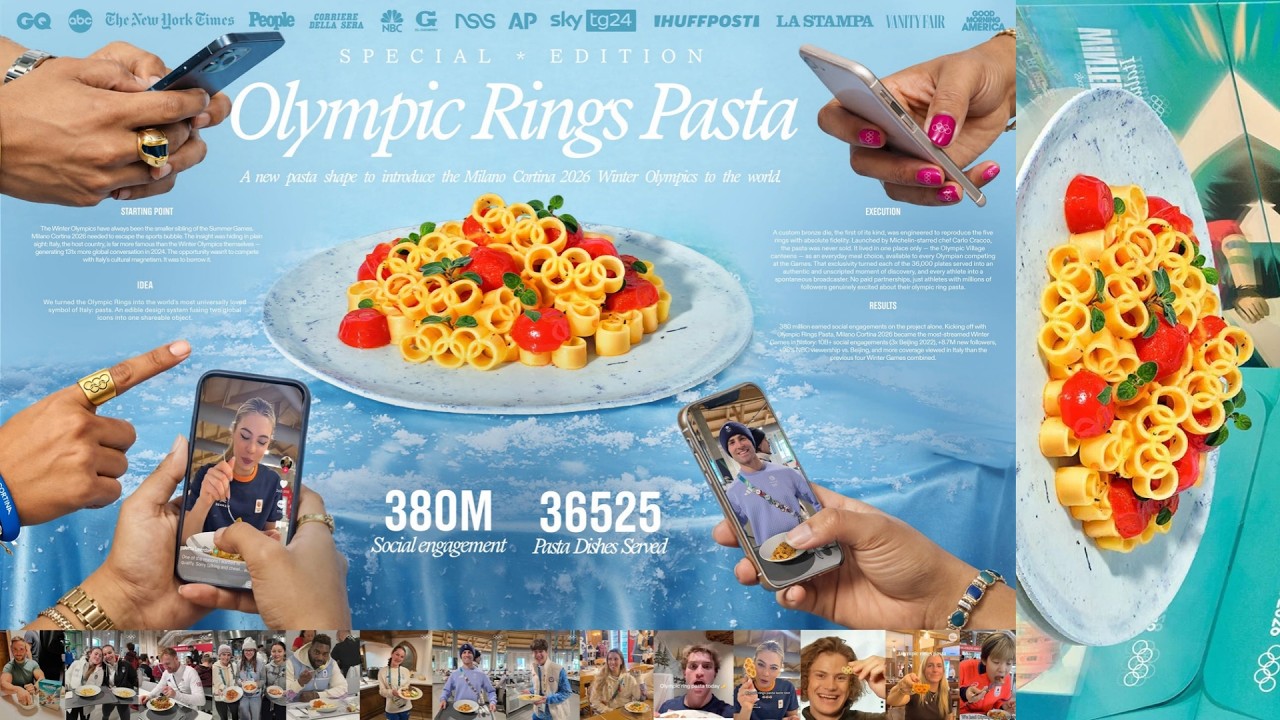
The IOC turned the Olympic rings into a physical, edible pasta shape.
The IOC turned Italy's most iconic cultural symbol into a physical representation of the Olympic rings. By creating a limited-edition pasta shape, they humanized the brand and drove massive organic engagement by turning the Olympic Village dining hall into a social media engine.
Turning Italy's Culinary Heritage Into Olympic Gold
A Masterclass in Culinary Diplomacy
To bridge the gap between a corporate institution and a younger, digital-native audience, the IOC collaborated with six-Michelin-starred chef Carlo Cracco. He developed a bespoke recipe, *Pasta alla Crudaiola*, featuring raw tomato pesto and anchovy essence, designed to mirror the colors of the Italian flag. The pasta shape itself was custom-molded to perfectly interlock, creating a physical manifestation of the five rings that served as both a meal and a social media prop.
The Olympic Village Viral Engine
The campaign transformed the dining experience into a primary engagement driver. During the Games, chefs prepared over half a ton of the ring-shaped pasta daily for athletes. This "surprise and delight" strategy turned the Olympic Village into a content studio, with Olympians from nations including Great Britain, France, and Ukraine sharing their meals on TikTok and Instagram. This organic reach was pivotal, resulting in 380 million social media engagements and over 400 global media articles.
From Kitchen to Museum Collection
Despite the massive public demand, the pasta was never sold at retail. It remained a strictly limited-edition promotional tool, distributed through digital sweepstakes and athlete activations. The project’s cultural significance was cemented when an unopened box of the pasta was inducted into the permanent collection of the Olympic Museum in Lausanne. By moving away from traditional broadcast-heavy marketing, the IOC successfully humanized the brand, proving that cultural storytelling—and a well-designed bowl of pasta—could effectively modernize the Olympic image for the 2026 Winter Games.
Creative Strategy Deconstructed
Company
The IOC leveraged its global authority and the host nation's deep culinary heritage to create a unique, branded physical product.
Category
Sports organizations typically rely on broadcast-heavy, corporate, and institutional messaging that often feels distant from the average fan.
Customer
Younger audiences and fans craved authentic, shareable, and human-centric moments that felt less like a corporate sponsorship and more like culture.
Culture
The viral trend of 'Olympic Village food' content created a perfect environment for a highly aesthetic, culturally relevant product to explode.
Company
The IOC leveraged its global authority and the host nation's deep culinary heritage to create a unique, branded physical product.
Category
Sports organizations typically rely on broadcast-heavy, corporate, and institutional messaging that often feels distant from the average fan.
Strategy:
Transform brand identity into a tangible, functional cultural artifact to drive organic, peer-to-peer social engagement.
Customer
Younger audiences and fans craved authentic, shareable, and human-centric moments that felt less like a corporate sponsorship and more like culture.
Culture
The viral trend of 'Olympic Village food' content created a perfect environment for a highly aesthetic, culturally relevant product to explode.
Strategy:
Transform brand identity into a tangible, functional cultural artifact to drive organic, peer-to-peer social engagement.
Results
The campaign went viral, generating 380M social engagements. It was covered by major global publications including People, The Wall Street Journal, GQ, ABC, The New York Times, and NBC. The Wall Street Journal noted that "The Olympics are fully back and actually fun again." The pasta became the most popular food at the Olympics, with boxes being resold online for up to $2,026.00.
380M
social engagements
$2,026
resale price per box
Strategy Technique
Build an Utility, Not an Ad
By creating a functional food item that served as both a meal and a cultural artifact, the IOC bypassed traditional advertising to become a genuine part of the athletes' and fans' daily lives.
Explore Technique
Creative Technique
Turn Message into Product
The campaign literally transformed the Olympic brand identity into a physical, edible product. This turned a abstract symbol into a tangible, shareable experience that resonated deeply with Italian culture and global fans.
Explore Technique
Craft Breakdown
This campaign brilliantly merges physical product design with cultural storytelling, turning a simple food item into the ultimate symbol of Italian hospitality and Olympic spirit.
The engineering and manufacturing of a custom pasta die to perfectly replicate the interlocking Olympic rings is a masterclass in physical product design.
The elegant, typewriter-style serif typography on the grid background gives the case study a highly polished, editorial feel.