Dole and Ananas Anam: Piñatex
Dole Sunshine Company and Ananas Anam needed to address the environmental problem of vast pineapple leaf waste and its methane emissions. They sought to establish a credible, sustainable solution for the fashion industry, positioning Dole as an innovator in circularity. The campaign aimed to drive awareness and adoption of Piñatex among brands and consumers.
Creative Idea
Transformed agricultural waste - pineapple leaves - into a high-value, sustainable leather alternative.
Dole and Ananas Anam transformed millions of tons of pineapple leaf waste into Piñatex, a sustainable, vegan leather alternative, effectively tackling agricultural pollution and offering a circular solution for the fashion industry while empowering farmers.
Turning Pineapple Waste Into Nike Sneakers
From Rotting Leaves to Global Runways
The scale of the transformation is rooted in a staggering agricultural reality: for every ton of pineapples harvested, 3 tons of leaves are left to rot. By intercepting this waste, the partnership prevents methane emissions 20 times more harmful than CO2. This closed - loop system ensures that even the residual biomass from fiber extraction isn't lost, as it is converted into natural fertilizer for the same Filipino farms. The initiative led to an 83% reduction in organic waste across Dole’s global operations and created a new revenue stream for local farming cooperatives.
The B2B Campaign That Went Viral
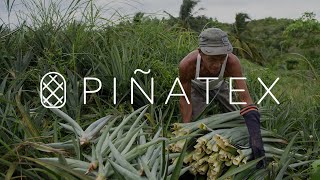 While the innovation itself dates back to 2014, the campaign’s genius lay in scaling the supply chain and marketing infrastructure. L&C New York shifted the industry's view on raw material partnerships, proving that a B2B story could drive massive B2C demand. The results were global, garnering over 1.7 billion impressions and leading to adoption by over 1,000 brands by 2023. High - profile applications included the Nike "Happy Pineapple" collection and the world’s first vegan hotel suite at the Hilton London Bankside, which featured Piñatex interiors.
Leadership and Creative Vision
The project was spearheaded by Dr. Carmen Hijosa, the inventor of Piñatex, and Pier - Luigi Sigismondi, Global President of Dole Sunshine Company. Sigismondi viewed the initiative as the proof - of - concept for the "Dole Promise" to reach zero fruit loss by 2025. Director Camden Elizabeth and Suitcase Productions captured the visual journey from the fields of South Cotabato to high - fashion showrooms, emphasizing that unlike many "vegan" leathers made of toxic plastics, Piñatex is a truly circular, plant - based alternative.
Creative Strategy Deconstructed
Company
Dole, as a major pineapple producer, had abundant leaf waste, while Ananas Anam possessed the innovative technology to transform natural fibers.
Category
The leather industry is highly polluting, and many "vegan" alternatives rely on ecologically toxic, plastic-based materials.
Customer
Brands and consumers increasingly sought genuinely sustainable, cruelty-free materials that offered environmental benefits beyond plastic-based alternatives.
Culture
A global cultural shift towards sustainability, circular economy principles, and ethical, plant-based alternatives created strong demand for innovative solutions.
Company
Dole, as a major pineapple producer, had abundant leaf waste, while Ananas Anam possessed the innovative technology to transform natural fibers.
Category
The leather industry is highly polluting, and many "vegan" alternatives rely on ecologically toxic, plastic-based materials.
Strategy:
Transform overlooked waste streams into valuable, sustainable resources to lead industry change.
Customer
Brands and consumers increasingly sought genuinely sustainable, cruelty-free materials that offered environmental benefits beyond plastic-based alternatives.
Culture
A global cultural shift towards sustainability, circular economy principles, and ethical, plant-based alternatives created strong demand for innovative solutions.
Strategy:
Transform overlooked waste streams into valuable, sustainable resources to lead industry change.
Results
Leather is identified as one of the most polluting production sectors globally. Over 2.5 million tons of pineapples are grown in the Philippines annually. For every 1 ton of pineapples harvested, 3 tons of leaves are wasted. When left to rot, these leaves could create methane emissions over 20 times more harmful than CO2. Dole partnered with Ananas Anam to produce Piñatex. Piñatex is described as a vegan, cruelty-free, and sustainable leather alternative that doesn't use water, land, or fertilizers, unlike other plastic-based vegan alternatives which are ecologically toxic. Piñatex features a closed-loop production where residual leaf biomass is converted into natural fertilizer. Over 200 brands in more than 80 countries are now using Piñatex to become more sustainable, including Hilton, Svala, Schenk, Mayu, Riva, nae, Delaunay, Paul Smith, No Sain+s, skos, ALTIIR, Gus Re, MASHU, MARICI, Jo-anne Vernay, it's logic, MOMOC, ARK, bego, Hugo Boss, H&M, and Nike (for their Happy Pineapple sneakers). Piñatex provides an additional income opportunity for farmers. This initiative is part of Dole's ongoing efforts to achieve zero waste by 2025 from its farms.
3 tons
of leaves wasted for every 1 ton of pineapple harvested
20 times
more harmful methane emissions than CO2 from rotting leaves
200+ brands
using Piñatex in 80+ countries
Strategy Technique
Make the Brand the Hero of a Bigger Fight
Dole positioned itself as a leader tackling massive agricultural waste and environmental pollution. By transforming pineapple leaves into Piñatex, it became a hero in the fight for circularity and sustainability.
Explore Technique
Creative Technique
ESG
The campaign directly addresses environmental issues by upcycling pineapple waste and social impact by providing new income for farmers. It showcases a business transformation driven by sustainability and ethical production.
Explore Technique
Craft Breakdown
This campaign's craft is exceptional in its foundational innovation, effectively translating a global waste problem into a tangible, desirable, and widely adopted sustainable product.
The material itself, Piñatex, is a testament to exceptional design, successfully creating a functional, aesthetically pleasing, and cruelty-free product that meets the stringent demands of the fashion industry and is adopted by major brands.
The clear and compelling articulation of Piñatex's unique value proposition, environmental benefits, and 'zero waste' commitment was crucial in positioning it as 'the green answer to leather' and driving its widespread understanding and acceptance.
“The campaign's power comes from the seamless integration of a groundbreaking idea with a meticulously designed product, effectively communicated through compelling messaging and strategically disseminated to achieve widespread adoption and impact.”