Chrome Music Lab: Song Maker
Google Creative Lab New York was tasked with demonstrating the power and speed of the Chrome browser to a global audience. They needed to move beyond technical specs to show real - world utility. The goal was to engage students and educators during Music in Our Schools Month by making music theory and composition accessible to everyone, regardless of their technical skill or financial resources.
Creative Idea
Turned the web browser into a colorful, grid - based instrument for instant, collaborative music composition.
Google transformed complex music theory into a vibrant, browser - based playground, allowing anyone to compose and share melodies instantly. By removing technical barriers, they turned the web browser into an accessible instrument for education and viral creative expression.
The Color Coded Code That Democratized Composition
A Digital Sound Playground Built on Open Source
To achieve professional - grade audio latency within a standard web browser, Google Creative Lab collaborated with musician and coder Yotam Mann. The project utilized the Web Audio API and WebMIDI, powered by Mann’s own Tone.js library. In a significant move for a global brand, Google released the entire codebase as open - source on GitHub, allowing the developer community to build upon the framework. The UI was intentionally designed as a "flat" grid to strip away the intimidation of traditional Digital Audio Workstations like Ableton or Logic, effectively turning a $100 Chromebook into a sophisticated music studio.
Sixty Million Users and the Viral Grid
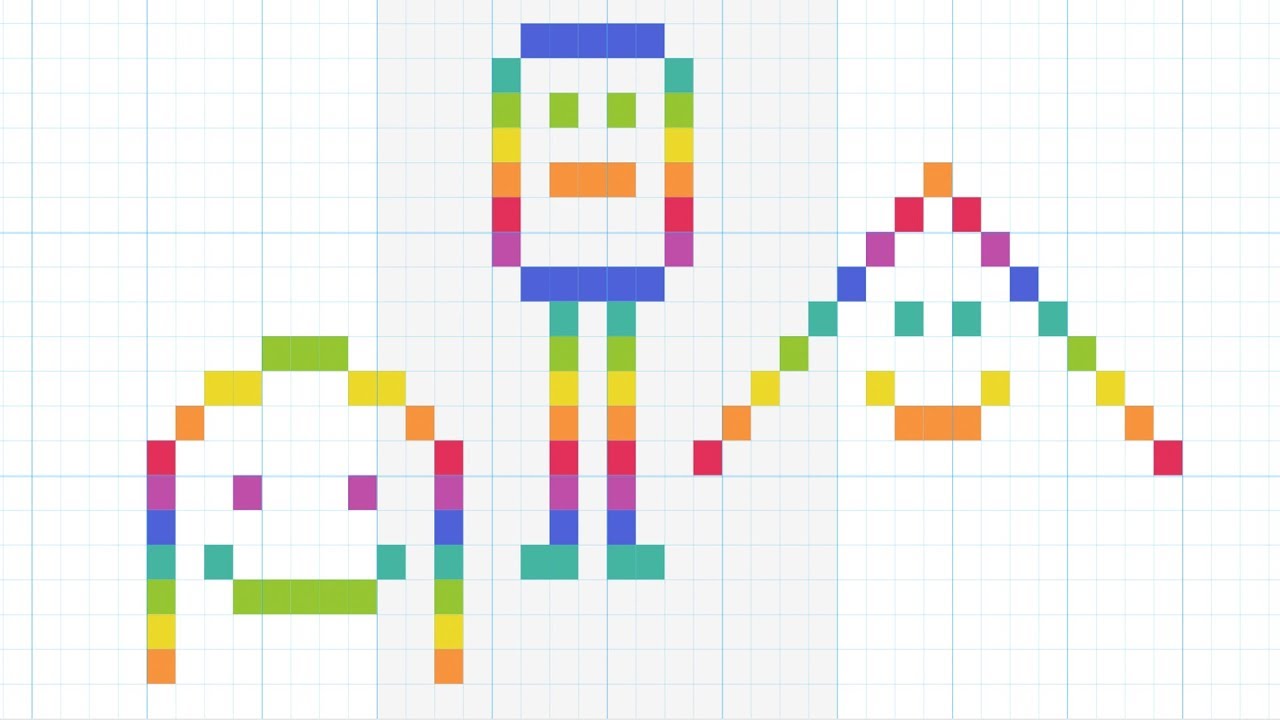 Since its launch for Music in Our Schools Month, the platform has reached over 60 million users. Creative Director Alexander Chen aimed to make music feel "less like following rules, and more like playing." This philosophy sparked a massive cultural trend where users "drew" pixel art on the grid - such as smiley faces or Mario characters - that simultaneously functioned as complex musical covers. These "Song Maker Covers" became a staple of TikTok and YouTube, featuring recreations of artists from Olivia Rodrigo to Drake.
Hidden Features and Pandemic Utility
The tool includes several "Easter eggs" for power users, such as the ability to plug in a MIDI keyboard or use voice - to - text AI to transcribe singing directly into the grid. Because it requires no login or account, it became a friction - free essential for distance learning during the COVID - 19 pandemic. Every creation generates a unique, permanent URL, creating a massive, living archive of millions of user - generated melodies stored on Google’s servers.
Creative Strategy Deconstructed
Company
Google's advanced Web Audio API and browser technology capable of low - latency sound processing.
Category
Tech brands usually showcase speed through benchmarks or abstract animations rather than hands - on creative tools.
Customer
Aspiring creators and students who find traditional music software intimidating, expensive, or difficult to access.
Culture
A growing movement toward democratized digital creation and the need for accessible remote learning tools.
Company
Google's advanced Web Audio API and browser technology capable of low - latency sound processing.
Category
Tech brands usually showcase speed through benchmarks or abstract animations rather than hands - on creative tools.
Strategy:
Democratize complex technical processes by transforming them into intuitive, play - based digital utilities.
Customer
Aspiring creators and students who find traditional music software intimidating, expensive, or difficult to access.
Culture
A growing movement toward democratized digital creation and the need for accessible remote learning tools.
Strategy:
Democratize complex technical processes by transforming them into intuitive, play - based digital utilities.
Results
Since its debut, the platform has reached over 60 million users worldwide. It became a global staple for music education, officially used by thousands of music educators and serving as a primary tool for distance learning during the COVID-19 pandemic. The campaign drove a massive spike in user-generated content, sparking viral social media trends on TikTok and YouTube where creators 'drew' pixel art that functioned as musical covers. The project earned significant industry recognition, including a Cannes Lions Bronze Lion in Entertainment/Digital Craft, a 2019 Webby Award for Best Use of Machine Learning, and multiple Clio Awards and FWA Site of the Day honors. Furthermore, Google released the entire codebase as open-source on GitHub, fostering a living archive of millions of user-created melodies.
60M+
Global users reached
Millions
User-generated melodies archived
100%
Open-source codebase availability
Strategy Technique
Build an Utility, Not an Ad
Instead of telling people Chrome is powerful, Google built a sophisticated tool that proves it. By solving the friction of music creation, the product itself becomes the most effective marketing for the browser's capabilities.
Explore Technique
Creative Technique
Unexpected Utility
It provides a fully functional, professional - grade music composition tool directly in the browser. This transforms a standard web interface into a valuable, creative instrument that users can actually use to produce work.
Explore Technique
Craft Breakdown
The campaign excels by stripping away the technical intimidation of music production through a vibrant, browser-based UI that functions as both a visual and auditory playground.
Leveraged Web Audio API and Tone.js to deliver professional-grade, low-latency audio synthesis directly in a standard web browser.
The 'flat' grid UI democratized composition by turning complex music theory into an intuitive, color-coded visual language.
Integrated advanced features like MIDI keyboard support and AI voice-to-text transcription to bridge the gap between play and professional creation.
Transformed musical notes into a pixel-art grid, allowing users to 'see' melodies and share them via unique, permanent URLs.
“The magic lies in the intersection of high-end audio engineering and minimalist visual design, making the browser feel like a physical instrument rather than a software interface.”