New York Times: NYT VR
The New York Times tasked T Brand Studio with proving the brand's digital relevance. They needed to make investigative journalism feel more immersive for Sunday subscribers, while providing a high - value platform for premium advertisers like GE and Mini to showcase innovation in a non - intrusive, editorial - first environment.
Creative Idea
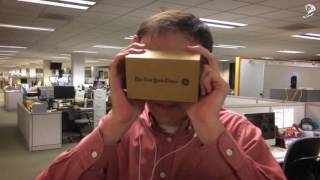
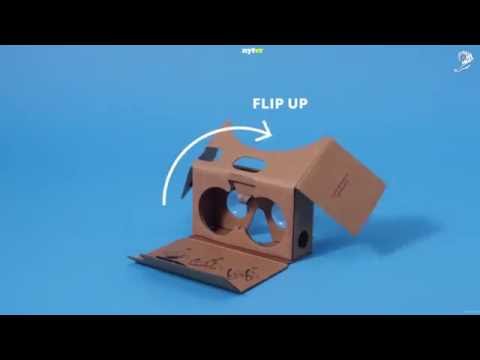
Mailed VR headsets to print subscribers to turn news into immersive first - person experiences.
The New York Times transformed a 164 - year - old print tradition into a cutting - edge digital experience by distributing 1.3 million Google Cardboard headsets to subscribers, turning investigative journalism into immersive VR stories that fostered deep emotional empathy.
The Empathy Machine in a Cardboard Box
1.3 Million Sunday Surprises
The campaign achieved a "Wright Brothers moment" for mobile media by distributing 1.3 million Google Cardboard headsets to Sunday print subscribers in a single weekend. While many readers initially mistook the flat inserts for promotional flyers, the resulting engagement was unprecedented. The NYT VR app became the fastest - adopted app in the company's history, seeing over 500,000 downloads within days. Users spent an average of 6 to 14.7 minutes per session - a staggering metric for mobile content - with 92% of viewers choosing the immersive "Cardboard mode" over standard 360 - degree video.
Hollywood Noir and Custom Rigs
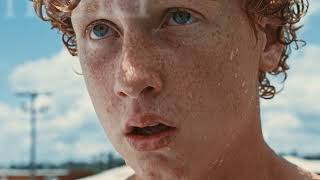
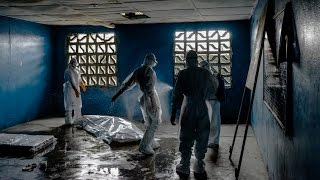
To maintain the Times' editorial standards, the studio recruited top - tier cinematic talent. Chris Milk directed the flagship film *"The Displaced,"* while acclaimed directors like Gina Prince - Bythewood and Daniel Askill helmed the *"Great Performers"* series. These VR experiences featured a massive roster of A - list talent, including Charlize Theron, Kristen Stewart, Don Cheadle, and Natalie Portman. On the technical front, Bipolar Studio engineered a custom 9 - camera RED Dragon rig specifically to capture high - fidelity footage for Mini’s branded shorts, ensuring the commercial content matched the visual caliber of the journalism.
The Business of Immersion
The project proved that high - end branded content could drive significant revenue without compromising editorial integrity. The initial ad buy from GE reached the $1 million range, and by 2015, T Brand Studio projects accounted for nearly 20% of the Times’ digital advertising revenue. This success led the Gray Lady to acquire the VR/AR agency Fake Love in 2016, cementing the transition from an analog institution to a digital pioneer.
Creative Strategy Deconstructed
Company
A 164 - year - old reputation for investigative journalism and a massive physical distribution network of loyal Sunday print subscribers.
Category
Traditional news outlets struggled to engage younger audiences and were often perceived as static, text - heavy, and disconnected from digital innovation.
Customer
Readers who felt compassion fatigue from standard news reporting and craved a deeper, more visceral connection to global human stories.
Culture
The emergence of VR as a buzzword that lacked a mainstream killer app or accessible hardware for the average person.
Company
A 164 - year - old reputation for investigative journalism and a massive physical distribution network of loyal Sunday print subscribers.
Category
Traditional news outlets struggled to engage younger audiences and were often perceived as static, text - heavy, and disconnected from digital innovation.
Strategy:
Leverage physical distribution networks to democratize emerging technology and deepen emotional engagement with complex editorial narratives.
Customer
Readers who felt compassion fatigue from standard news reporting and craved a deeper, more visceral connection to global human stories.
Culture
The emergence of VR as a buzzword that lacked a mainstream killer app or accessible hardware for the average person.
Strategy:
Leverage physical distribution networks to democratize emerging technology and deepen emotional engagement with complex editorial narratives.
Results
The campaign achieved a 'Wright Brothers moment' for mobile media, distributing 1.3 million Google Cardboard headsets to Sunday print subscribers in a single weekend. The NYT VR app became the fastest-adopted app in the history of The New York Times, securing over 500,000 downloads within its first few days. Engagement was unprecedented, with 1.5 million total content views and average session times ranging from 6 to 14.7 minutes. Notably, 92% of videos were viewed in 'Cardboard mode.' Financially, the campaign was a powerhouse: GE's initial ad buy was in the $1 million range, and T Brand Studio projects accounted for nearly 20% of the Times’ digital advertising revenue. The campaign swept major awards, winning two Grand Prix at Cannes Lions (Mobile and Entertainment), a Yellow Pencil at D&AD, and a Grand Clio. Socially, the launch weekend generated over 700 Instagram posts with the #NYTVR hashtag.
1.3M
Google Cardboard headsets distributed
14.7m
Peak average session duration
20%
Contribution to total digital ad revenue
Strategy Technique
Build an Utility, Not an Ad
Instead of just telling readers about VR, the brand provided the physical and digital tools necessary to experience it, positioning a legacy institution as a pioneer.
Explore Technique
Creative Technique
Cutting-edge Tech
By integrating VR technology directly into the physical Sunday paper, the campaign bridged the gap between analog habits and futuristic storytelling, making complex global issues feel visceral.
Explore Technique
Craft Breakdown
This campaign masterfully bridged the gap between 19th-century print tradition and 21st-century immersion, using physical distribution to solve the hardware barrier of virtual reality.
The creation of the NYT VR app and the seamless integration of 360-degree video established a new benchmark for mobile journalism.
Utilizing custom 9-camera RED Dragon rigs and A-list directors, the campaign delivered cinematic fidelity previously unseen in VR.
The strategic decision to use the Sunday print edition as a distribution vehicle for 1.3 million headsets was a masterstroke in logistics and reach.
The campaign transformed the act of reading the news into a visceral, empathetic experience through the 'empathy machine' of VR.
“The magic lies in the 'analog-to-digital' bridge: using a physical print newspaper to deliver a high-tech digital portal, making cutting-edge technology accessible to the masses.”