2026DoveConsumer GoodsCase video
Dove: The Beauty Machine
Dove tasked Ogilvy with addressing the growing pressure women feel to conform to homogenized beauty standards driven by social media algorithms. The objective was to challenge these digital norms and reinforce the brand's commitment to authentic, diverse beauty. The campaign needed to engage a UK audience and spark a global conversation about the impact of technology on self-image, moving beyond traditional advertising to create a tangible, disruptive experience.
Creative Idea
A vending machine dispensed identical faces to expose the homogenization caused by social algorithms.
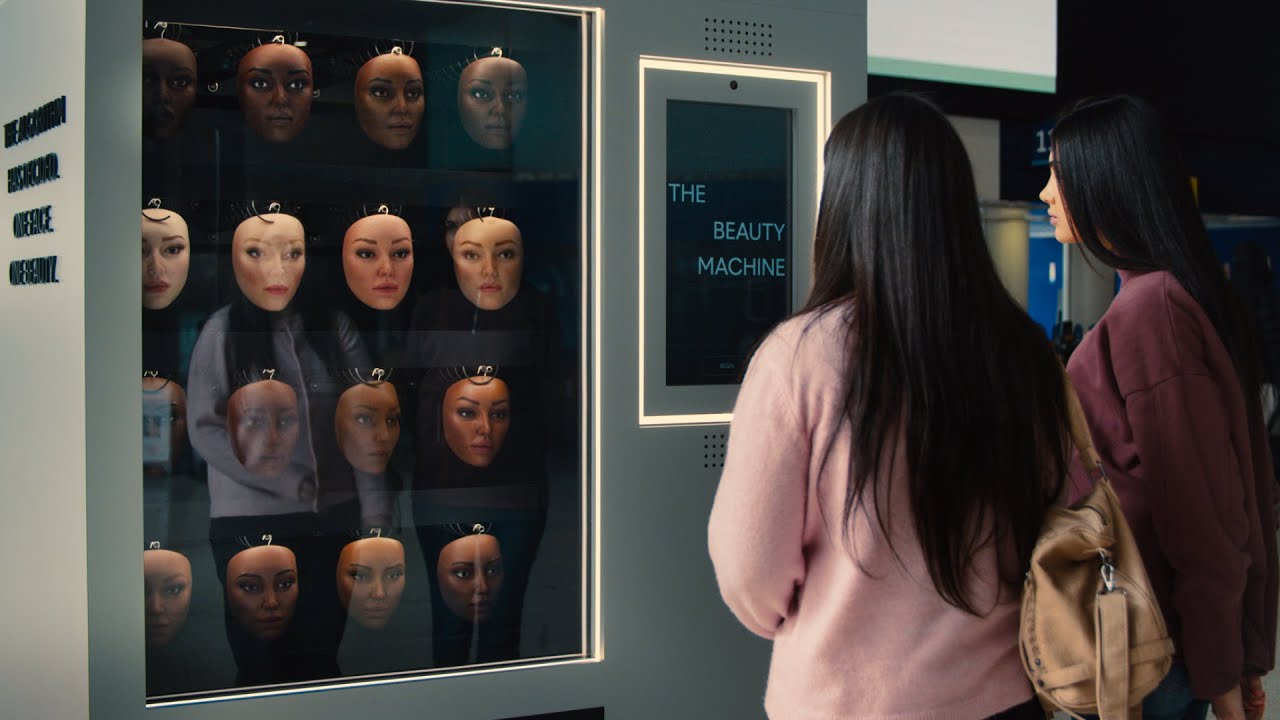
Dove installed a vending machine in London's Waterloo Station that dispensed identical synthetic faces to dramatize how social media algorithms homogenize beauty, then invited women to share their unique features to reclaim individuality and challenge these narrow digital standards.
The Algorithmic Face of Modern Homogenization
Sculpting the Synthetic Ideal
To create the "Beauty Machine," the team did not rely on random imagery. Director Lauren Greenfield and her production partners at Institute conducted a deep dive into algorithmic data, plastic surgery trends, and social media feeds. They synthesized this research to design a specific, hyper-realistic bust that embodied the "algorithmic ideal"—a composite featuring foxy eyes, a snatched jawline, and poreless skin. By repeating this exact face within the vending machine, the installation provided a visceral, physical manifestation of the narrow, repetitive beauty standards that social media algorithms prioritize.
A Rapid Response Pipeline
The campaign’s success relied on a complex, high-speed production workflow. To facilitate the #DoveOpenCall, the agency established a 48-hour turnaround pipeline. Once women submitted their unfiltered photos via QR code, the team had to verify the images for authenticity, format them for large-scale digital out-of-home displays, and push them to the billboards surrounding Waterloo Station. This technical feat allowed the brand to replace the machine's synthetic, repetitive imagery with a diverse, real-world mosaic of human faces in near real-time.
Driving Global Engagement
The activation achieved significant scale, reaching 254.9 million impressions across digital and social channels. Beyond the digital reach, the physical installation at Waterloo Station engaged over 485,000 commuters, with 62 women interacting directly with the machine during the live event. The campaign resonated strongly with the public, as 81% of surveyed respondents reported an improved perception of Dove, and 85% felt the message was important enough to share with their own networks. This effort reinforced Dove’s long-standing commitment to never use AI to distort the appearance of real women in its advertising.
4C Framework deconstruction
Company
Dove leveraged its long-standing authority in championing real beauty to credibly challenge the digital homogenization of female appearance.
Category
Beauty brands typically rely on polished, filtered imagery to sell products, reinforcing the very standards that cause consumer insecurity.
Customer
Women felt pressured by social media to conform to a singular, AI-driven aesthetic that ignored their unique, natural features.
Culture
The rise of AI-generated content and filter culture created a collective anxiety about the loss of authentic human representation.
Company
Dove leveraged its long-standing authority in championing real beauty to credibly challenge the digital homogenization of female appearance.
Category
Beauty brands typically rely on polished, filtered imagery to sell products, reinforcing the very standards that cause consumer insecurity.
Strategy:
Expose the invisible algorithmic bias that forces human beauty into a singular, synthetic digital mold.
Customer
Women felt pressured by social media to conform to a singular, AI-driven aesthetic that ignored their unique, natural features.
Culture
The rise of AI-generated content and filter culture created a collective anxiety about the loss of authentic human representation.
Strategy:
Expose the invisible algorithmic bias that forces human beauty into a singular, synthetic digital mold.
Strategy Technique
Attack a Cultural Blind Spot
The campaign exposes the invisible influence of algorithms on self-perception. It forces a conversation about how digital curation quietly erodes human diversity, making the abstract technical issue feel urgent and personal.
Explore Technique
Creative Technique
Analogy for the Problem
The vending machine serves as a physical metaphor for the algorithmic feed. It forces commuters to confront the repetitive, synthetic nature of digital beauty standards in a tangible, unavoidable way.
Explore Technique
Craft Breakdown
This campaign excels through brilliant Experiential Design and compelling Art Direction, physically manifesting algorithmic beauty bias as a physical vending machine to provoke real-world emotional reactions.
Designing 'The Beauty Machine' as a physical interactive installation in a high-traffic transit hub turned an abstract digital issue into a tangible, high-impact public activation.
The stark visual contrast between identical 3D-sculpted synthetic masks and vivid, authentic portraits creates an immediate visual thesis on standardisation versus real beauty.
The precision manufacturing of identical lifelike face masks and custom interactive vending hardware perfectly sells the uncanny dystopian concept.
Sharp provocative messaging ('The algorithm has decided. One face. One beauty.') poses challenging philosophical questions directly to the audience.
“The physical sculpture of the machine, atmospheric lighting, and high-contrast billboard art direction work seamlessly together to create an unforgettable real-world stunt.”