2025RFSLNot-for-Profit & GovernmentCase video
RFSL: The Human Writes Font
RFSL faced a critical challenge when Meta's automated systems began blocking all issue-based advertising following new EU transparency laws. The organization needed a way to continue its vital LGBTQI+ advocacy and human rights messaging across social media. Stendahls was tasked with finding a creative solution to circumvent these digital restrictions and ensure their voice remained heard by the public despite the platform-wide censorship.
Creative Idea
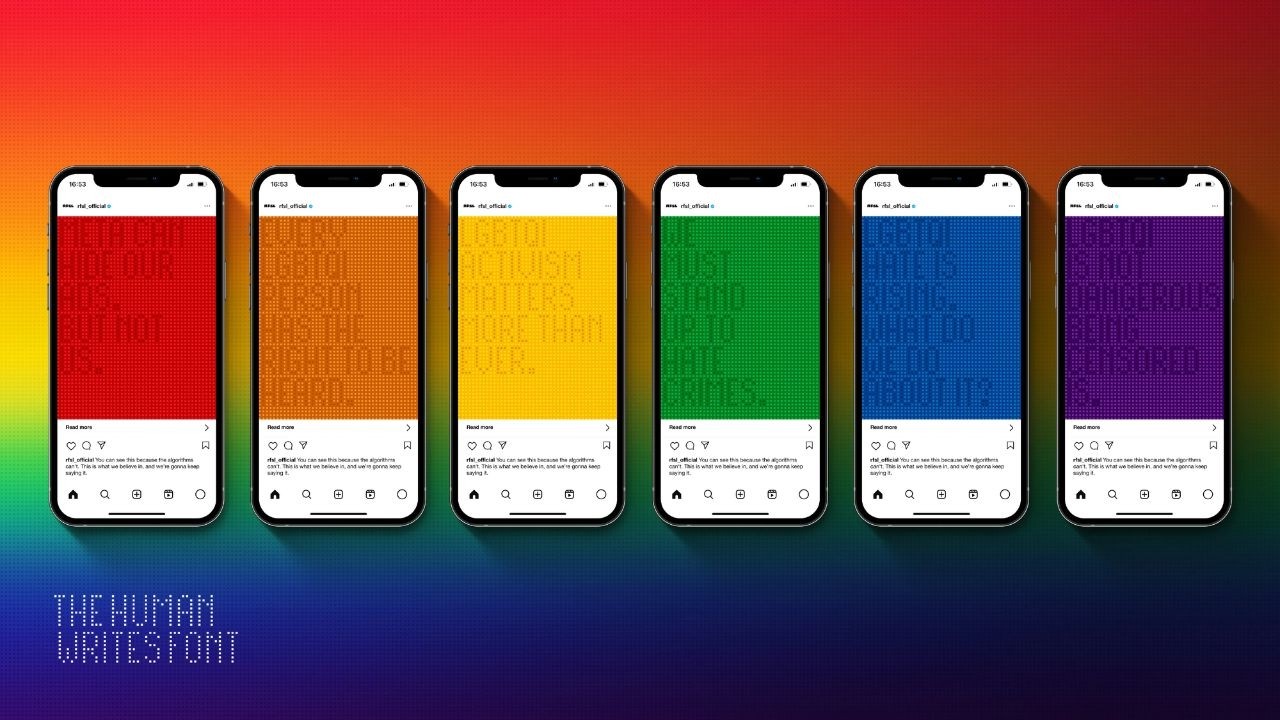
A custom font bypassed AI moderation by appearing as unreadable patterns to machines.
RFSL created a custom typeface using pixel patterns that bypass Meta's automated AI moderation systems. By rendering text invisible to algorithms but legible to humans, the organization successfully restored its ability to advocate for LGBTQI+ rights despite platform-wide censorship.
A Trojan Horse for Human Rights
Zero Budget Digital Disobedience
The campaign was executed with a SEK 0 media budget, relying entirely on organic reach and the viral adoption of the tool. By releasing the generator at humanwritesfont.com, Stendahls empowered thousands of civil society organizations to bypass Meta’s automated moderation. The font functioned as a form of digital civil disobedience, allowing activists to continue sharing vital messages about human rights and gender equality that were otherwise silenced by Big Tech’s blanket ban on issue-based advertising.
Engineering the Optical Hack
The typeface was built on a precise pixel grid system designed to exploit the limitations of computer vision. By manually calibrating letterforms, color points, and letter-spacing, the team created a visual contrast hack that renders text as unreadable gibberish to AI models while remaining perfectly legible to human eyes. This technical workaround turned the font into a functional tool for protest, though the creators openly acknowledged it as a temporary measure in an evolving cat-and-mouse game against AI moderation.
A Voice for the Silenced
The project gained significant political resonance, being shared by high-profile figures such as Sweden’s Minister for Gender Equality. Felix König, Head of Communications at RFSL, framed the initiative as a direct response to censorship, arguing that Meta’s automated policies threatened democratic debate. Sofia Frejd, the project's Art Director, described the font as a creative alternative to a megaphone, noting that while Meta’s algorithms were not listening, the public was. To maintain ethical standards, the team included a disclaimer on the site, warning users against utilizing the tool for hate speech or disinformation.
4C Framework deconstruction
Company
As a leading LGBTQI+ federation, RFSL possessed the authority and necessity to challenge digital censorship of human rights advocacy.
Category
Non-profits typically rely on standard social media ad formats, which are easily blocked by automated moderation systems.
Customer
The public felt silenced and frustrated by Big Tech's arbitrary removal of vital social and equality-based messaging.
Culture
The 2025 EU political transparency law triggered widespread platform censorship, creating a urgent need for alternative communication tools.
Company
As a leading LGBTQI+ federation, RFSL possessed the authority and necessity to challenge digital censorship of human rights advocacy.
Category
Non-profits typically rely on standard social media ad formats, which are easily blocked by automated moderation systems.
Strategy:
Bypass digital gatekeepers by embedding advocacy into tools that render censorship mechanisms obsolete.
Customer
The public felt silenced and frustrated by Big Tech's arbitrary removal of vital social and equality-based messaging.
Culture
The 2025 EU political transparency law triggered widespread platform censorship, creating a urgent need for alternative communication tools.
Strategy:
Bypass digital gatekeepers by embedding advocacy into tools that render censorship mechanisms obsolete.
Results
The campaign achieved over 15,000+ engagements, over 6,200,000+ earned media reach across news publications, and over 20,000+ people tried the font. It was also shared by Sweden's Minister for Gender Equality.
6.2M+
Media Reach
15,000+
Engagement
20,000+
Tried the Font
Strategy Technique
Find the Missing Conversation
Meta's blanket ban on issue-based ads created a void in public discourse. By identifying this censorship as a critical failure of transparency, the brand reclaimed the space to discuss human rights.
Explore Technique
Creative Technique
Turn Message into Product
The campaign transformed a political message into a functional design tool. This allowed the brand to bypass algorithmic censorship by embedding advocacy directly into the visual structure of the font itself.
Explore Technique
Craft Breakdown
The campaign excels through clever custom typography and digital engineering that outsmarted AI content moderation algorithms to protect free expression.
The bespoke dot-matrix pixel typeface was custom-designed so human eyes read the messages instantly while AI image recognition tools fail to parse the characters as text.
The execution strategically exploited AI optical character recognition limitations in social ad platforms to create an un-censorable ad format.
“The combination of optical typographic design and digital platform hack turned a restrictive policy barrier into an engaging social media movement.”