Marketing Mix (4 Ps)
Marketing Mix (4 Ps): Product, Price, Place, Promotion - and Why They Have to Agree
The Marketing Mix is the first framework taught on every marketing course and the one people stop thinking about the day they graduate. Four boxes - Product, Price, Place, Promotion - that look too obvious to be useful. Of course you need a product. Of course it has a price. The trouble is that in a real company those four decisions are made by four different teams, in four different meetings, and nobody checks whether they still describe the same brand.
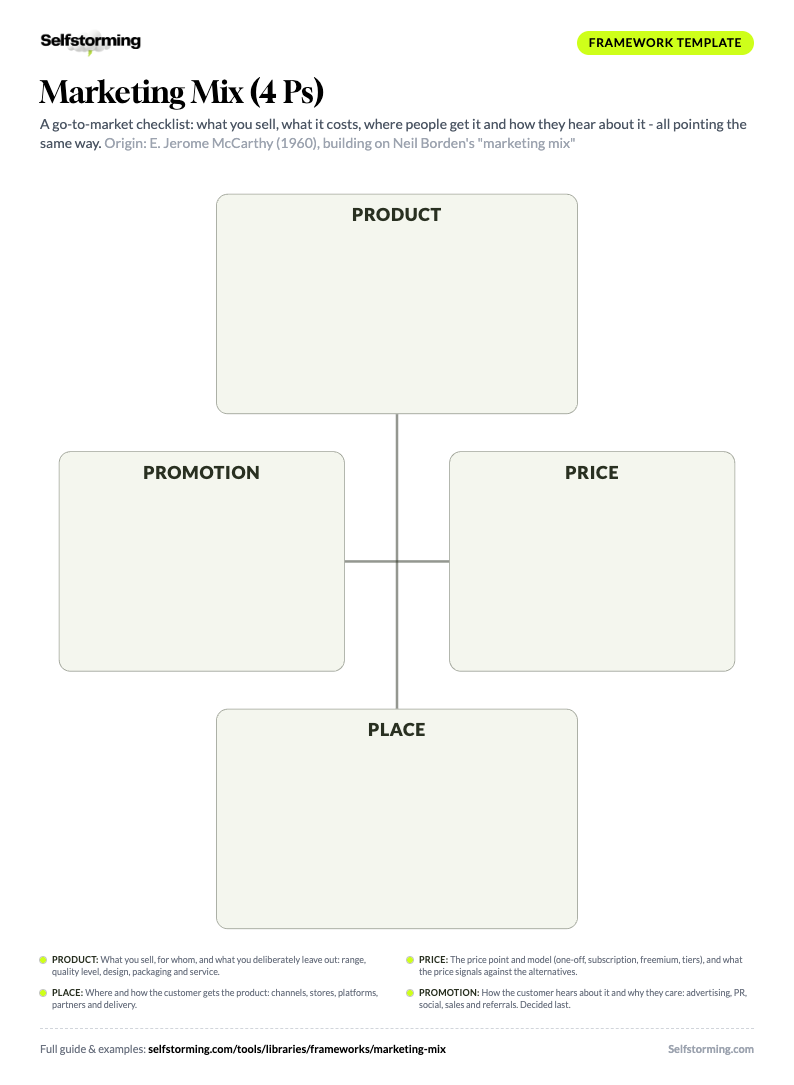
Print it. Fill it in.
The Marketing Mix (4 Ps) as a printable A4 worksheet - write straight into the framework, on paper or in any PDF app.
Download the PDF templateKnowledge Worth Paying For
A working library of brand strategy frameworks - with worked examples on real brands, sources, and decision criteria. Not vibes.
One good deck covers the subscription. The rest is profit.
Four decisions every offer needs, around one customer: Product (what you sell and the problem it solves), Price (the price point, the model and what it signals), Place (where and how the customer gets it) and Promotion (how the customer hears about it and why they care). The rule that makes it work: the four Ps must agree - with each other and with the positioning. For services, add the 7 Ps extension: People, Process and Physical evidence.
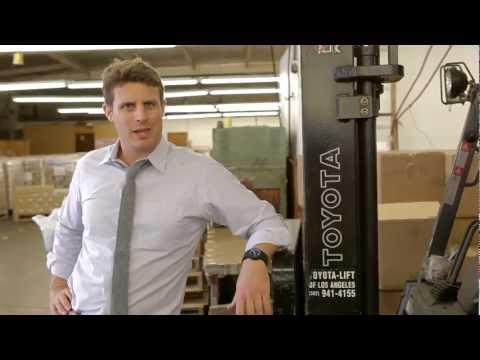
Dollar Shave Club
Razor subscription brand (USA, launched 2012)The cleanest modern case of four Ps pointing the same way. The launch attacked an overpriced, overcomplicated category: a short range instead of a wall of blades, a subscription instead of a locked shelf, delivery by post instead of the supermarket, and one funny founder video instead of a celebrity campaign. Each P made the others more believable.
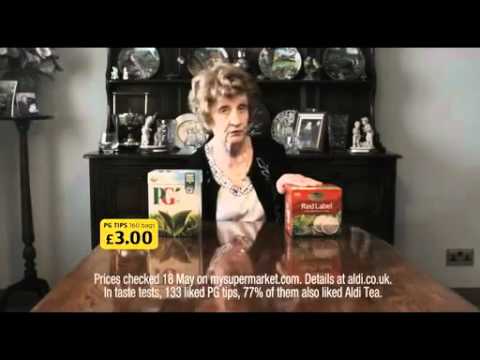
Aldi
Discount supermarket (Germany, with a large UK business)A mix built entirely around one promise: the same quality for less. The short range of own-label products, the no-frills store format and the low prices all make the promise possible, and the promotion simply shows it. It is a useful reminder that Place and Product can be the reason a price is credible.
Mailchimp
Email marketing software for small businesses (USA, founded 2001)A B2B and SaaS translation of the 4 Ps. Price is a model (freemium), Place is self-serve signup, and Product includes how easy the tool is to start with. The promotion built a quirky, memorable brand in a category full of interchangeable software names. The fields describe the mix in broad strokes, not Mailchimp's current plan details.

Dollar Shave Club, Aldi, Mailchimp - filled in, line by line. Unlock to read them.
Dollar Shave Club (Razor subscription brand (USA, launched 2012))
The cleanest modern case of four Ps pointing the same way. The launch attacked an overpriced, overcomplicated category: a short range instead of a wall of blades, a subscription instead of a locked shelf, delivery by post instead of the supermarket, and one funny founder video instead of a celebrity campaign. Each P made the others more believable.
Product: A short range of decent razors and refills - no wall of 40 options, no five-blade arms race.
Price: A subscription that started at a dollar a month, against a category known for expensive refills.
Place: Ordered online and delivered by post - no locked razor cabinet, no trip to the store.
Promotion: One cheap, funny founder video that spread on its own and made the category look overpriced.
Aldi (Discount supermarket (Germany, with a large UK business))
A mix built entirely around one promise: the same quality for less. The short range of own-label products, the no-frills store format and the low prices all make the promise possible, and the promotion simply shows it. It is a useful reminder that Place and Product can be the reason a price is credible.
Product: A short range of mostly own-label products that look and taste like the famous brands next to them.
Price: Consistently low everyday prices instead of constant promotions - the price is the positioning.
Place: Smaller, no-frills stores with a limited range, so the shop is quick to walk and cheap to run.
Promotion: Comparison ads that put the Aldi product next to the brand it resembles: "Like Brands. Only Cheaper."
Mailchimp (Email marketing software for small businesses (USA, founded 2001))
A B2B and SaaS translation of the 4 Ps. Price is a model (freemium), Place is self-serve signup, and Product includes how easy the tool is to start with. The promotion built a quirky, memorable brand in a category full of interchangeable software names. The fields describe the mix in broad strokes, not Mailchimp's current plan details.
Product: Email marketing and automation built for small businesses that do not have a marketing team.
Price: A free plan to start, then paid tiers that grow with the size of the contact list.
Place: Self-serve signup online, plus integrations with the shop and website tools customers already use.
Promotion: A quirky brand with a memorable mascot, and campaigns like "Did You Mean Mailchimp?" that played with its name.
1. Product
What exactly are we selling, to whom, and which problem does it solve better than the alternatives?
The offer itself: features, quality, range, design, packaging, service and guarantees. In the Marketing Mix, Product is a strategic choice, not a spec sheet - it decides what the brand can credibly charge, where it can be sold and what the promotion can promise. Fewer, sharper choices usually beat a bigger range.
Good answer: Three razor options, delivered on a schedule, instead of a wall of forty. The narrow range is the product decision: it removes choice anxiety and makes a subscription simple enough to say yes to.
Wrong answer: "High-quality products for everyone." A Product description with no customer and no trade-off. If the range tries to fit every buyer, the price, channel and message have nothing specific to support.
2. Price
What do we charge, how do people pay, and what does that price tell them about the product?
The price point, the pricing model (one-off, subscription, freemium, tiers) and the discounts and terms around it. Price is also a message: it signals quality and positioning before the customer has used anything. It has to cover the business model and fit what the target customer expects to pay for this kind of value.
Good answer: A free plan with a contact limit, then paid tiers that grow with the customer. The model matches how small businesses buy software: try it with no risk, pay when it is already working.
Wrong answer: Pricing by cost plus margin and nothing else. The number covers costs but ignores what customers compare it with and what it signals - so a premium product can look cheap, or a mass product overpriced.
3. Place
Where does our customer expect to find this, and how does it reach them with the least friction?
Distribution: the channels, stores, platforms, marketplaces, partners and logistics that put the product within reach. Place decides availability, which is often the biggest driver of sales. For digital products it includes app stores, self-serve signup and integrations; for services it means access - opening hours, locations, response times.
Good answer: Smaller stores with a short range, so the shop is quick to walk and cheap to run. The store format is the Place decision, and it keeps the low prices possible instead of just announcing them.
Wrong answer: "We'll be everywhere." Being in every channel at once stretches the budget and often contradicts the positioning - a premium brand in every discount bin stops being premium.
4. Promotion
How will our customer hear about this, and what will make them care enough to try it?
Everything that creates awareness and preference: advertising, PR, social and creator content, sales, events, sponsorship and referrals. Promotion should be the last P you decide, because it has to communicate what the other three already deliver. Its job is to build memory and make the brand easy to think of when the customer is ready to buy.
Good answer: Comparison ads that put the cheaper product next to the famous brand it resembles. The promotion dramatises the real advantage the product and price already created, so it does not need to invent one.
Wrong answer: A big launch campaign for a product that is hard to find or badly priced. Promotion makes the gap more visible: more people discover the problem faster.
Decide your starting point: You do not have to start from four empty boxes. On Selfstorming you can browse how real campaigns combined price, channel and message for inspiration, or run a Research Session on the category first. Then use the steps below to make your own four decisions and test whether they agree.
Write the customer and the positioning first: One sentence on who the offer is for and why they should choose it over the alternative. Every P will be judged against this sentence. Without it, the mix turns into a list of what each department already planned.
Make the Product decision: Define what you sell and what you deliberately leave out. Range, quality level, packaging and service all belong here. Ask which features the target customer would actually pay for, and cut the ones that only exist because a competitor has them.
Set Price as a strategy, not a calculation: Decide the price point and the model - one-off, subscription, freemium, tiers - based on what the customer compares you with and what the price should signal. Then check the margin. Discounts and promotions are part of Price, so decide how often you will use them before they become a habit.
Choose Place where the customer already is: List where your customer currently buys this kind of product and how they prefer to receive it. Pick the channels that fit the positioning and the price, and make the product easy to find there. Availability usually matters more than people expect.
Decide Promotion last: Choose the channels and the message that communicate what the Product, Price and Place already deliver. Promotion that promises more than the other three can support creates disappointment at scale.
Run the contradiction check: Read the four decisions together and look for conflicts - a premium price in a discount channel, a niche product with mass media, a subscription promoted as a one-off. Fix the P that breaks the pattern, not the one that is easiest to change.
Add the 7 Ps for services: If people deliver the experience, add People (who serves the customer and how they are trained), Process (each step of the service) and Physical evidence (what proves quality: the space, the app, the documents). Then run the contradiction check again across all seven.
Best for: Planning a launch, a market entry or a relaunch, when you need to make sure the product, price, distribution and communication all support the same positioning. / Choosing the positioning itself, finding a customer insight or developing a creative idea. The mix turns a strategy into decisions; it does not create the strategy.
Output: Four (or seven) short decisions on one page, each tied to the customer, plus a list of contradictions to fix. / A brand identity, a customer journey or a media plan. The mix connects to all of them but replaces none.
Time to complete: A first draft in an afternoon; a solid version in a few days with input from product, pricing, sales and marketing. / A one-off exercise at launch. A mix that is never reviewed drifts away from the market within a year or two.
vs 4C (Company, Category, Customer, Culture): Use the Marketing Mix to decide what you will offer and how you will take it to market. / Our 4C framework analyses the situation - company, category, customer and culture - to find a strategy. Run 4C first, then turn the strategy into a Marketing Mix.
vs Positioning Statement: Use the Marketing Mix to make the positioning real across product, price, distribution and promotion. / The Positioning Statement defines who the brand is for and why it is different. Write it first; the mix is how you deliver it.
vs TAM SAM SOM: Use the Marketing Mix to decide how to win the customers inside your market. / TAM SAM SOM sizes the market and your realistic share. Size the opportunity first, then plan the mix that captures it.
The idea of a marketing "mix" goes back to Harvard professor James Culliton, who in 1948 described marketing managers as "mixers of ingredients". His colleague Neil Borden picked up the phrase, used "marketing mix" in his 1953 address to the American Marketing Association, and set it out in his 1964 article The Concept of the Marketing Mix - a long list of ingredients rather than a neat model. The four Ps came in 1960, when E. Jerome McCarthy grouped those ingredients into Product, Price, Place and Promotion in his textbook Basic Marketing, and Philip Kotler's textbooks made them the standard. In 1981 Bernard Booms and Mary Jo Bitner added People, Process and Physical evidence for services, creating the 7 Ps, and in 1990 Robert Lauterborn rewrote the four Ps from the customer's side as the 4 Cs: Consumer, Cost, Convenience and Communication.
The Marketing Mix is criticised less for being wrong than for being incomplete. The first objection is that it is written from the company's side: the four Ps describe what a firm does, not what a customer needs, which is exactly why Lauterborn proposed the 4 Cs and why relationship and service marketers pushed for the 7 Ps. The second is that it treats four interacting decisions as separate boxes, which in large organisations becomes four departments that never compare notes. The third is that it was built for manufactured goods sold through retail, so digital businesses - platforms, subscriptions, products that market themselves through use - have to stretch the categories to fit. Used as a checklist that tests whether every go-to-market decision supports the same positioning, it holds up well. Used as a template that someone fills in once, it adds very little.
What is the Marketing Mix?
The Marketing Mix is the set of decisions a company controls when it takes something to market, usually summarised as the 4 Ps: Product (what you sell), Price (what it costs and how people pay), Place (where and how people get it) and Promotion (how people hear about it). The idea comes from Harvard's Neil Borden, who described marketers as "mixers of ingredients", and E. Jerome McCarthy turned it into the 4 Ps in 1960. The point is that the four decisions have to fit each other and the customer, not be made by four different departments.
What are the 4 Ps of marketing?
Product is the offer itself: features, quality, range, packaging and the problem it solves. Price is the price point and the pricing model, including discounts, subscriptions and how the price compares with alternatives. Place is distribution: the channels, stores, platforms and logistics that put the product within reach. Promotion is everything that makes people aware of it and want it: advertising, PR, social, sales and partnerships. Each P is a decision, and a good Marketing Mix makes them all point the same way.
What is the difference between the 4 Ps and the 7 Ps of marketing?
The 7 Ps add three elements for services, proposed by Bernard Booms and Mary Jo Bitner in 1981: People (the staff who deliver the service and shape the experience), Process (how the service is delivered, step by step) and Physical evidence (the tangible cues that prove quality, from a clean shop to a well-designed app). Use the 4 Ps for physical products and simple digital products. Use the 7 Ps when the customer is buying an experience delivered by people, such as banking, hospitality, healthcare or an agency.
What is the difference between the 4 Ps and the 4 Cs?
In 1990 Robert Lauterborn rewrote the 4 Ps from the customer's side: Product becomes Consumer wants and needs, Price becomes Cost to satisfy, Place becomes Convenience to buy and Promotion becomes Communication. It is the same checklist seen from the other side of the counter, and it is a useful way to stop the 4 Ps turning into an internal wish list. Note that the 4C framework in our library is a different model (Company, Category, Customer, Culture) used for strategy, not for the Marketing Mix.
Is the Marketing Mix still relevant?
Yes, as a checklist of decisions. The criticism that it is product-centric and old is fair, and the labels need translating for digital businesses: Place is now an app store, a marketplace or a checkout flow, and Promotion includes the product spreading itself. But every launch still has to decide what it sells, what it charges, where people get it and how they hear about it. A failed launch rarely lacks a framework. Far more often, one of those four decisions contradicted the others.
How do you use the Marketing Mix for a new product?
Start from the customer and the positioning, not from the four boxes. Write who the product is for and why they should choose it, then make each P prove that choice: a Product that delivers the promise, a Price that signals the right value, a Place where that customer already shops, and Promotion in the channels that customer actually uses. Then check the fit across the four. A premium price sold through discount channels, or a mass promotion for a niche product, are the classic contradictions.
Does the Marketing Mix work for B2B and SaaS?
Yes, with translation. In B2B and SaaS, Product includes onboarding, integrations and support; Price includes the plan structure, free tiers and contract length; Place covers self-serve signup, sales teams, partners and marketplaces; and Promotion covers content, events, sales enablement and referrals. Many SaaS companies find the 7 Ps more useful, because People (customer success) and Process (onboarding) decide whether customers renew.
What is a Marketing Mix example?
Dollar Shave Club's 2012 launch is a clean one. Product: a short range of decent razors instead of a wall of options. Price: a subscription starting at a dollar a month. Place: delivered by post, which skipped the locked razor cabinet in the supermarket entirely. Promotion: one cheap, funny founder video that spread on its own. Every P pushed the same idea - shaving without the hassle and the markup. This page has three worked examples, including a discount retailer and a B2B software brand.
A go-to-market checklist: what you sell, what it costs, where people get it and how they hear about it - all pointing the same way.
All 50 frameworks, ready to use.
The PDF book with worked examples and printable templates, the editable PowerPoint and an MD file for your AI. €39.90, or free with a yearly plan.
See the ebook packThat is the actual job of the 4 Ps. Not to list what you already know, but to force the four decisions to agree with each other and with the customer. A premium skincare line sold in pound-shop bins, a cheap gadget promoted like a luxury watch, a subscription nobody can find outside one app store: none of these fail for lack of effort. They fail because one P is quietly contradicting the other three. This page covers each P and the question that unlocks it, the 7 Ps for services, Lauterborn's 4 Cs, and worked examples where all four point the same way.
Related Frameworks
Playing to Win
Five linked choices, top to bottom: Winning Aspiration (what winning looks like, for whom), Where to Play (the specific market, segment, geo
OKRs
One Objective (qualitative, ambitious, memorable - the hill worth taking) plus three Key Results (numeric, measurable, with zero grey area -
SWOT Analysis
Four boxes, two axes: Strengths and Weaknesses are internal and controllable, Opportunities and Threats are external and mostly not. Left si
Eisenhower Matrix
Score every task on two axes: important (does it matter to your goals?) and urgent (does it need attention now?). That gives four boxes. Do