Decision Making marketing laws
When attention is shallow and stakes are low, choice runs on autopilot. These laws - cognitive ease, fluency over persuasion, system 1 dominance - explain why the easy-to-process brand usually beats the most rationally compelling one.
Browse other categories
Premium
How People Decide
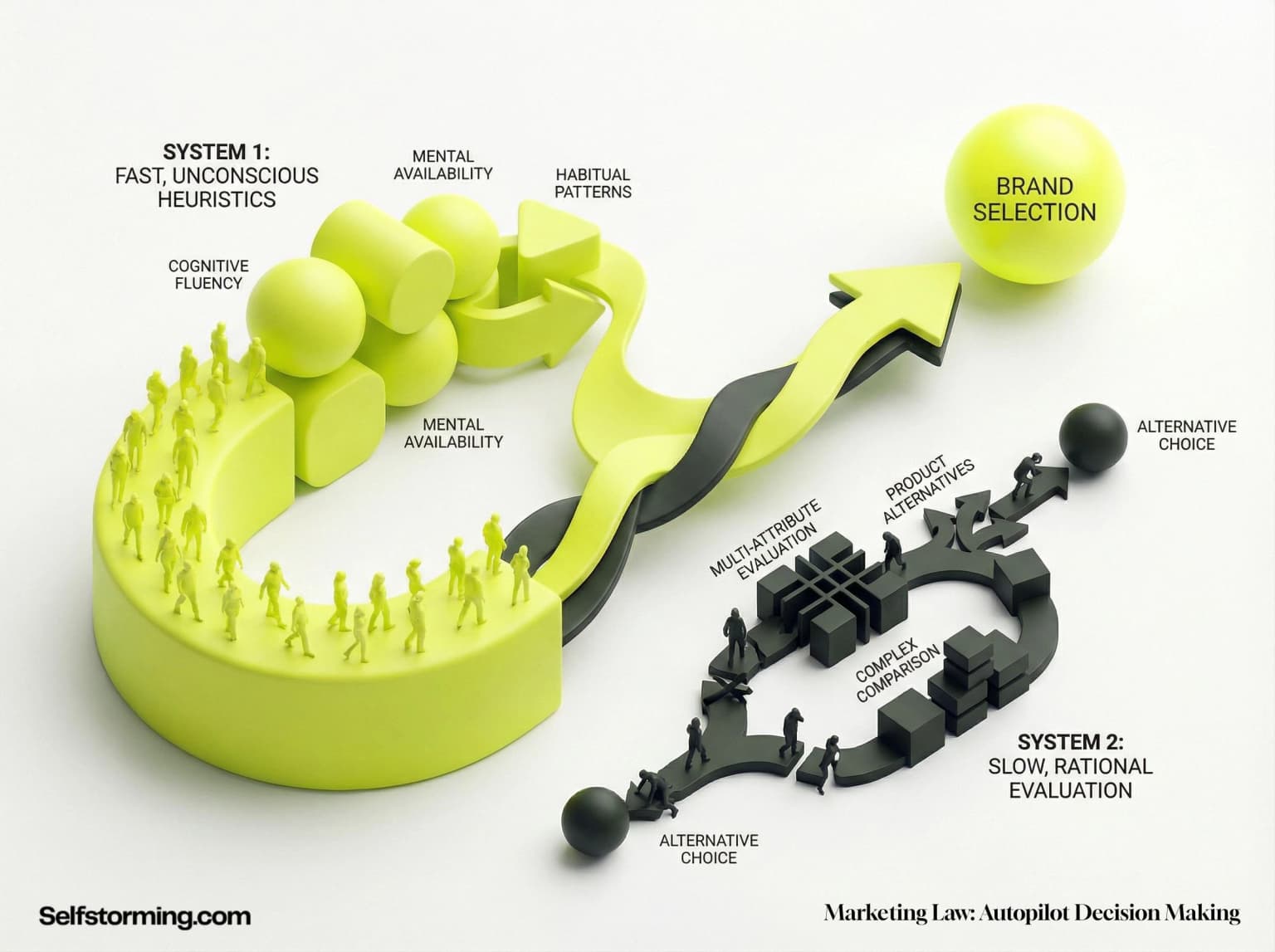
The Autopilot Law
Most brand choices are made without conscious deliberation.
Daniel Kahneman, Ehrenberg-Bass Institute
Read preview
Free
How People Decide
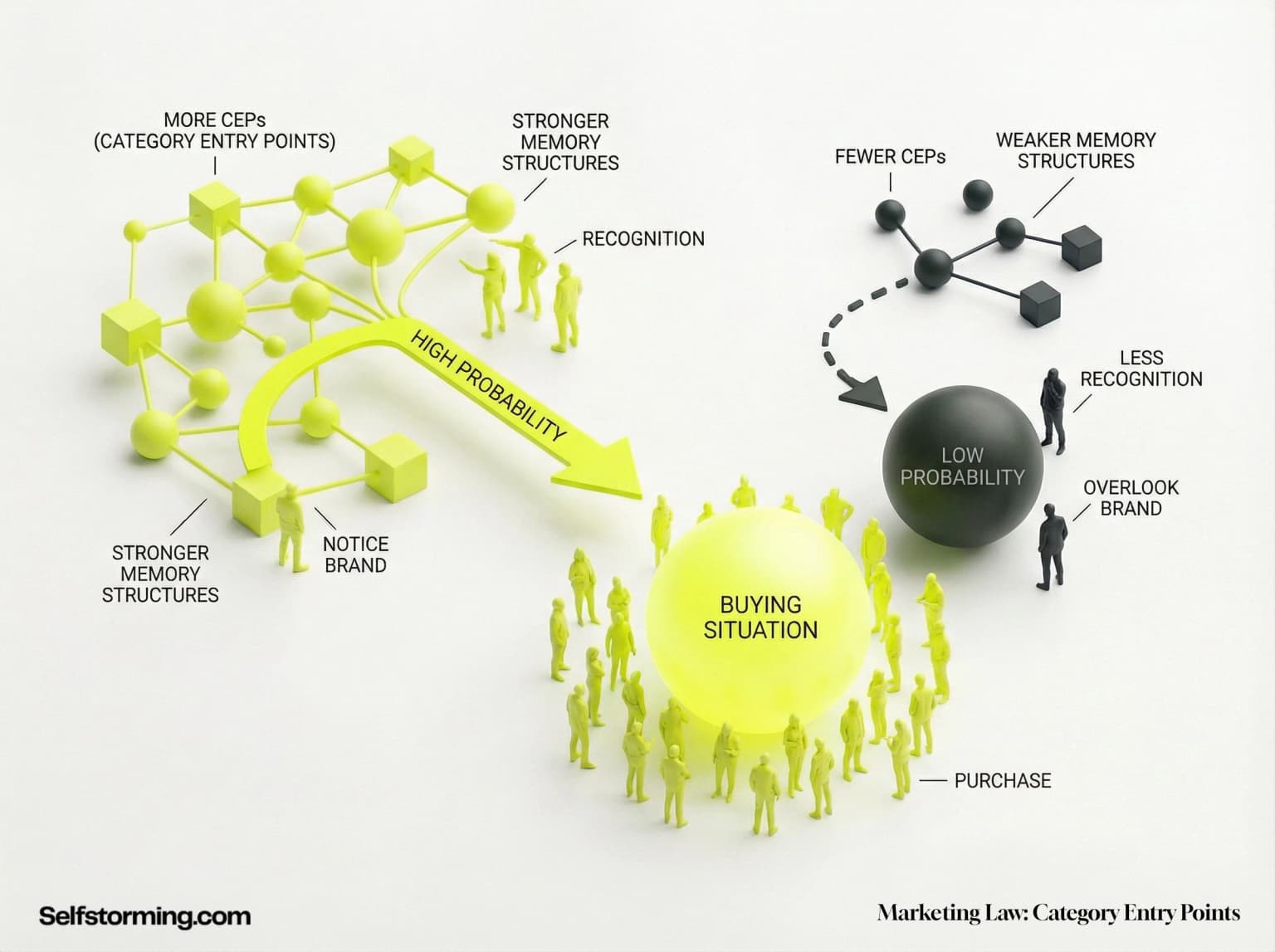
The Law Of Category Entry Points
Brands grow by linking to more buying situations.
Ehrenberg-Bass Institute, Jenni Romaniuk
Read for free
Premium
How People Decide
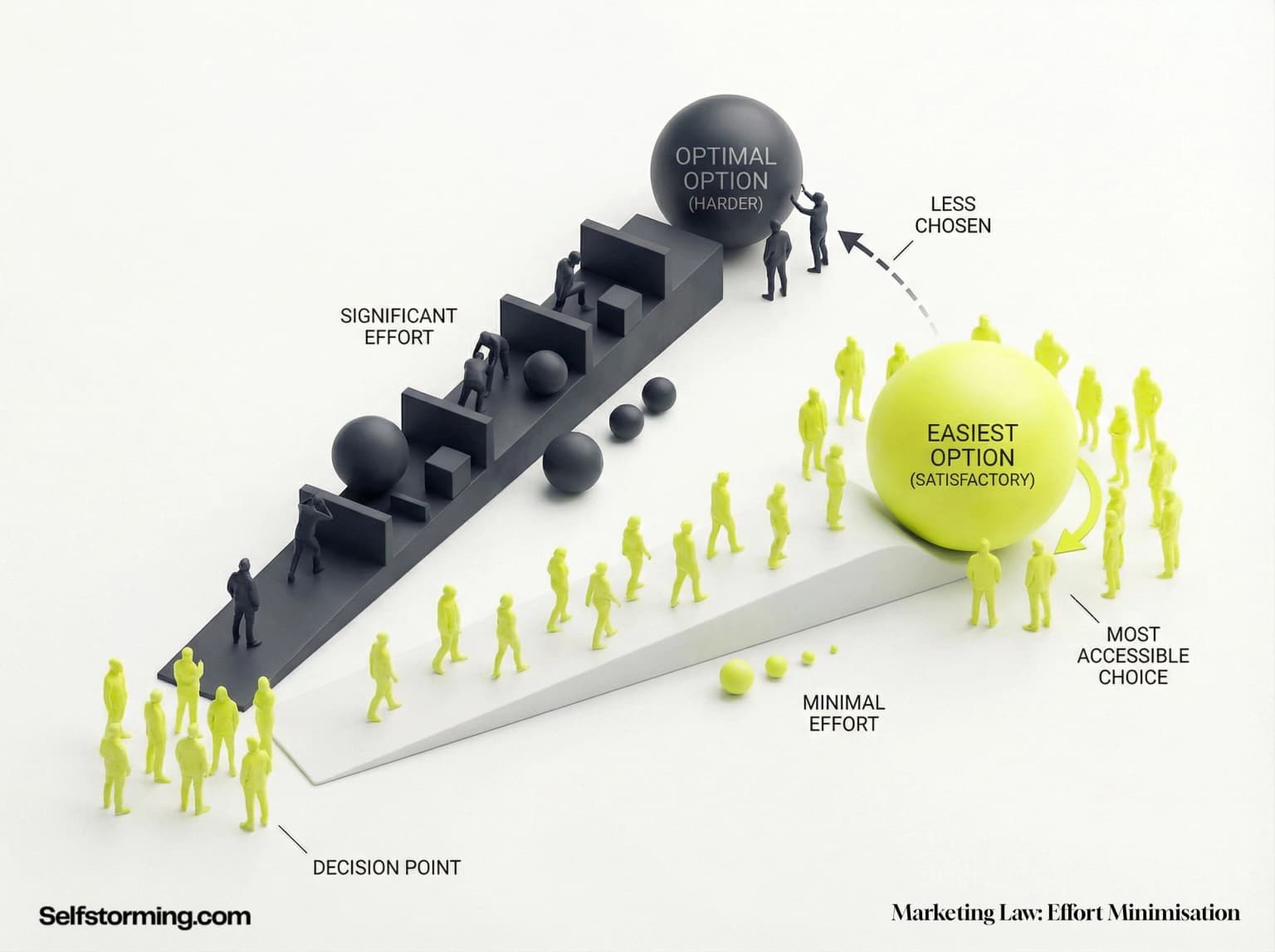
The Law Of Effort Minimisation
People choose the easiest acceptable option, not the best one.
Daniel Kahneman, Byron Sharp
Read preview

Premium
How People Decide
The Law Of Usage Over Attitude
Personal experience shapes brand perceptions more than advertising claims.
Byron Sharp, Ehrenberg-Bass Institute
Read preview
Premium
How People Decide
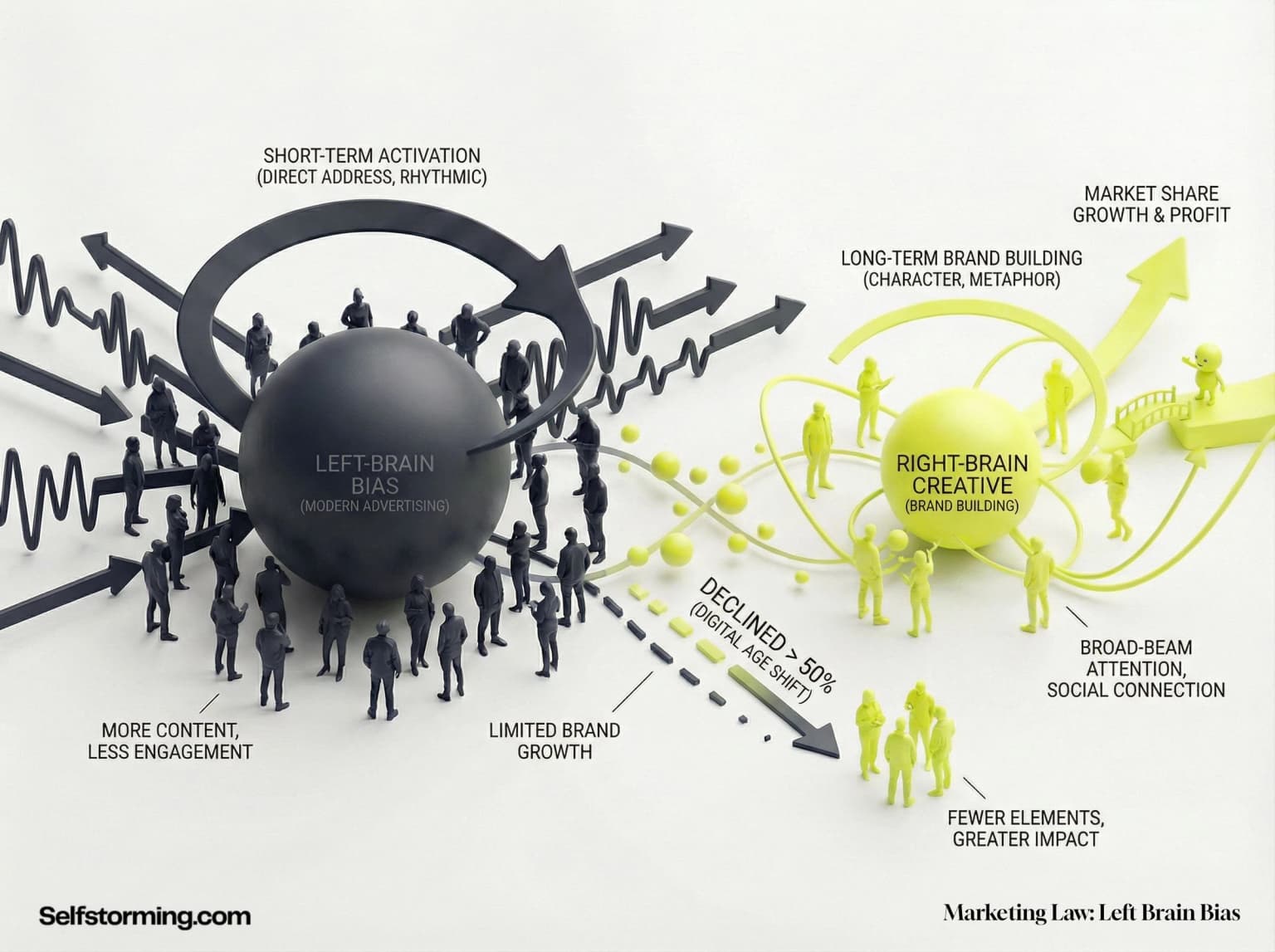
The Left-Brain Law
Over-rational advertising underperforms emotionally rich work.
Orlando Wood, Orlando Wood
Read preview
Premium
How People Decide
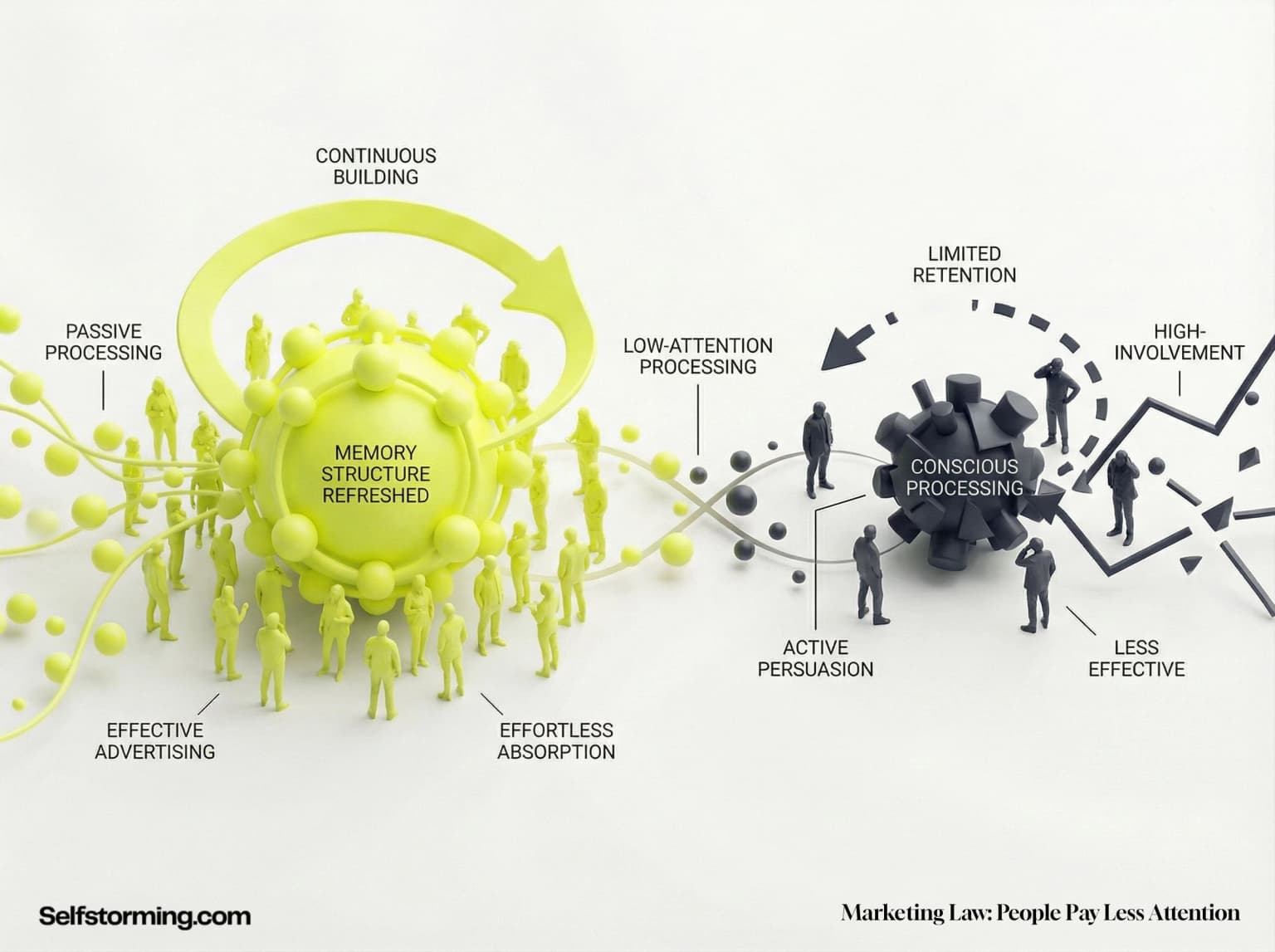
The Low Attention Law
Most advertising is processed passively, if at all.
System1, Ehrenberg-Bass Institute
Read preview