Chicago Hearing Society: Caption With Intention
Chicago Hearing Society tasked FCB Chicago with addressing the stagnant state of closed captioning for the 430 million people with hearing loss. They needed to move beyond basic text to provide a truly inclusive cinematic experience. The goal was to find a way for deaf audiences to feel the emotional depth of film, ensuring they weren't just reading dialogue but experiencing the story's full nuance.
Creative Idea
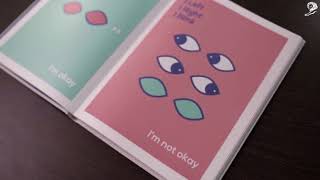
Reimagined static closed captions as a dynamic, variable typographic system that visualizes emotional performance.
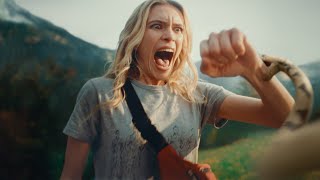
The campaign transformed static, functional text into an expressive cinematic tool, allowing deaf audiences to experience the nuance of film performance through synchronized, variable typography and color-coded character identification that conveys tone, volume, and speaker identity.
Six Decades of Static Text Finally Shattered
A Six Year Labor of Love
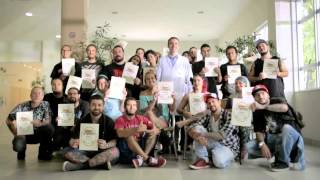
The project was a grueling six year journey that began in 2019. Spearheaded by Bruno Mazzotti, an Executive Creative Director at FCB Chicago and a CODA (Child of Deaf Adults), the initiative was born from a personal desire to let his parents experience the "magic" of cinema. Alongside Hard of Hearing designer So A Ryu, the team spent nearly a year in workshops with the Deaf community to ensure the system felt authentic rather than intrusive. During testing, the team realized they were initially "over-indexing" on animation and had to dial back the kinetic movements to ensure the captions didn't distract from the film's visual artistry.
From Prototypes to the Oscars
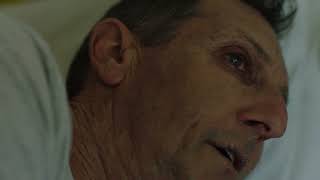
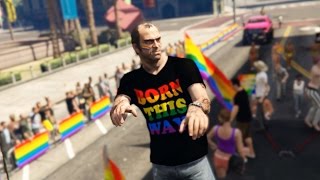
To prove the system's versatility, the creators tested the typography against iconic scenes from *Forrest Gump*, *Pulp Fiction*, *The Dark Knight*, and *Barbie*. This rigorous stress-testing helped the system move beyond a "functional utility" into a recognized cinematic language. The impact was so profound that the Academy of Motion Picture Arts and Sciences officially added the system to the Oscar submission rule book. In a rare crossover between advertising and cinema, the project was awarded an Award of Merit (Oscar statuette) at the 2025 Scientific and Technical Awards, accepted by Academy Award-winning actress Marlee Matlin.
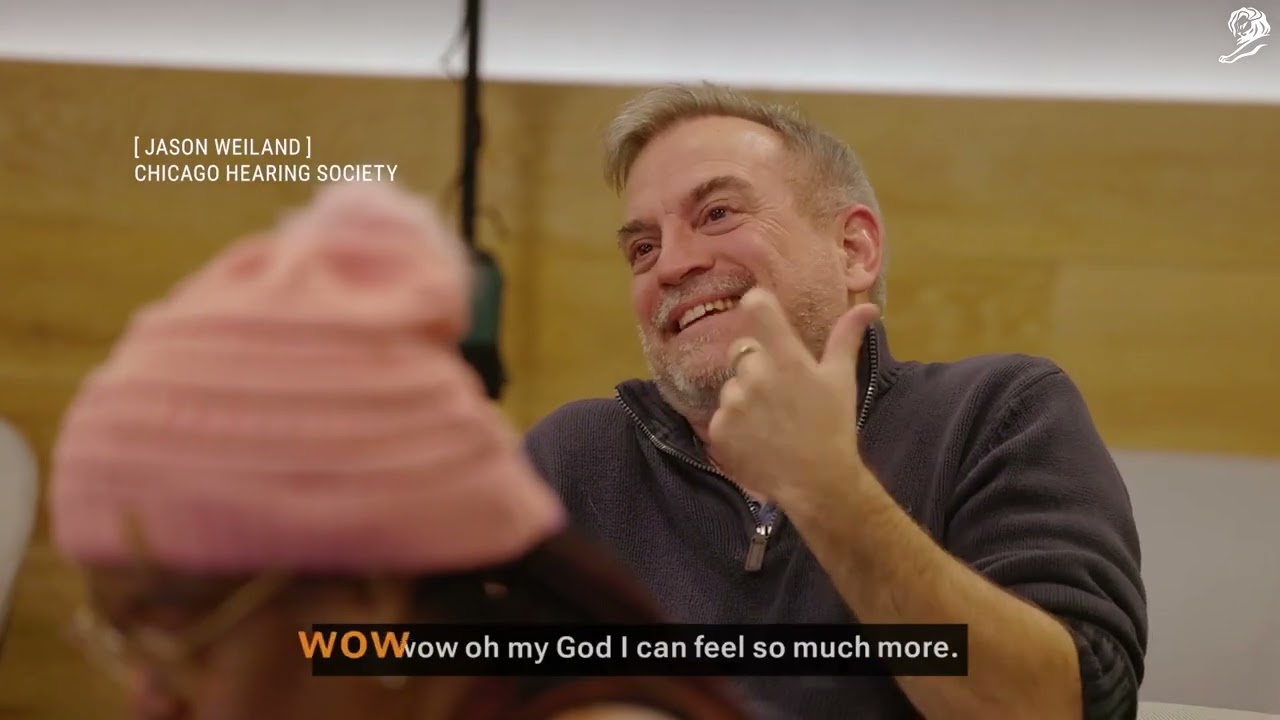
Open Source for Global Equity
By releasing the tool as open-source, CHS and FCB removed the financial barriers that often prevent independent creators from implementing high-quality accessibility. The campaign reached over 16.1 million digital impressions at launch, but its true legacy lies in its potential to serve the 430 million people worldwide living with disabling hearing loss. As director Marc Forster noted, the technology ensures that future films are designed with accessibility in mind from the very first day of pre-production.
Creative Strategy Deconstructed
Company
Deep expertise in deaf advocacy combined with world-class creative design and typography capabilities.
Category
Accessibility is often treated as a technical compliance requirement rather than an integral part of the creative process.
Customer
Deaf audiences felt excluded from the emotional subtext of film, missing the nuances of tone and character performance.
Culture
A growing cultural demand for radical inclusion and the technological evolution of variable digital typography.
Company
Deep expertise in deaf advocacy combined with world-class creative design and typography capabilities.
Category
Accessibility is often treated as a technical compliance requirement rather than an integral part of the creative process.
Strategy:
Transform functional accessibility into a creative medium to bridge the emotional gap between content and marginalized audiences.
Customer
Deaf audiences felt excluded from the emotional subtext of film, missing the nuances of tone and character performance.
Culture
A growing cultural demand for radical inclusion and the technological evolution of variable digital typography.
Strategy:
Transform functional accessibility into a creative medium to bridge the emotional gap between content and marginalized audiences.
Results
The campaign achieved significant industry recognition and adoption. It was embraced by major studios including Netflix, Paramount, Warner Bros, Disney, Columbia, and Universal. The system is supported in 196 languages and has been validated through 10 months of panels. It received an Academy Award of Merit for Technical Achievement & Inclusion. Media coverage was extensive, with Variety calling it 'A Revolution', IndieWire praising its 'Artistry and innovation', and The Hollywood Reporter describing it as 'INSPIRING'. Other outlets like Deadline, Vox, and MSN also featured the campaign. It is set to be available and streaming in 2026.
196
languages supported
10 months
of validation panels
1
Academy Award of Merit
Strategy Technique
Build an Utility, Not an Ad
By creating an open-source design system rather than just a commercial, the brand provided a permanent solution that fundamentally changed how the industry approaches inclusion.
Explore Technique
Creative Technique
Unexpected Utility
It turns a basic, overlooked utility into a powerful storytelling device, proving that accessibility tools can be as creatively expressive as the films they support.
Explore Technique
Craft Breakdown
This campaign's excellence lies in its sophisticated use of typography and design to solve a long-standing accessibility issue, turning a functional tool into a cinematic art form.
The use of variable fonts to represent volume and emotion directly through letterforms is a masterclass in functional design.
The precise, word-by-word synchronization and kinetic movement of the text perfectly mirror the rhythm of human speech.
The creation of a comprehensive visual system that integrates seamlessly into existing film aesthetics while remaining highly legible.
The narrative effectively frames a technical update as a historic civil rights milestone for the deaf community.
“The synergy between kinetic animation and variable typography creates a 'visual voice' that allows the viewer to see sound.”