Diesel: Go With the Fake
Diesel wanted to challenge consumer perceptions of authenticity and generate buzz in a saturated fashion market. The brand needed to connect with a young, irreverent audience by ironically embracing the concept of "fake" products. The challenge for Publicis Italy was to create a campaign that reinforced Diesel's edgy identity and drove engagement by turning a perceived flaw into a unique selling proposition.
Creative Idea
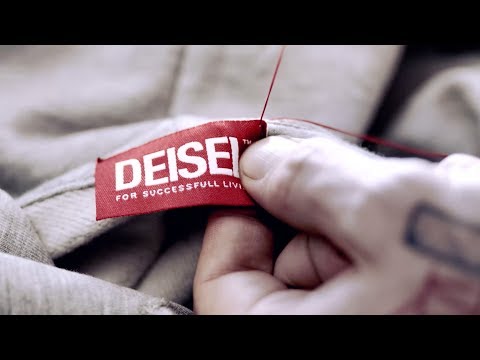
Diesel created a fake knock-off store selling intentionally misspelled "DEISEL" clothing.
Diesel created a fake knock-off store selling "DEISEL" branded clothing to challenge consumer perceptions about authenticity. The campaign playfully demonstrated that genuine Diesel quality can exist even with intentionally misspelled branding, turning the concept of a "fake" product into a clever marketing strategy.
Selling Real Fakes on Canal Street
The Art of the Trademarked Typo
To pull off the heist, Diesel took the unprecedented legal step of trademarking the misspelled "DEISEL" name before launch. This prevented actual counterfeiters from legally profiting off the brand's own "fake" gear. The shop, located at 419 Broadway, was designed with "authentic shabbiness" - using neon markers for signage, cheap plastic bags, and haphazard bins to blend into the grit of NYC’s counterfeit district.
Hidden Cameras and Improv Hustlers
 The agency, Publicis Italy and New York, filmed the 2.5 - day operation using hidden cameras to capture genuine consumer skepticism. To maintain the ruse, they hired improv actors to play high - energy Canal Street "hustlers." The irony peaked when Renzo Rosso, Diesel’s founder, and rapper Gucci Mane appeared at the store to reveal the prank, turning the "cheap" shop into a mobbed fashion destination.
From Ten Dollars to Five Hundred
The results were a masterclass in market manipulation. All 1,000 unique pieces sold out within three days at "knock - off" prices ranging from $10 to $200. Almost immediately, the items resurfaced on eBay as high - value collector's items, fetching over $500. The campaign’s success propelled Diesel from 15th to 9th on the Lyst Index of hottest fashion brands.
The Ultimate Meta Compliment
In a final twist of cultural irony, just days after the "DEISEL" pop - up closed, actual counterfeiters on Canal Street began producing "fake fakes" - bootleg versions of the intentionally misspelled Diesel apparel. As Global CCO Bruno Bertelli noted, the brand succeeded by "poking the world’s nonsense with a stick," proving that in the era of logomania, the "DEISEL" typo was more valuable than the correct spelling.
Creative Strategy Deconstructed
Company
Diesel's 'Go With the Flaw' brand identity allowed them to embrace imperfections that would destroy other luxury labels. They leveraged their high-quality manufacturing to hide genuine products in plain sight.
Category
Fashion brands usually police counterfeits aggressively and prioritize 'perfection' and status. The category relies on exclusivity and the fear of being seen with 'fake' goods to maintain high price points.
Customer
Consumers value the thrill of the 'find' and want the status of designer labels without the stuffy, overpriced retail experience. They appreciate irony and being 'in on the joke' more than traditional luxury.
Culture
The rise of 'bootleg' fashion trends and ironic consumption made the timing perfect to blur the lines between real and fake. Streetwear culture was increasingly valuing authenticity of spirit over corporate polish.
Company
Diesel's 'Go With the Flaw' brand identity allowed them to embrace imperfections that would destroy other luxury labels. They leveraged their high-quality manufacturing to hide genuine products in plain sight.
Category
Fashion brands usually police counterfeits aggressively and prioritize 'perfection' and status. The category relies on exclusivity and the fear of being seen with 'fake' goods to maintain high price points.
Strategy:
Celebrate the irony of counterfeit culture to prove that Diesel's authenticity survives even the most obvious flaws.
Customer
Consumers value the thrill of the 'find' and want the status of designer labels without the stuffy, overpriced retail experience. They appreciate irony and being 'in on the joke' more than traditional luxury.
Culture
The rise of 'bootleg' fashion trends and ironic consumption made the timing perfect to blur the lines between real and fake. Streetwear culture was increasingly valuing authenticity of spirit over corporate polish.
Strategy:
Celebrate the irony of counterfeit culture to prove that Diesel's authenticity survives even the most obvious flaws.
Results
The video states that the campaign resulted in 2.5 million earned impressions from social and traditional media within the first 24 hours. The pop-up store completely sold out of its collection, generating over $50,000 in sales. The campaign achieved a positive sentiment of +30%, demonstrating its success in reaching and positively engaging its target audience.
2.5M
earned impressions
$50,000+
sales generated
+30%
positive sentiment
Strategy Technique
Turn Weakness Into Strength
Diesel transformed the perceived weakness of counterfeit products into a unique strength. By ironically embracing 'fakes,' the brand challenged authenticity norms and generated buzz.
Explore Technique
Creative Technique
Reverse Expectations
Diesel reversed industry expectations by creating its own 'fake' store. This challenged consumer perceptions of authenticity, turning a perceived flaw into a unique selling proposition.
Explore Technique
Craft Breakdown
This campaign's craft is exceptional in its bold and humorous storytelling, seamlessly blending guerrilla marketing with high-production value to deliver a subversive brand message. The intelligent copywriting elevates the entire concept.
The central idea, the 'DEISEL' misspelling and the 'Go With The Flaw' tagline, is a brilliant piece of copywriting that underpins the entire campaign's wit and message.
The visual execution of the 'knock-off' market, from the stall design to the packaging, perfectly captures the aesthetic of counterfeit goods while subtly hinting at quality.
The narrative effectively builds intrigue and humor through the street vendor interactions, leading to a satisfying and impactful brand reveal that redefines perceived flaws as strengths.
The ingenious strategy of opening a 'fake' store selling 'real' Diesel products at 'fake' prices perfectly embodies the brand's 'Go With The Flaw' philosophy and generated significant buzz.
“The campaign's magic comes from the seamless integration of a bold creative concept (Copywriting) with a unique experiential marketing strategy (Campaign Strategy), brought to life through authentic Art Direction and engaging Storytelling.”