Save the Children: Most Shocking Second a Day
Save the Children briefed adam&eveDDB, wanting to urgently highlight the devastating impact of conflict on children's lives, making it relatable for a Western audience. The challenge was to cut through donor fatigue and demonstrate how quickly innocence can be lost. They needed a powerful, shareable campaign to drive awareness and donations, showing the sudden, shocking disruption children face globally.
Creative Idea
Save the Children filmed a girl's life deteriorating second-by-second to show how quickly conflict destroys childhood.
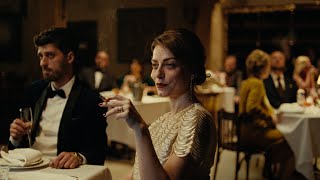
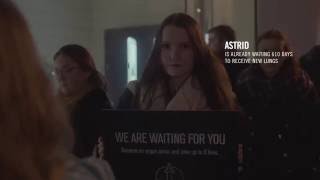
Save the Children created a powerful video showing a young girl's normal life gradually transforming into a war-torn nightmare, using a "second a day" format to dramatically illustrate how conflict suddenly disrupts children's innocent everyday experiences.
The Most Shocking Two Days in London
From 17 Ideas to One Second
To cut through "war fatigue," agency Don’t Panic London pitched 17 different concepts before landing on the "one second a day" format. Inspired by the 1 Second Everyday app trend, the production team at Unit9 and director Martin Stirling filmed the entire narrative in just two days in London. Every harrowing event depicted - from the use of gas masks to the traumatic separation from parents - was meticulously based on factual accounts of children living through the Syrian conflict.
The Girl Who Became the Face of Syria
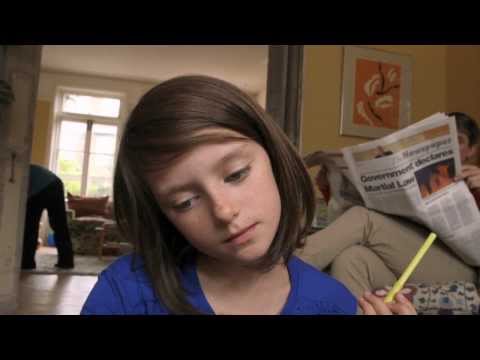 The film stars Lily-Rose Aslandogdu, who was 11 years old at the time. Despite the heavy subject matter, crew members noted her resilience, describing her as "like a mermaid" during water-based scenes. The production included subtle "Easter eggs" to maintain a sense of unsettling realism; for instance, the prop newspaper announcing martial law was simply titled "The Newspaper" to avoid grounding the conflict in a specific existing city, making the "What If?" scenario feel more universal.
Breaking the Apathy of Poverty Porn
The campaign successfully shifted the charity sector away from "poverty porn" toward empathy-based storytelling. It went viral in over 50 countries within days, supported by endorsements from Stephen Fry, Sir Roger Moore, and J.K. Rowling. The impact was immediate: Save the Children saw a 93% uplift in online donations for their Syria appeal and an 89% increase in YouTube subscribers. It even won a Golden Radiator Award, a prize specifically designed to honor fundraising films that avoid damaging stereotypes.
Creative Strategy Deconstructed
Company
Save the Children is a global NGO with the moral authority to advocate for children’s safety and the logistical capacity to provide immediate relief during cross-border disasters.
Category
Most charity ads use footage of distant foreign crises, which often leads to viewer desensitization and the belief that war is an inevitable, permanent state for those regions.
Customer
People living in safety often view war as a remote concept, lacking the emotional proximity to realize that conflict could destroy a life as familiar as their own.
Culture
The campaign leveraged the popular 'second a day' video trend, using a familiar social media storytelling format to deliver a jarring, unexpected subversion of domestic bliss.
Company
Save the Children is a global NGO with the moral authority to advocate for children’s safety and the logistical capacity to provide immediate relief during cross-border disasters.
Category
Most charity ads use footage of distant foreign crises, which often leads to viewer desensitization and the belief that war is an inevitable, permanent state for those regions.
Strategy:
Relocalize distant conflict by subverting domestic storytelling formats to prove war destroys every child's universal right to safety.
Customer
People living in safety often view war as a remote concept, lacking the emotional proximity to realize that conflict could destroy a life as familiar as their own.
Culture
The campaign leveraged the popular 'second a day' video trend, using a familiar social media storytelling format to deliver a jarring, unexpected subversion of domestic bliss.
Strategy:
Relocalize distant conflict by subverting domestic storytelling formats to prove war destroys every child's universal right to safety.
Strategy Technique
Create Contrast
The campaign strategically uses a stark "before and after" contrast, showing a child's normal life rapidly devolving into war. This powerfully demonstrates the sudden loss of innocence, making the impact undeniable and urgent.
Explore Technique
Creative Technique
Dramatize the Problem
The campaign vividly portrays a child's normal life descending into war, dramatically exposing the devastating and sudden impact of conflict. It makes the abstract problem of war's effect on children undeniably real and urgent.
Explore Technique
Craft Breakdown
This campaign's exceptional craft lies in its masterful use of sound design and editing to create a deeply unsettling and immersive experience, transforming everyday scenes into a chilling portrayal of war through a child's eyes.
The sound design is critical, starting subtly with distant, almost subliminal war noises that gradually amplify and become terrifyingly present, effectively conveying the escalating horror without explicit visuals.
The editing is brilliant, rapidly cutting between mundane and increasingly distressing scenes, creating a disorienting effect that mirrors the protagonist's descent into conflict.
The cinematography skillfully captures the innocence of childhood with warm, naturalistic shots, then shifts to gritty, desaturated, and shaky handheld footage to immerse the viewer in the chaos and despair of war.
The child actor's ability to convey a wide range of emotions, from pure joy to profound terror and sadness, is incredibly impactful and anchors the emotional weight of the narrative.
“The emotional impact of this ad is primarily driven by the synergy between the increasingly alarming sound design and the escalating visual deterioration, creating a visceral and deeply affecting experience.”