2024World Literacy FoundationNot-for-Profit & GovernmentCase video
World Literacy Foundation: The Literacy Pen
The World Literacy Foundation tasked Media.Monks with addressing the global illiteracy crisis affecting 773 million adults. They needed a scalable, accessible solution that bypassed the barriers of traditional education and complex digital apps. The goal was to empower illiterate individuals to learn to read and write independently, restoring their self-confidence and improving their economic opportunities through a simple, inclusive, and globally distributable educational device.
Creative Idea
A simple pen attachment uses AI to turn spoken words into written learning exercises.
The Literacy Pen empowers illiterate adults by combining a simple pen-clip device with AI voice-to-text, enabling users to learn to read and write through the physical and visual repetition of transcribing their own spoken words onto paper.
Bridging the Literacy Gap with Voice-to-Text Technology
Bypassing Educational Barriers Through Repetitive Dictation
While conventional literacy approaches like peer teaching and formal programs are effective, they remain inaccessible to many of the 773 million illiterate adults worldwide, according to UNESCO data cited by the launch release. Monks recognized that combining AI with traditional methods could break down these literacy barriers, grounding the innovation in the insight that repeating written words helps learning while immediate feedback speeds up overall comprehension. The ultimate aim is to enable independent learning through repeated writing and visual reinforcement so users can start writing and reading right away.
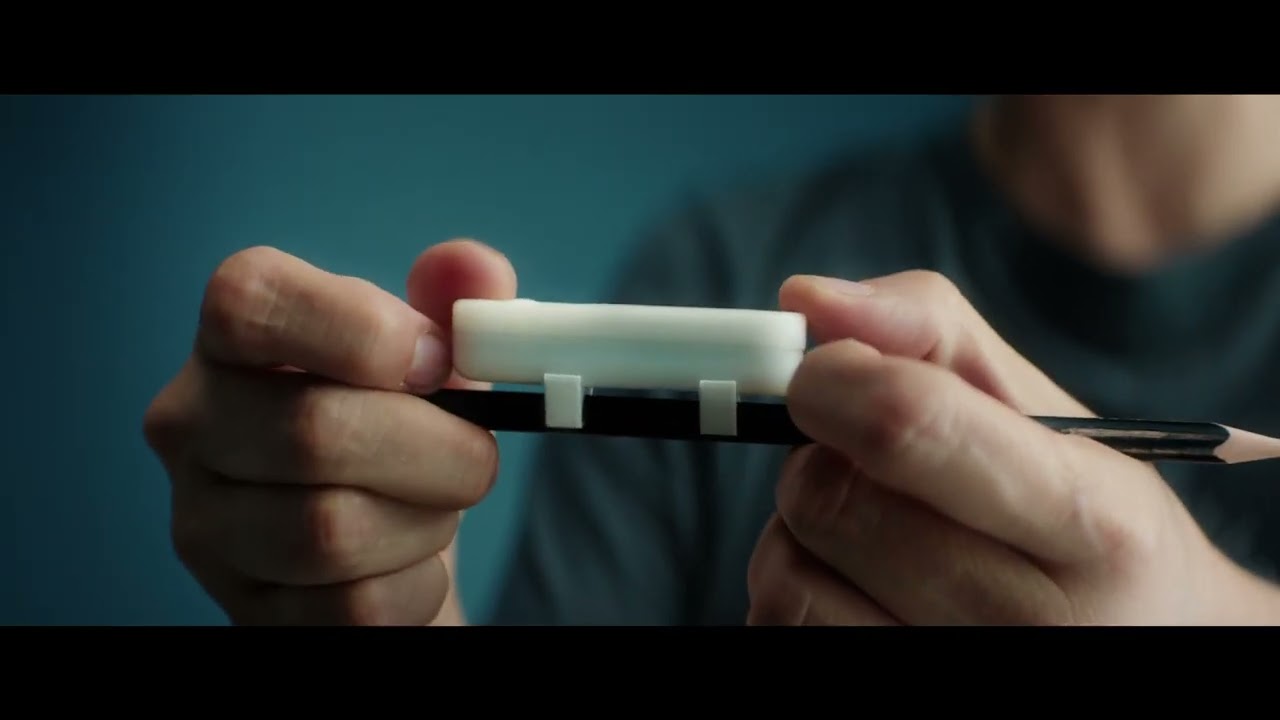
The device itself is a thumb-sized, lightweight, ergonomic clip-on that attaches to any standard pencil or pen on the market. Designed as an open-source, low-cost standalone device, it embeds voice-to-text dictation using Google's open-source speech-to-text technology, completely bypassing the need for smartphones or internet infrastructure. Users simply speak a word into a built-in microphone, watch the voice dictation render the word on a digital display one letter at a time, and then copy those letters directly onto paper.
Iterative Hardware Engineering and Global Pilot Rollouts
Monks designed and manufactured the device in-house, testing five distinct versions before settling on the final model after navigating complex challenges across hardware programming, UX, and product design. The World Literacy Foundation and Media.Monks officially announced the Literacy Pen on April 12, 2024 in a PR Newswire release from New York, establishing a rollout target to manufacture 2,000 Literacy Pens and distribute them across 50 schools by 2025.
The initial deployment was framed as a pilot program across Colombia, Kenya, Nigeria, and Uganda. However, early reporting by MIT Solve noted that official research, outcome numbers, and user data had not yet been collected, with planned future evaluations set to include baseline assessments and pre- and post-intervention tests.
Industry Coverage, Award Recognition, and Critical Feedback
Following its launch, the Literacy Pen was covered by media outlets including ABC, Yahoo! Finance, NBC, ITV News, Fox8, Medium, Morningstar, TNW, and Seeking Alpha. The Next Web highlighted that while text-to-speech pens using OCR are common, speech-to-text pens are rare, noting its potential impact could be massive if widely distributed. Creative publications like designboom and Yanko Design also spotlighted the project. However, Yanko Design raised practical questions about how accessible the tool is for individuals who have never held a pen before, pointing out the lack of pricing and formal testing data.
The project earned major industry recognition, winning a Silver Cannes Lion in 2024 in the Brand Experience and Activation category under Culture & Context. Agency self-reports also claim additional accolades including LIA and El Ojo awards.
Perspectives on the Impact of Educational Technology
we are offering a lifeline to those fighting illiteracy
The Literacy Pen holds the potential to impact millions of people who are limited in their daily lives
The Literacy Pen represents a device poised to change the lives of millions
It can't be stressed enough that literacy is the best tool for empowerment and social change.
Get Who To By deconstruction
This framework highlights how a physical learning innovation converts a daunting, systemic educational barrier into an immediate, self-directed personal habit.
Results
Within two weeks of launch, the campaign generated over 300 million impressions with 100% positive sentiment. The initiative also established plans to manufacture and distribute over 2,000 new Literacy Pen devices by 2025.
300 million+
Impressions generated in two weeks
100%
Positive sentiment achieved
2,000+
Devices planned for distribution by 2025
Strategy Technique
Build an Utility, Not an Ad
By creating a physical tool rather than a traditional advertisement, the brand solves a tangible problem. This approach makes the product the primary vehicle for the mission.
Explore Technique
Creative Technique
Unexpected Utility
The device transforms a standard writing tool into an educational aid. It provides a functional, low-cost solution that directly addresses the physical barrier to literacy.
Explore Technique
Craft Breakdown
The campaign excels through purposeful product design and seamless technology integration, turning high-tech speech recognition into an ultra-accessible learning tool.
The physical device design solves a complex global problem with an elegant, clip-on form factor compatible with any pencil or pen.
By embedding voice-to-text dictation into an standalone, low-cost device, it bypasses the need for smartphones or internet infrastructure.
“The combination of intuitive physical design and embedded voice technology creates a friction-free educational tool accessible to anyone.”
Questions about World Literacy Foundation: The Literacy Pen
Who created The Literacy Pen?
The Literacy Pen was developed by creative agency Media.Monks LA in partnership with the World Literacy Foundation.
How does The Literacy Pen work?
It is a thumb-sized device that clips onto any standard pen or pencil. The user speaks into a built-in microphone, the speech-to-text technology displays the word letter-by-letter on a digital screen, and the user transcribes those letters onto paper.
Does The Literacy Pen require a smartphone or internet connection?
No. The Literacy Pen is designed as a standalone, low-cost device that operates without needing smartphones or internet infrastructure.
What technology powers the device?
The device utilizes Google's open-source speech-to-text voice dictation technology.
Where is the pilot program being conducted?
The initial pilot program covers target regions in Colombia, Kenya, Nigeria, and Uganda.
What awards has The Literacy Pen won?
The Literacy Pen won a Silver Cannes Lion in 2024 in the Brand Experience and Activation category (Culture & Context). Media.Monks also reported wins at LIA and El Ojo.
What were the main media results of the campaign?
The campaign garnered over 300 million impressions within two weeks of launch, achieving 100% positive sentiment and receiving coverage across outlets such as ABC, NBC, ITV News, and Yahoo! Finance.
Credits (8)
| Chief Creative Officer | Jouke Vuurmans |
|---|---|
| Executive Creative Director | Federico Duran |
| Group Creative Director | Tomas Almuna |
| Group Creative Director | Cristian Costa |
| Associate Creative Director (Copy) | Luis Alburqueque |
| Associate Creative Director (Art) | Oscar Gonzales |
| Lead Producer | Liz Ch'ng |
| Lead Producer | Servando Alonso |
Sources (3)
- Literacy Pen (Ads of the World) · adsoftheworld.com
- Cannes Lions entry: Brand Experience and Activation > Culture & Context · lovethework.com
- The Literacy Pen case study (Monks) · monks.com