Samsung: Touchable Ink
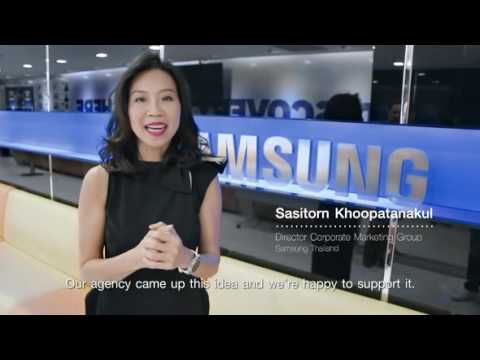
Samsung tasked JWT Bangkok with proving their brand spirit through a CSR initiative for Thailand's visually impaired. The blind community faced a massive Braille gap because specialized printers cost $15,000, leaving many without tactile reading materials. Samsung needed a scalable, low-cost way to make information accessible using their existing technological footprint.
Creative Idea
Created heat-sensitive ink that expands when microwaved, turning standard printers into Braille embossers.
Samsung developed a revolutionary ink that expands when heated, allowing the visually impaired to print tactile Braille using standard home printers, solving the massive cost barrier of specialized equipment through a simple, accessible chemical innovation.
Cooking Braille in a Kitchen Microwave
1.5 Years of Chemical Trial and Error
The development of Touchable Ink required a 1.5-year collaboration between JWT Bangkok and the Department of Chemistry at Thammasat University. The team had to engineer a non-toxic polymer - a mix of embossing powder and standard ink - that was stable enough to pass through a printer head without clogging or causing permanent damage. This shifted the role of the agency from traditional storytellers to product inventors, a move Matt Eastwood (Worldwide CCO) cited as a landmark shift for the industry.
From $15,000 to a Hairdryer
 The primary barrier for the Thailand Association of the Blind was the $15,000 price tag of dedicated Braille embossers. This innovation bypassed that cost entirely by utilizing common household heat sources. Once a document was printed using the specialized cartridge and a custom Braille font, the paper remained flat. The tactile effect was only "activated" when the user applied heat via a hairdryer, clothing iron, or microwave. This "eureka moment," as described by Digital Director Hansa Wonsiripitack, allowed the visually impaired to literally cook their own reading materials.
Beyond the Written Word
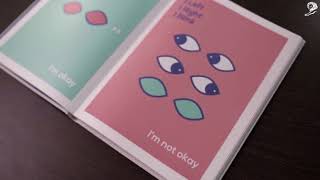
While the project addressed the "Braille gap" for the 90% of visually impaired Thais living in low-income settings, its impact extended to tactile graphics. For the first time, students in trial schools could "see" complex shapes, such as dinosaur anatomy, musical notes, and geographic maps, which are nearly impossible to describe through text alone. The campaign achieved massive scale, generating 225 million impressions in its first week and sparking a global conversation on how corporate R&D can solve accessibility crises.
Creative Strategy Deconstructed
Company
Samsung's expertise in hardware and chemical innovation provided the technical foundation for developing a specialized, heat-reactive ink.
Category
Tech brands often focus on high-end digital accessibility features while ignoring the fundamental, physical need for affordable Braille.
Customer
Visually impaired individuals in low-income regions felt excluded from information because specialized Braille printers were prohibitively expensive.
Culture
A growing global demand for inclusive design and the democratization of technology through low-cost, DIY household solutions.
Company
Samsung's expertise in hardware and chemical innovation provided the technical foundation for developing a specialized, heat-reactive ink.
Category
Tech brands often focus on high-end digital accessibility features while ignoring the fundamental, physical need for affordable Braille.
Strategy:
Democratize specialized accessibility tools by repurposing existing household technology through low-cost, innovative chemical modifications.
Customer
Visually impaired individuals in low-income regions felt excluded from information because specialized Braille printers were prohibitively expensive.
Culture
A growing global demand for inclusive design and the democratization of technology through low-cost, DIY household solutions.
Strategy:
Democratize specialized accessibility tools by repurposing existing household technology through low-cost, innovative chemical modifications.
Results
The campaign successfully developed a low-cost alternative to expensive Braille printers, which typically cost $15,000. By utilizing standard home printers and a specialized ink, the project significantly increased accessibility to Braille materials for the visually impaired in Thailand. The initiative was supported by Samsung Thailand and the Thailand Association of the Blind, leading to the creation of tactile maps, medicine labels, and educational materials. The 'Touchable Ink' provided an affordable way to improve the everyday lives of the blind community, fostering independence and emotional connection through tactile reading.
$15,000
cost of traditional Braille printers replaced by this low-cost solution
100%
compatibility with standard home printers
1st
special ink of its kind to use embossing powder for Braille
Strategy Technique
Build an Utility, Not an Ad
Instead of just talking about accessibility, Samsung and JWT created a tangible product that solved the $15,000 price barrier of Braille printers, making the brand's commitment to innovation functional.
Explore Technique
Creative Technique
Unexpected Utility
By turning a standard household printer into a life-changing accessibility tool, the campaign provided a functional solution that went beyond traditional advertising to offer genuine, unexpected utility.
Explore Technique
Craft Breakdown
The campaign's excellence lies in its innovative use of chemical engineering to solve a social accessibility problem, combined with a deeply human narrative.
The creation of a chemically reactive ink that works with standard hardware is a brilliant 'hack' for social good.
The script effectively balances technical explanation with emotional storytelling, particularly in the final reveal.
“The synergy between the technical breakthrough of the ink and the intimate human stories makes the innovation feel necessary rather than just clever.”