Jacquard Wearable Fabric: Welcome to Project Jacquard
Google ATAP and Google Creative Lab London aimed to launch a revolutionary smart textile technology. They needed to prove that wearable tech could be fashionable, durable, and useful rather than just a gimmick. The goal was to partner with a heritage brand like Levi's to reach urban commuters who needed digital connectivity without the constant distraction of a smartphone screen.
Creative Idea
Wove conductive yarn into traditional denim to turn clothing into a touch-sensitive digital interface.
Google introduced a conductive yarn that weaves interactivity directly into denim, allowing users to control digital devices through simple gestures on their clothing, effectively turning everyday garments into seamless, invisible interfaces that reduce screen dependency.
Weaving Binary Code into 150 Years of Denim
From Savile Row to Silicon Valley
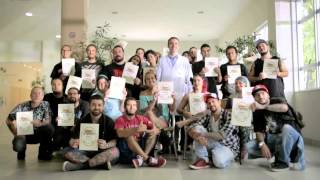
The campaign bridged a massive cultural gap by filming traditional tailors on Savile Row reacting to the "magical" fabric, emphasizing that this was a feat of tailoring as much as engineering. Led by Ivan Poupyrev of Google ATAP and Paul Dillinger of Levi’s, the production highlighted the development of a unique conductive yarn created in Japan. This material combined metallic alloys with natural fibers like cotton, allowing it to be processed on standard industrial looms. To ensure the tech survived the factory, the team had to invent specific "singeing" and washing techniques, though early models were famously limited to 10 washes.
The Look Up Movement
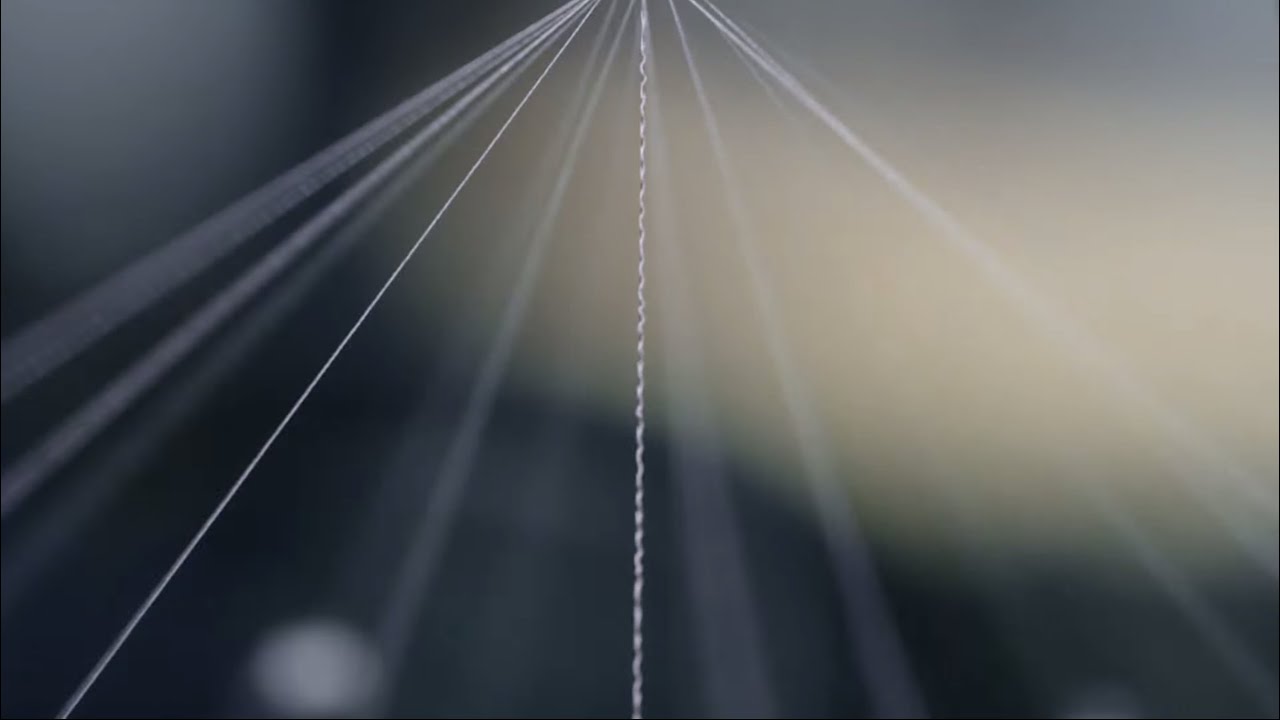 The creative strategy, spearheaded by Steve Vranakis at Google Creative Lab, focused on "ambient computing" to solve screen addiction. By turning a sleeve into a gesture - based interface, the campaign marketed the $350 jacket as a way to maintain "eye contact" with the real world. The project name itself serves as a historical Easter egg, honoring Joseph Marie Jacquard, the 18th - century inventor whose loom used punched cards that eventually inspired binary computer programming.
Scaling the Invisible Interface
The launch film successfully moved the needle for wearable tech, garnering over 1.1 million views and proving that "invisible technology" could be a commercial reality. While Google Glass was often seen as a bulky "cyborg" gadget, Jacquard successfully transitioned smart textiles into a scalable commercial product. The "brain" of the garment was reduced to a single Jacquard Tag the size of a button, allowing the heritage brand to modernize without losing its aesthetic identity.
Creative Strategy Deconstructed
Company
Google ATAP's breakthrough in conductive yarn technology and textile manufacturing.
Category
Wearable tech was often bulky, "cyborg-like" gadgets that felt disconnected from personal style and heritage.
Customer
Consumers felt overwhelmed by screen addiction and wanted to stay connected without constantly looking down at phones.
Culture
The cultural shift toward "ambient computing" where technology becomes an invisible, tactile part of our physical environment.
Company
Google ATAP's breakthrough in conductive yarn technology and textile manufacturing.
Category
Wearable tech was often bulky, "cyborg-like" gadgets that felt disconnected from personal style and heritage.
Strategy:
Transform the interface from a distracting screen to a tactile, invisible layer within everyday physical objects.
Customer
Consumers felt overwhelmed by screen addiction and wanted to stay connected without constantly looking down at phones.
Culture
The cultural shift toward "ambient computing" where technology becomes an invisible, tactile part of our physical environment.
Strategy:
Transform the interface from a distracting screen to a tactile, invisible layer within everyday physical objects.
Results
The 'Welcome to Project Jacquard' launch film garnered over 1.1 million views on YouTube. The project generated massive earned media coverage in global publications including WIRED, The New York Times, Vogue, and The Guardian. The campaign successfully transitioned smart textiles from niche prototypes to a scalable commercial product with the Levi’s Commuter Trucker Jacket retailing for $350. The project received the highest industry honors, including the Cannes Lions Grand Prix in Product Design (2016), a D&AD Wood Pencil, a D&AD Graphite Pencil, and multiple Gold and Silver One Show pencils. It was also a Webby Awards Winner for Technical Achievement and recognized by the Clio Awards for Innovation.
1.1M+
YouTube views for the launch film
Grand Prix
Cannes Lions Product Design winner
$350
Retail price point for commercial launch
Strategy Technique
Build an Utility, Not an Ad
Instead of just talking about the future of wearables, Google and Levi's built the actual infrastructure - a conductive yarn and a functional jacket - that solved the problem of digital distraction.
Explore Technique
Creative Technique
Cutting-edge Tech
The campaign showcases the invention of a new conductive yarn that transforms traditional textiles into touch-sensitive surfaces, using high-end production to demonstrate the seamless integration of digital functionality into physical fashion.
Explore Technique
Craft Breakdown
This campaign masterfully bridges the gap between 18th-century weaving traditions and future-facing ambient computing through a seamless integration of physical and digital design.
The development of a conductive yarn that survives industrial looms and washing cycles represents a breakthrough in 'invisible' interface engineering.
The project honors the heritage of the Jacquard loom while creating a modern, aesthetic-first wearable that avoids the 'cyborg' look of previous tech.
By positioning the product as a solution to screen addiction, the campaign secured high-tier placement across fashion, tech, and lifestyle media.
Filming on Savile Row and in Japanese textile mills grounded the high-tech innovation in a narrative of authentic craftsmanship.
“The 'magic' lies in the synergy between Google's digital innovation and Levi's 150-year heritage, proving that technology is most effective when it is woven into the fabric of daily life.”