2025Canadian Blood ServicesNot-for-Profit & GovernmentVideo ad
Canadian Blood Services: Who’s Saving Who
Canadian Blood Services and agency Diamond sought to recruit one million new donors by 2030 to address rising medical demand. They needed to move beyond traditional guilt-based appeals to engage a younger, socially conscious audience. The goal was to increase donor retention by identifying a more sustainable, emotionally resonant motivation for participation in the national blood and plasma donation program.
Creative Idea
The campaign reframed blood donation as a personal reward rather than a moral duty.
By shifting the narrative from moral obligation to personal fulfillment, the campaign highlights the emotional rewards donors gain, successfully recruiting new donors by framing the act of giving as a meaningful, identity-affirming experience rather than a chore.
Reframing The Reciprocity Of Saving Lives
Authentic Voices Over Scripted Actors
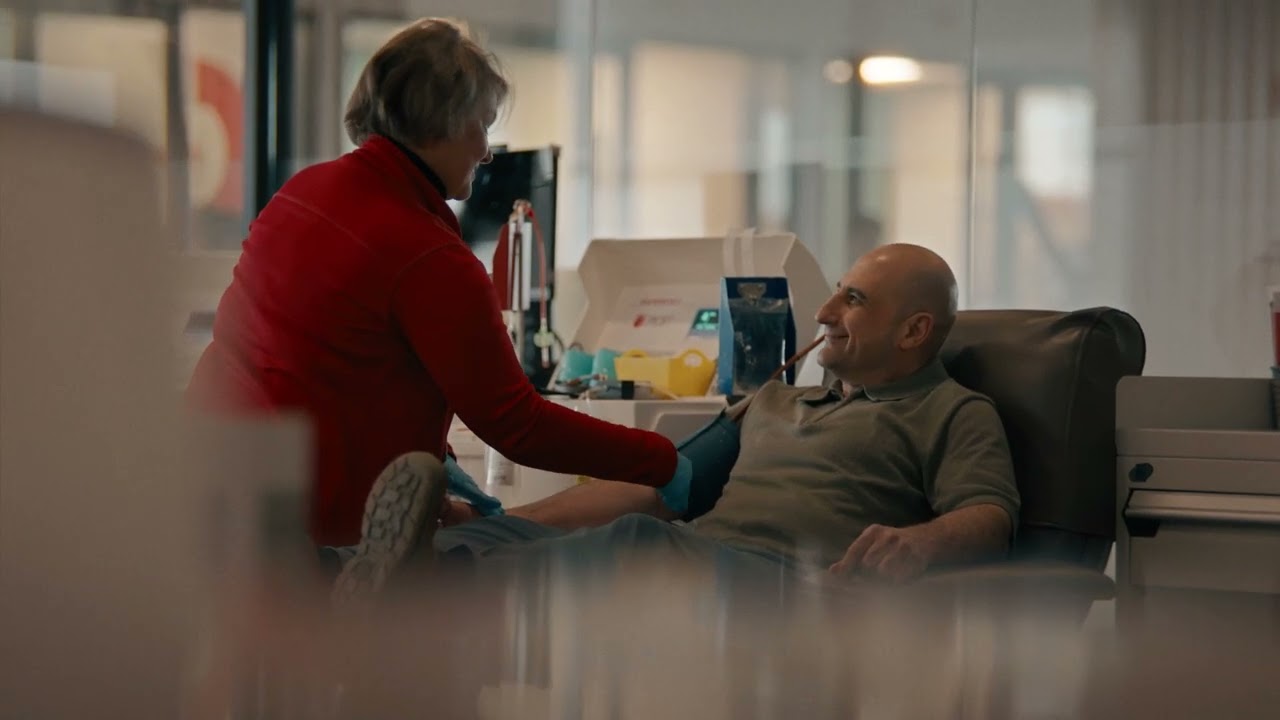
To capture the genuine emotional resonance of the donor experience, the production team moved away from hiring actors. Instead, they filmed real Canadian blood and plasma donors, such as Hassan, who shared their personal motivations on camera. Hassan, an Iraqi-born donor, described his participation as a way to find belonging and gratitude within the Canadian medical system, framing his plasma donation as a small step in a larger revolution of care.
Stunts And Shared Tables
The campaign utilized a high-stakes visual approach in its hero film, I Am Here to Save You, which featured a vehicle rollover sequence. The production team used a small ramp and filmed the interior of the car with stunt drivers in a single, continuous camera setup to maintain visual intensity. To ground the campaign in human connection, the agency also launched the Common Ground Café in Toronto. This experiential activation invited donors to sit face-to-face with transfused patients, fostering direct dialogue about the mutual impact of the donation process.
Shifting The National Narrative
The campaign was developed to address a critical supply gap, as medical demand for red blood cells rises by 2% annually and plasma demand by 10% annually. By targeting a younger demographic, including Gen Z, the strategy successfully tapped into the desire for no-cost social impact. Post-launch data indicated that 71% of Canadians now view donation as a meaningful community contribution, while 67% of recent donors reported gaining significant emotional rewards from the act, validating the agency's shift from guilt-based messaging to a focus on personal fulfillment and identity.
4C Framework deconstruction
Company
Canadian Blood Services leveraged its national infrastructure and critical role in healthcare to facilitate life-saving donations.
Category
The category typically relies on guilt-based messaging and urgent pleas to recruit donors for medical needs.
Customer
Donors sought meaningful connection and a sense of purpose, rather than just fulfilling a moral duty.
Culture
Younger generations are increasingly seeking tangible, no-cost ways to make a positive social impact and find identity.
Company
Canadian Blood Services leveraged its national infrastructure and critical role in healthcare to facilitate life-saving donations.
Category
The category typically relies on guilt-based messaging and urgent pleas to recruit donors for medical needs.
Strategy:
Shift the focus from recipient need to donor fulfillment to build long-term engagement.
Customer
Donors sought meaningful connection and a sense of purpose, rather than just fulfilling a moral duty.
Culture
Younger generations are increasingly seeking tangible, no-cost ways to make a positive social impact and find identity.
Strategy:
Shift the focus from recipient need to donor fulfillment to build long-term engagement.
Strategy Technique
Find the Consumer Truth
The agency discovered that donors weren't motivated by guilt, but by the personal sense of purpose they gained. This insight allowed them to pivot the messaging to focus on the donor's emotional reward.
Explore Technique
Creative Technique
Testimonial
The campaign uses authentic, unscripted stories from real donors like Hassan. This approach builds genuine emotional resonance by letting individuals share their personal motivations for giving.
Explore Technique
Craft Breakdown
The campaign excels through authentic documentary storytelling and subtle cinematography that treats real donor stories with dignity and emotional depth.
Intimate lens choices and soft depth of field elevate a routine clinical procedure into a cinematic personal journey.
The simple, authentic first-person narrative framing creates a powerful contrast between past hardship and present gratitude.
“The combination of unscripted personal history and understated visuals creates an authentic emotional connection without feeling melodramatic.”