2026Foundation to Combat AntisemitismNot-for-Profit & GovernmentVideo ad
Foundation to Combat Antisemitism: Sticky Note
The Foundation to Combat AntiSemitism tasked VML with creating a campaign to address rising antisemitism among U.S. youth. The goal was to move beyond awareness and encourage active allyship among non-Jewish audiences. The client needed a relatable, high-impact narrative that would provide a clear, actionable way for students to stand up against hate in their daily lives.
Creative Idea
A student covers a slur with a blue square to model active allyship.
The campaign uses a simple, relatable school bullying scenario to demonstrate the power of active allyship. By covering a slur with a Blue Square, it provides a clear, actionable visual metaphor for standing up against hate in everyday life.
Bringing the Blue Square to Life in the Classroom
Crafting a Tactile Metaphor for Allyship
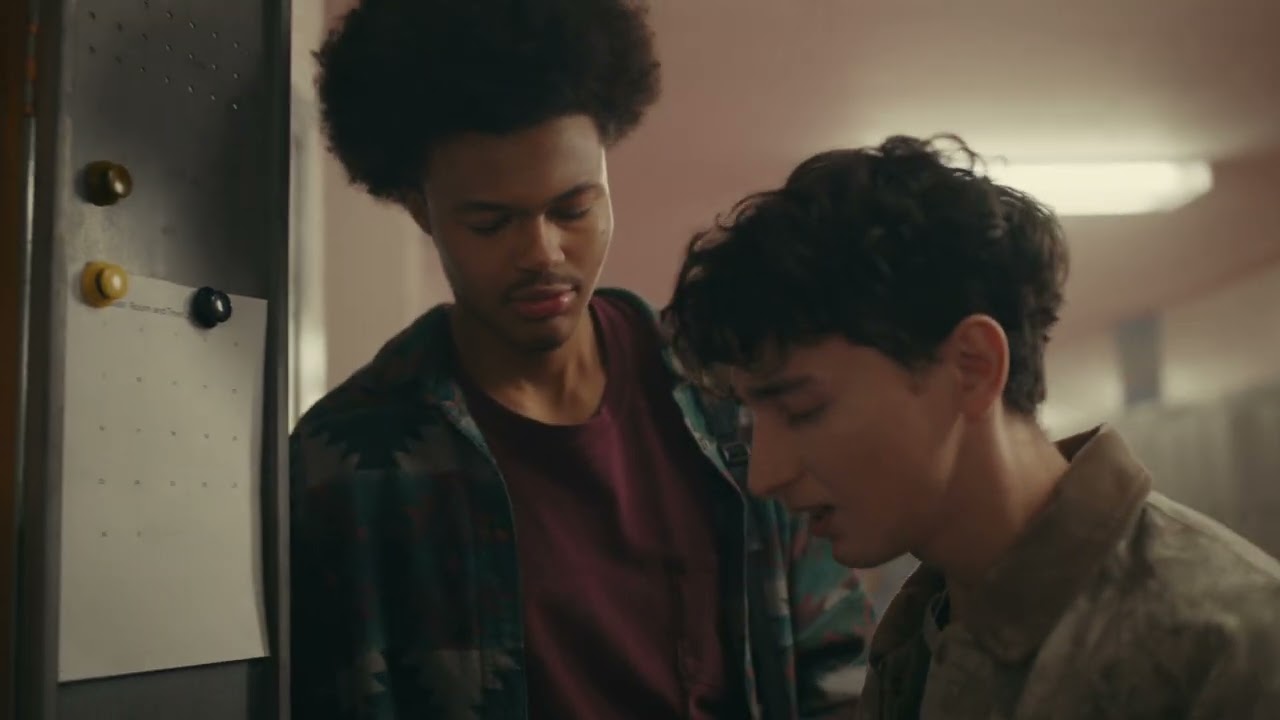
The campaign uses a simple, highly visual metaphor of the iconic blue square covering hate, executed through naturalistic acting and precise visual storytelling. The art direction translates the central symbol into a tactile physical object that seamlessly drives the plot narrative. Combined with subtle, authentic performances by teenage actors, the piece captures the realistic vulnerability of facing prejudice and the quiet strength of active allyship. Art direction serves as the primary craft driving the campaign's case video.
Released by the Blue Square Alliance Against Hate (formerly the Foundation to Combat Antisemitism) and created by VML, the 30-second Super Bowl spot titled "Sticky Note" depicts a Jewish teen finding an antisemitic note reading "Dirty Jew" attached to his backpack. A Black classmate covers the slur with a blue square and reassures him, while another classmate attaches a blue square to his own chest and walks alongside the student. On-screen text underscores the stakes, noting that 2 in 3 Jewish teens have experienced antisemitism.
Strategic Directness and Broader Media Placement
The ad forms part of a reported $15 million push across television, social media, YouTube, billboards, and NBC's Winter Olympics coverage over the following months. According to leadership, the campaign targeted a general audience rather than Jewish viewers specifically, testing and tweaking the ad for those disengaged from the issue. The group chose a school setting to show an approachable form of allyship, noting that the slur featured in the ad had appeared in nearly 500 million social media impressions over three years.
This marked a shift from the group's previous Super Bowl spots - such as a 2024 ad featuring a Martin Luther King Jr. speechwriter and a 2025 ad featuring Tom Brady and Snoop Dogg against "all hate" that did not explicitly mention Jews. Following criticism from Jewish activists over the 2025 ad's broader focus, the 2026 spot took a more direct approach by explicitly addressing antisemitism.
A Polarized Reception Within the Community
The commercial drew sharp criticism and debate within the Jewish community, with some calling the $15 million spend wasteful while others defended it. Critics voiced concerns ranging from the portrayal of Jews as passive or weak to arguments that funds would be better spent on internal community resources like Jewish Day Schools. A columnist from *Tablet* criticized it as "quivering victimhood," while a writer for *The Forward* remarked that the ad felt more like a '90s teen flick than current lived reality.
Conversely, defender commentary from the *Jewish Journal* noted that because the ad was designed for non-Jewish general audiences, it succeeded by that metric. Other observers praised the ad for being clear about the issue it addressed, while *Adweek* noted that the spot placed the cause squarely back on the Jewish people while headlining that it "Nails the Cause, But Not the Craft."
Perspectives from Leadership
Gen Z is three times more likely to witness antisemitism but twice as likely to say it's not a problem.
stand up for each other and stand up to hate wherever you see it.
Get Who To By deconstruction
The framework clearly maps how transforming passive, non-Jewish bystanders into active allies requires grounding an abstract social issue in everyday personal intervention.
Results
The spot achieved strong engagement metrics, ranking 5th in the 2026 HarrisX Super Bowl ranking with a score of 85.4 on the HarrisX Ad Index. It placed in the top 10 most replayed Super Bowl LX ads according to Kinetiq and recorded the highest intense negative emotion score of any Super Bowl LX ad in DAIVID's measurement. An independent randomized experiment by the ADL's Center for Antisemitism Research found viewers were notably more motivated to fight antisemitism and interrupt antisemitic comments.
85.4
Score on the HarrisX Ad Index
5th
Rank in HarrisX Super Bowl study
Top 10
Most replayed Super Bowl LX ads
Strategy Technique
Make the Invisible Visible
It highlights the quiet, everyday reality of antisemitic harassment that often goes unnoticed by bystanders. By exposing this hidden behavior, the campaign forces the audience to acknowledge the need for intervention.
Explore Technique
Creative Technique
Dramatize the Solution
The ad visualizes the solution to antisemitic bullying by literally covering the hate with a symbol of solidarity. This makes the abstract concept of being an upstander tangible and easy to replicate.
Explore Technique
Craft Breakdown
The campaign uses a simple, highly visual metaphor—the iconic blue square covering hate—executed through naturalistic acting and precise visual storytelling.
Translates the campaign's central blue square symbol into a tactile physical object that seamlessly drives the plot narrative.
Subtle, authentic performances by the teenage actors capture the realistic vulnerability of facing prejudice and the quiet strength of allyship.
“The emotional resonance comes from combining the symbolic visual device of the blue square note with subtle, authentic performances.”
Questions about Foundation to Combat Antisemitism: Sticky Note
Who created and directed the 'Sticky Note' ad?
The ad was created by creative agency VML for the Blue Square Alliance Against Hate and was directed by Jake Scott.
What happens in the 'Sticky Note' commercial?
In the spot, a Jewish teenager finds an antisemitic note reading 'Dirty Jew' stuck to his backpack. A Black classmate covers the slur with a blue square sticky note, while another student attaches a blue square to his own chest and walks alongside him in solidarity.
Why was the setting and story chosen?
President Adam Katz stated that the organization chose a high school setting to showcase allyship in an approachable, relatable way, responding to data that 2 in 3 Jewish teens have experienced antisemitism.
How did the 2026 ad differ from the organization's previous Super Bowl ads?
Unlike the 2025 Super Bowl spot that spoke broadly against 'all hate' without mentioning Jewish people, the 2026 ad explicitly names antisemitism following criticism from Jewish activists about previous messaging.
What were the results of the ADL's study on the ad?
An independent experiment by the ADL found that viewers of the ad were notably more likely to view antisemitism as a serious problem, feel motivated to fight it, and intervene when hearing antisemitic comments.
Why did the campaign spark controversy within the Jewish community?
Opinions were split: some critics called the $15 million budget a waste that should have funded educational institutions like Jewish Day Schools, while others criticized the ad for portraying Jewish teens as weak or passive victims. Defenders argued that because the ad targeted a non-Jewish general audience, its messaging was clear and effective.
Sources (3)
- Robert Kraft's Blue Square Alliance to Air "Sticky Note" Super Bowl Ad · adsofbrands.net
- Adweek - Blue Square Alliance shifts focus back to antisemitism at Super Bowl · adweek.com
- Marketing Dive - HarrisX Super Bowl LX ad ranking · marketingdive.com