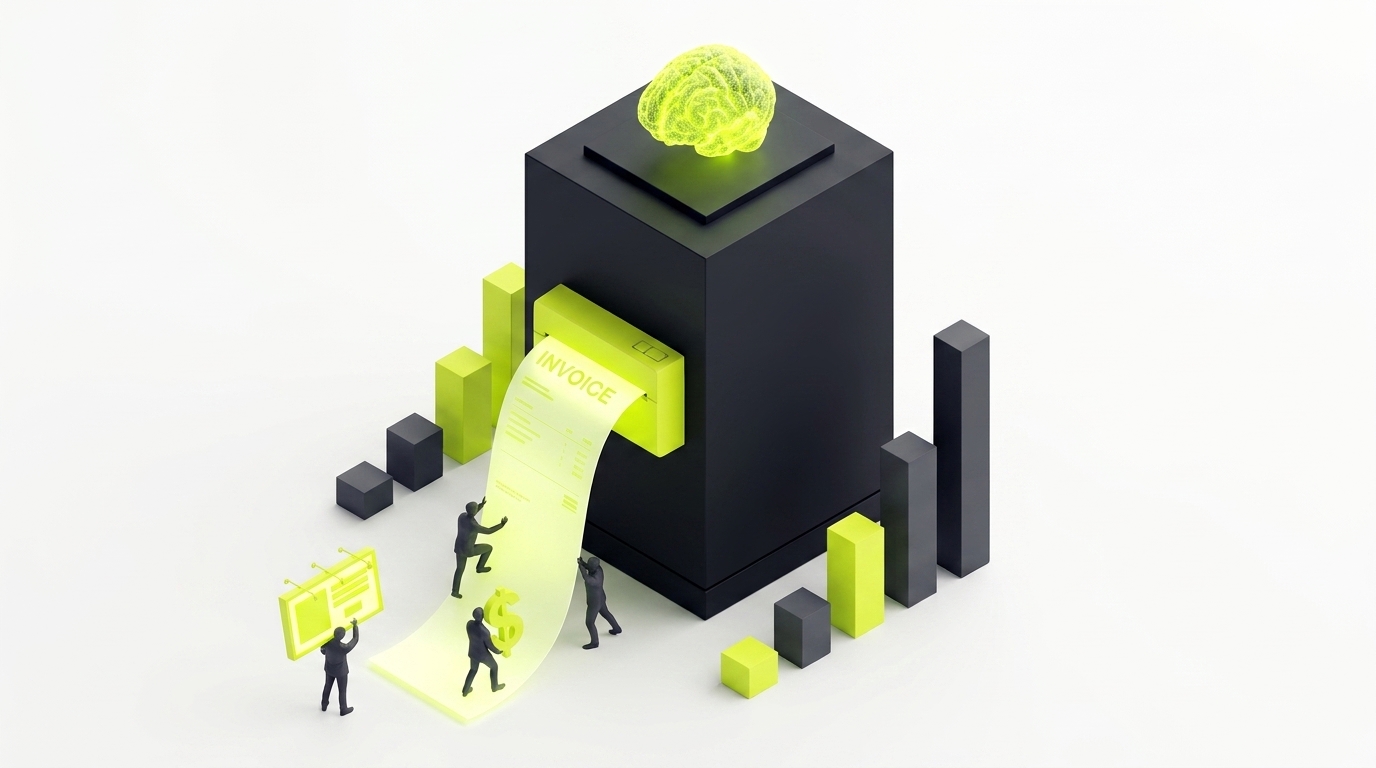
A strategic look at this week's AI updates from Runway, OpenAI, Getty, and Meta, analyzed through a brand strategy lens for planners and marketing directors.

The Automation of the Middleman - and the Fight for Distinctive Real Estate
Every week, the tech press treats new AI releases like a series of theological events. But for those of us who have to actually sell products to real, distracted humans, the question is much simpler: does this change how we build mental availability, or is it just another way to make cheaper, faster wallpaper? This week's developments suggest we are moving past the era of 'neat tricks' and straight into the plumbing of creative production and media distribution. The smart play isn't to marvel at the pixels - it's to look at where the legal risk, the media inventory, and the attention are shifting.
---Runway Agent 2.0: The Automated Briefing Room
Runway has launched Agent 2.0, designed to ingest marketing briefs and generate campaign assets directly. For agency workflows, this is a double-edged sword. On one hand, it promises to eliminate the agonizing three-day delay between a client brief and the first visual tissue session. On the other, it risks turning the strategic process into a closed-loop feedback system where average inputs guarantee beautifully rendered, entirely average outputs. If the machine writes the brief and generates the assets, the brand's distinctive assets are the first casualty. The strategist's job on Monday is no longer just writing the brief - it is protecting the friction, the weirdness, and the human tension that keeps a campaign from looking like every other category competitor.
OpenAI GPT-5.6 Sol: The Analytical Engine Gets a Brain Upgrade
OpenAI has previewed GPT-5.6 Sol, focusing heavily on advanced reasoning, coding, and analytical capabilities. While the tech world drools over the cybersecurity implications, the marketing director should look at consumer search behaviour and market research. As these models become more analytical, they are increasingly acting as the gatekeepers of brand discovery. If a consumer asks an agent to 'find the most reliable family SUV with the lowest cost of ownership', the brand that relies on vague, emotional lifestyle slogans will simply be filtered out of the consideration set. We are entering a world where your share of search is determined by how clearly your brand's functional truths are indexed by reasoning engines.
"The danger of frictionless creative production is that when everyone can generate a masterpiece in ten seconds, the only thing that stands out is a stubborn, highly expensive piece of human reality."
Getty Images and OpenAI: The Legal Shield for Creative Production
Getty Images has announced a display partnership with OpenAI, bringing licensed, commercially safe imagery into the generative pipeline. This is a massive shift for brand safety and budget allocation. Until now, enterprise brands have hesitated to use generative AI in public-facing campaigns due to the looming threat of copyright lawsuits. By wrapping the technology in Getty's legal indemnity shield, the barrier to scale has collapsed. Expect a massive surge in programmatic asset volume. The challenge for creative directors will be maintaining brand consistency when the production pipeline is running at a million miles an hour on pre-approved, legally safe pixels.
ByteDance Seedance 2.5: The 30-Second TikTok Factory
ByteDance has unveiled Seedance 2.5, an AI model engineered specifically to generate high-quality, 30-second videos from text prompts. This isn't just a technical update - it is a direct assault on social media ad inventory. Because ByteDance owns TikTok, this model is pre-tuned for the vertical, high-energy, attention-grabbing format that dominates the platform. For brands, this means the cost of testing social hooks is dropping to zero. You can now run fifty variations of an ad in a single afternoon to find the one that stops the thumb. But remember: testing only tells you which of your bad ideas is the least bad. It doesn't generate the big, cultural idea that builds long-term brand equity.
Figma Motion Graphics: Democratizing the Screen
Figma has integrated AI motion graphics and shader tools directly into its design suite. Historically, high-end motion design required specialized talent, expensive software, and lengthy render times. By bringing these tools into the collaborative canvas, Figma is making dynamic, interactive UI and motion assets a standard part of the design process. For digital product design and retail media networks, this means static banners are officially obsolete. The expectation for every digital touchpoint is now rich, responsive movement. The brand challenge is ensuring this movement serves a purpose - like guiding a user to checkout - rather than just creating visual noise that distracts from the product.
Google Gemini 3.5 Flash: The Computer Does the Boring Work
Google has introduced 'computer use' capabilities to Gemini 3.5 Flash, allowing the model to interact with desktop interfaces, click buttons, and navigate software like a human. In the short term, this is a massive productivity win for marketing teams buried in timesheets, media reporting, and campaign setup. In the long term, it shifts how we think about consumer touchpoints. If an AI agent can book a flight, order groceries, and manage subscriptions on a user's behalf, the traditional e-commerce funnel is broken. Your brand needs to be easy for an agent to buy, not just pleasant for a human to look at. Physical availability and seamless API integration are about to become your most important brand assets.
Meta and EssilorLuxottica: The Battle for the Face
Meta has deepened its partnership with EssilorLuxottica to launch their latest smart glasses. This is a long-term play for the ultimate ad inventory: the user's field of vision. By embedding AI into stylish, everyday eyewear, Meta is positioning itself to own the context layer of reality. Imagine walking down the street and having an AI whisper a discount code for the coffee shop you are looking at. For retail brands, this is a massive opportunity for real-time relevance. But it also means the battle for physical availability is moving to the digital overlay. If you aren't mapped in the agent's database, you don't exist in the consumer's reality.
---Your Monday Morning Action Plan
Do not write a memo about 'embracing AI' or schedule another vague brainstorming session. Instead, give your team a concrete task to test these shifts under load:
- Write a brief for your next campaign, input it into Runway Agent 2.0, and compare the visual outputs to your agency's tissue session. Use the machine's work to identify the generic category clichés you need to actively avoid.
- Audit your brand's digital presence through a reasoning engine. Ask a modern LLM to compare your product's functional specs against your top three competitors. If your brand doesn't show up in the answer, your mental availability has a pipeline problem.