Is the group brainstorm a creative ritual or a productivity crime? We compare collective chaos with the power of solitary strategy.

The Myth of the 'Magic' Meeting Room
The classic brainstorm. A ritual we perform to feel like we are collaborating, even when we are actually just waiting for the loudest person in the room to stop talking.
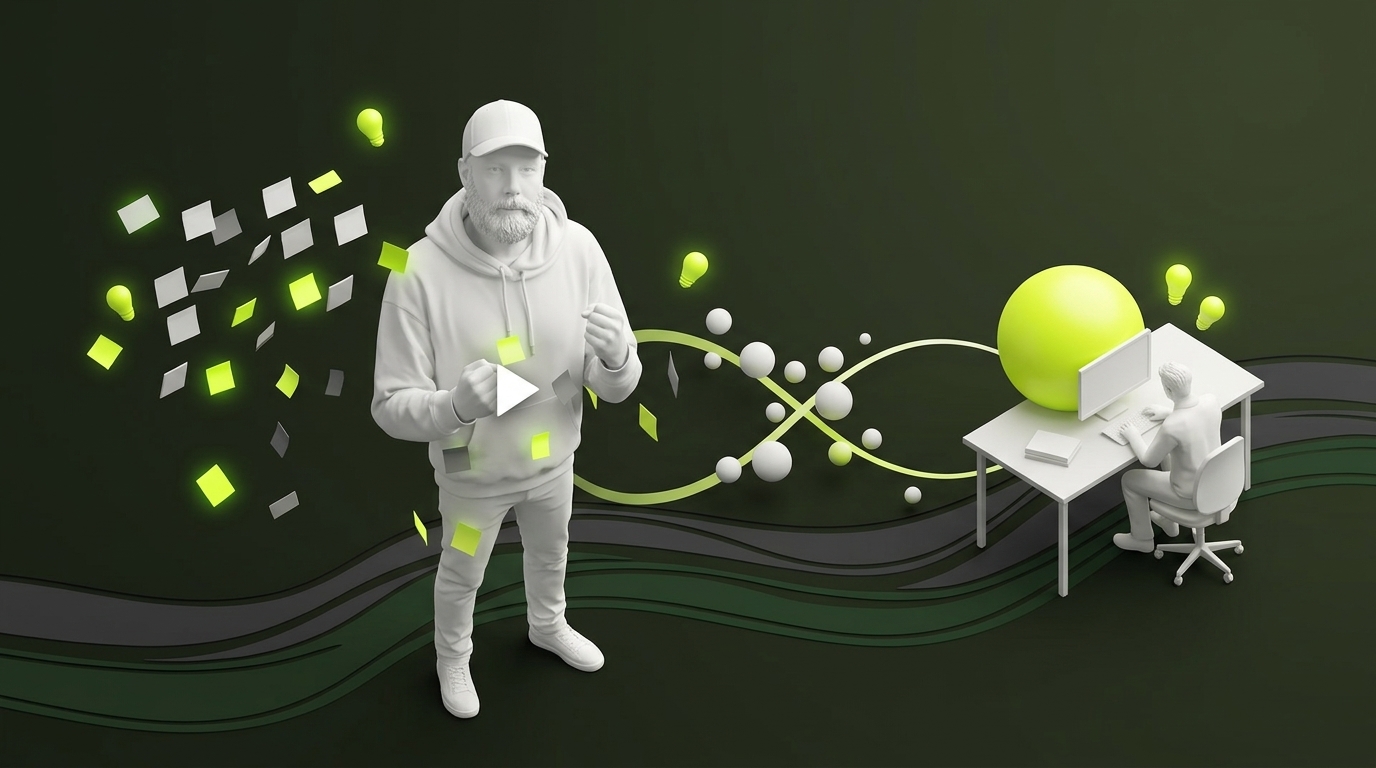
But then there is Selfstorming. It sounds like something you do in a dark room with a candle and a copy of Hegarty on Advertising, but it is actually the disciplined art of individual ideation. Before you throw your Sharpies at me, let us be clear: this is not a hit piece on teamwork. It is an autopsy of how we actually get to the 'Big Idea' without losing our sanity or our strategic integrity.
The Psychology of the Crowd
The problem with traditional brainstorming is not the people; it is the biology. When you put eight creative strategists in a room, the Social Proof Law kicks in faster than a free bar at an awards show. We instinctively look for cues from others. If the Creative Director laughs at a pun, suddenly everyone is writing puns. This leads to 'groupthink', a state where original thought goes to die in favor of social harmony.
"Brainstorming is often just a polite way of ensuring nobody takes individual responsibility for a mediocre campaign."
Selfstorming, on the other hand, leans into the Autopilot Law. By working alone, you bypass the need to perform for an audience. You can follow a train of thought into the weird, the uncomfortable, and the statistically improbable without worrying if your colleagues think you have finally lost the plot. It is where the Brutal Honesty happens.
The Comparison: Methods to the Madness
To help you decide which weapon to wield for your next brief, I have mapped out the cold, hard reality of both approaches. Neither is perfect, but one is definitely more likely to result in you actually leaving the office before 7 PM.
Brainstorming | Selfstorming | |
|---|---|---|
Velocity | Slow. Interrupted by 'Dave's weekend stories'. | Fast. Limited only by your reading speed. |
Psychological Safety | Low. Fear of looking stupid is real. | High. You can be as stupid as you like. |
Diversity of Thought | Surface level. Groupthink usually wins. | Allows for weird rabbit holes. |
Strategic Rigor | Variable. Often drifts into 'cool execution'. | High. Easier to stay tethered to the brief. |
Energy Levels | Performative. Drains the introverts. | Focused. Preserves creative stamina. |
The Case for the Group (When it Actually Works)
I am not a monster. Brainstorming has its place. If you need to build a Tribe within your agency or you need to 'plus' an existing idea, the collective friction of different brains can be useful. It is great for selection, but it is usually terrible for generation. As Rory Sutherland might suggest, the group is better at spotting the psychological flaws in a solution than it is at inventing the solution itself.
The Case for Selfstorming
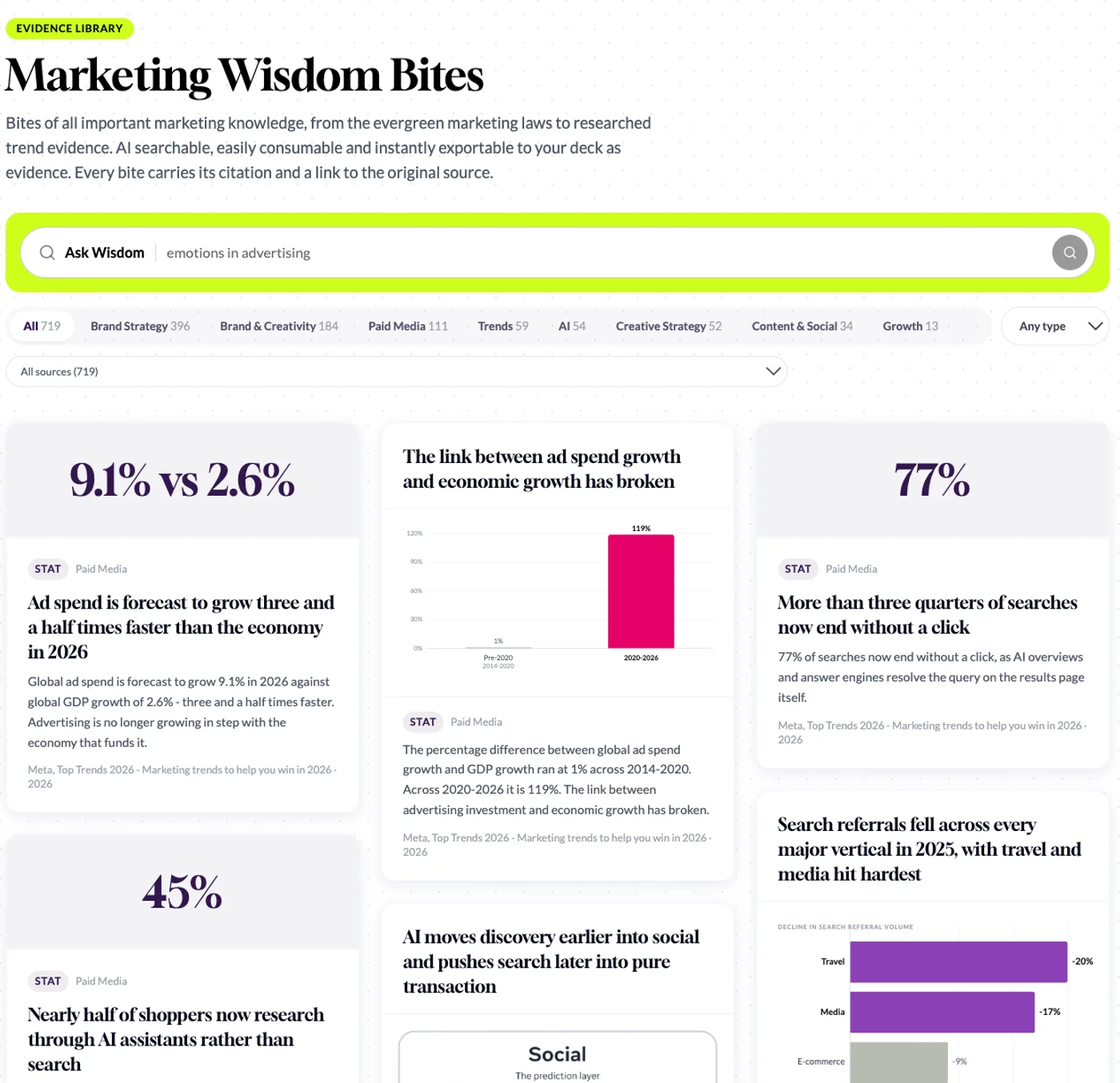
When you use a tool like the Creative Session, you aren't just thinking; you are navigating a structured library of human behavior. You are looking at the Double Jeopardy Law and asking how it applies to a disruptor brand. You are checking the Turn Weakness Into Strength technique to see if your product's slow shipping is actually a sign of 'artisanal care'.
How to Selfstorm Efficiently
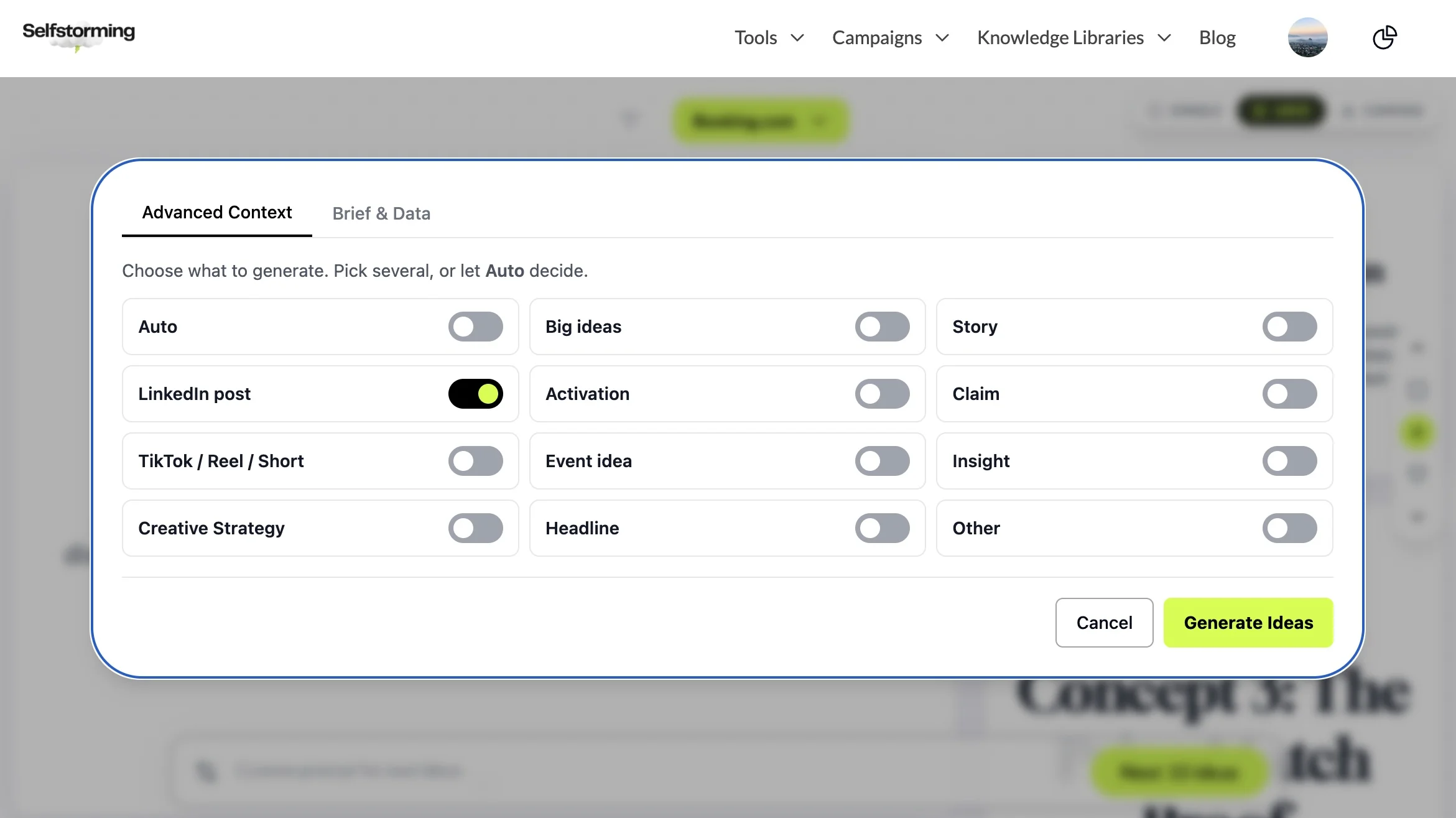
Drop the brief or write one: Use the Creative session if you already have a strategy direction, or Strategy session if need to find one.
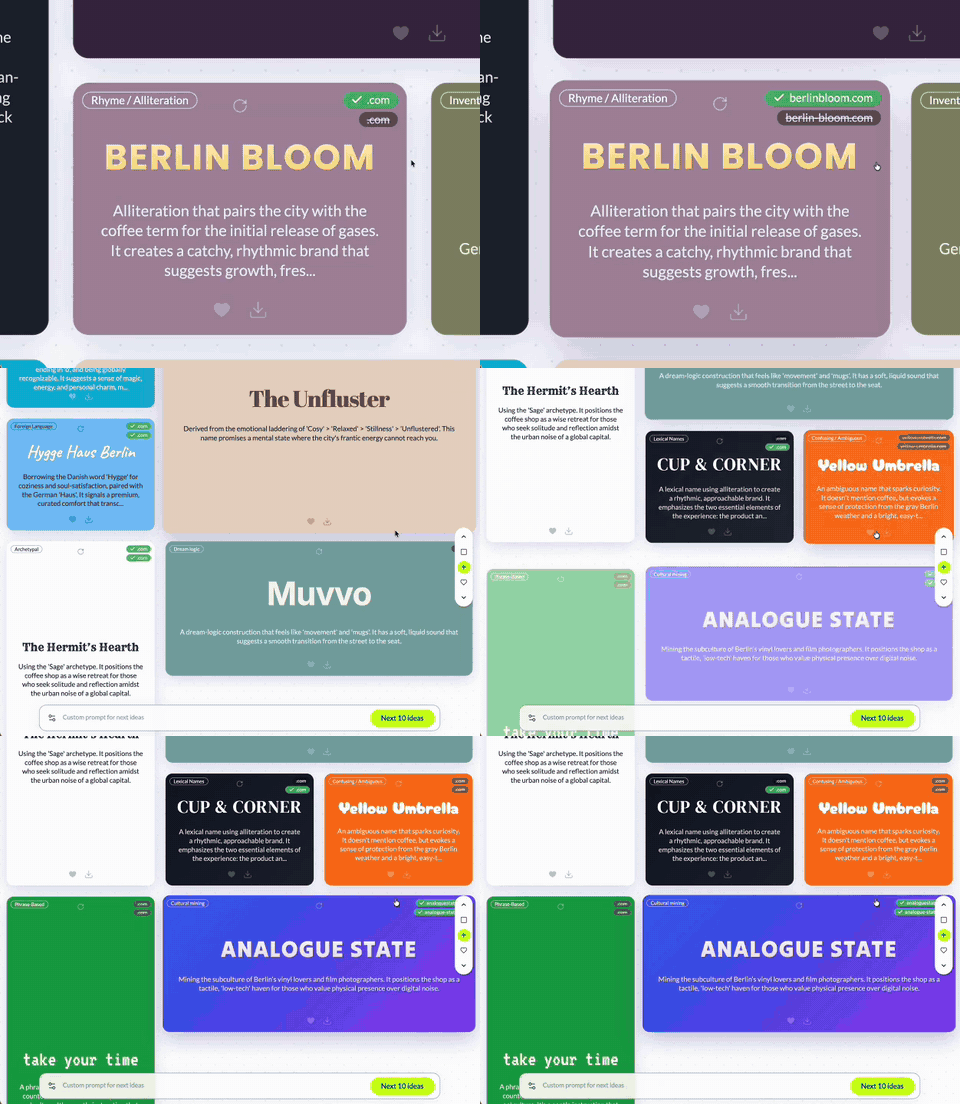
Generate ideas: Curate ideas worth elaborating. Ideas that pursue the goal and make your brand easier to think of. Edit, add your own.
Share or export: Create a shareable board to send your colleagues, CD for review or export to powerpoint to present.
Is the Brainstorm Dead?
No, but it needs a promotion. It should be moved from 'Idea Generator' to 'Idea Stress-Tester'. The most effective creative process looks like this: Selfstorm first, Groupstorm second. You go into the woods, find the gold, and then bring it back to the village to see if it is actually shiny or just yellow mud. This protects the Distinctiveness of the original thought while benefiting from the collective's ability to spot a disaster before it hits the client's inbox.
Summary: Choosing Your Path
If you want to have a nice chat and eat some catered sandwiches, book a brainstorm. If you want to find the Consumer Truth that actually sells product, lock yourself in a room with a strategy library. In the end, creativity is a solitary sport played by people who eventually have to show their work to a crowd. Respect the process, but more importantly, respect your own brain's need for some peace and quiet.
"No one ever erected a monument
to a committee."
John Hegarty
So, the next time someone invites you to a 'quick ideation huddle', maybe suggest a Hooks Session instead. Your sanity - and the client's ROI - will thank you.