Creativity’s value has plummeted by 75% in 30 years. Here is how to stop selling 'kilos of content' and start selling actual strategic impact.
Andrew Tindall recently flagged a graphic by Michael Farmer as the most terrifying data point in modern marketing. If you are a creative strategist, it’s the equivalent of a horror movie jump-scare. It reveals that the price of 'creative output' has dropped by a staggering 75% over the last three decades. In short: we are working four times harder to make the same money our predecessors did while sipping martinis in the 90s.
Price of Creative Agency Work
over 33 years
(Price per ScopeMetric Unit, constant dollars)
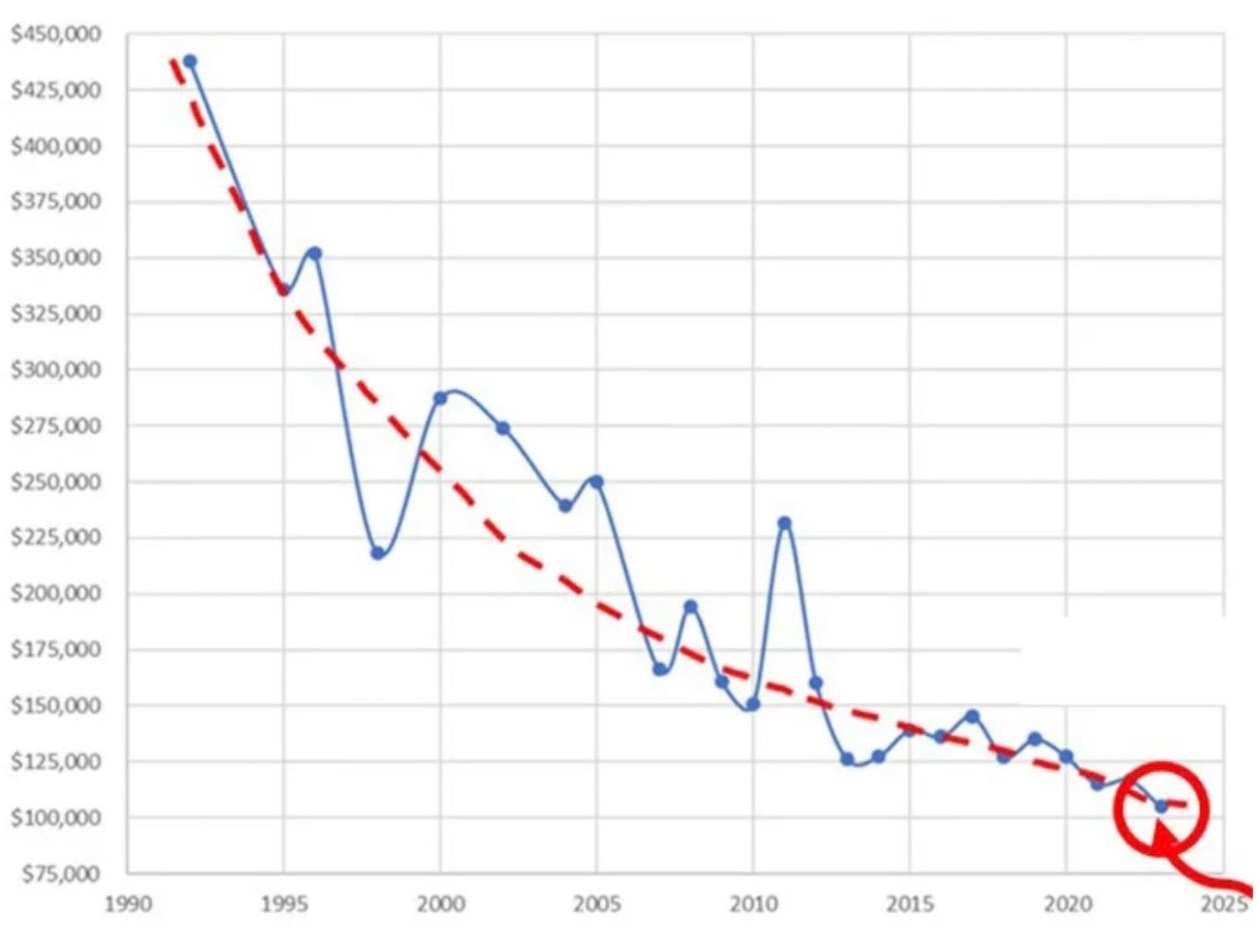
Welcome to the era of the 'Commodity Trap.' Where agencies and freelancers are no longer paid for the 'Big Idea,' but for the volume of assets they can pump into the hungry, soul-sucking maw of the social media algorithm. If you feel like a high-speed hamster on a low-battery wheel, this is why.
What is a 'ScopeMetric' and Why Are Agencies Losing?
Michael Farmer coined the term ScopeMetric to standardize creative work. Think of it as a 'kilo of creativity'—roughly the effort required for one 30-second TV spot. His research shows that while the volume of work (the scope) has exploded, the fees have remained flat or declined. We have traded high-margin brilliance for low-margin manual labor.
Why? Because we fell for the efficiency lie. We started treating The Law Of Being Ignored as a production problem rather than a creative one. We thought that if we just made 50 versions of a mediocre ad, someone would eventually care. Spoiler: they don't.
The Performance Marketing Hangover
The rise of digital attribution created a generation of CMOs addicted to immediate, trackable ROI. This led to a massive over-investment in short-term activation. According to The 60/40 Law, brands should balance long-term brand building and short-term activation. Instead, we tilted the scales so far toward 'click-here-now' buttons that we forgot why anyone would want to click in the first place. But I admit there is for sure some completely reasonable optimisation and use of performance marketing instead of Big Ideas only. But the ratio has to right.
AI: The Great Commodity Accelerator
If you thought a 75% drop was bad, wait until AI finishes its breakfast. Generative tools have turned the 'execution' phase of creativity into nearly a commodity. If your value proposition is 'I can make a social media banner,' you are competing with a bot that doesn't need coffee breaks or health insurance. This is the Law Of Over-Optimization in real-time. When everyone uses the same tools to produce the same 'optimized' garbage, everything starts to look like a blurry, beige mess.
"AI won't replace the strategist who understands human tension; it will only replace the one who was basically a human API for Powerpoint."
How to Exit the Commodity Trap
You can’t win a race to the bottom unless you plan on being the cheapest, and trust me, you don't. Here is how to reclaim your value using actual marketing science:
1. Stop Selling Assets, Start Selling Availability
Clients don't need 'more posts.' They need Mental Availability. Your job isn't to fill a grid; it's to ensure that when a category entry point (CEP) triggers, the consumer thinks of the brand. Use the Category Entry Points (CEP) framework to show clients that strategy is about memory structures, not just pixels.
2. Lean Into the 'Uncomfortable' Truths
Efficiency is boring. Effectiveness is often weird. Campaigns like Mountain Dew: PuppyMonkeyBaby or Burger King: The Moldy Whopper didn't come from an optimization loop. They came from a Creative Session designed to break conventions. In a world of 75% cheaper ideas, the only ones that hold value are the ones people can't look away from.
3. Use Brutal Honesty as a Differentiator
The market is flooded with 'corporate fluff.' Use the Pratfall Law. Admit what the brand sucks at to make the things it's great at more believable. Look at Domino's: Pizza Turnaround. They admitted their pizza tasted like cardboard. That honesty bought them more brand equity than ten years of 'innovative' slogans ever could.
The Strategist’s New Job Description
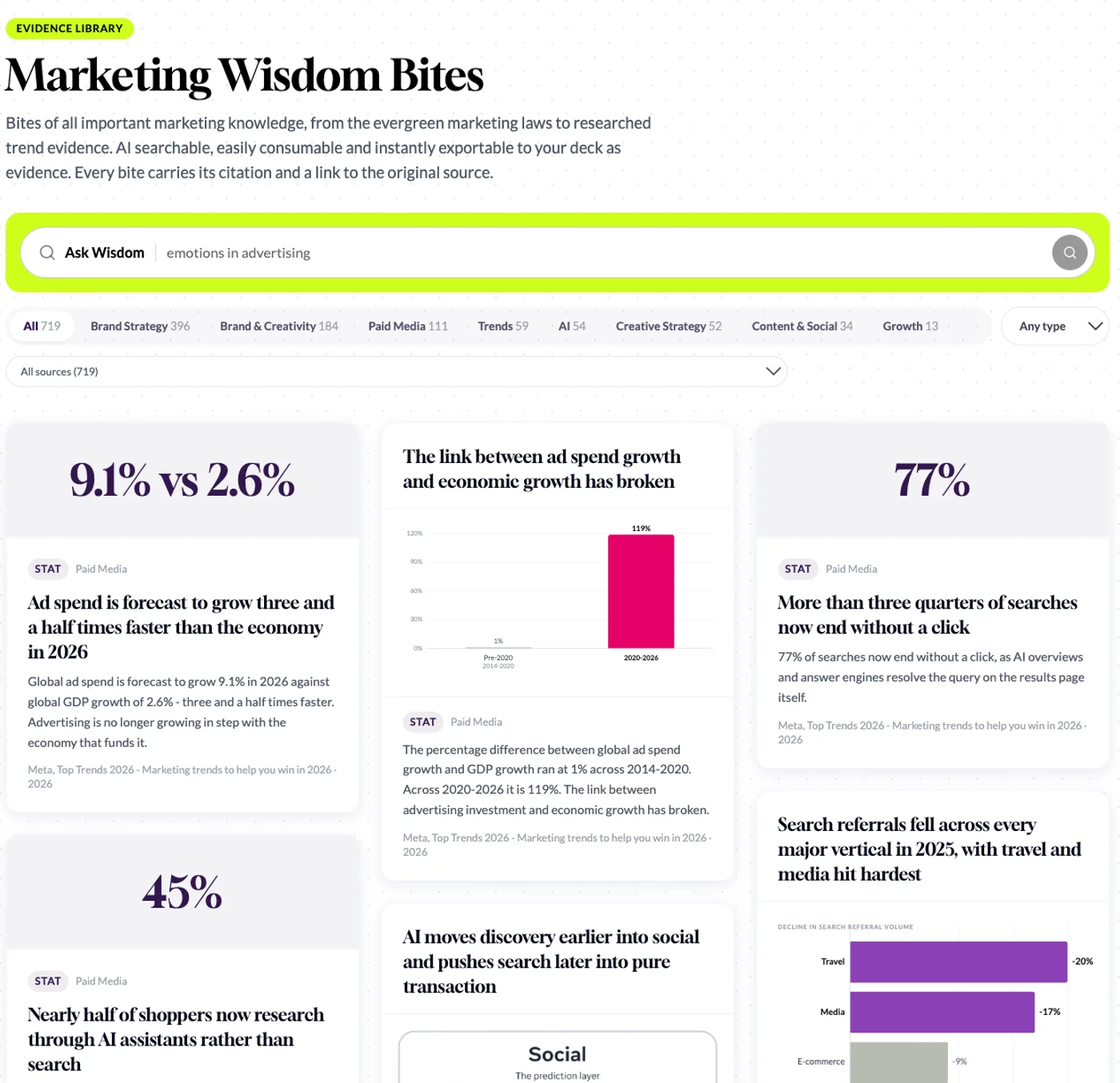
To succeed in this environment, you must move upstream. Don't just execute the brief; question the tension behind it, be curious. Use tools like the Framework Generator to find fast strategy directions that protect your creative ideas from being 'optimized' into oblivion.
The price of a 'kilo of content' is zero. The price of a strategic pivot that saves a brand from irrelevance is infinite.
We are burnt out because we are trying to out-produce a machine. Stop. Shift your focus back to The Law Of Emotion Over Reason. Logic makes people think, but emotion makes them act. And last time I checked, AI still doesn't know what it feels like to have a 2 AM existential crisis over a PowerPoint deck.
That's your edge. Use it.
Final Takeaway
The crisis of creativity isn't a lack of ideas. It's a lack of value perception. If you act like a vendor, you'll be paid like a vendor. If you act like a creative strategist who understands the Long and Short of it, you become indispensable. The machines can have the banners.
We’ll keep the breakthroughs.