AIDA, AARRR, Fogg, the Hook Model, CEP, the Messy Middle. The frameworks that move people from never-heard-of-you to acting, then doing it again - and an honest read on when each one actually fits.
Everyone wants the big idea. Almost nobody wants the boring question underneath it: how does a human actually get from never having heard of you to handing over money, and then doing it again next Tuesday without being reminded?
Let's walk the frameworks in groups, because using them at random is how you end up A/B testing a button colour while your actual problem is that nobody knows your category exists.
The funnels: maps of the journey
Start with the oldest one in the room. AIDA - attention, interest, desire, action - was scribbled down by an ad salesman in the 1890s, and it has outlived most of the brands it was used to sell. As a checklist for a single piece of communication (did this ad earn attention before it asked for action?) it still earns its keep. As a model of how anyone buys anything in 2026, it's a fairy tale with four acts.
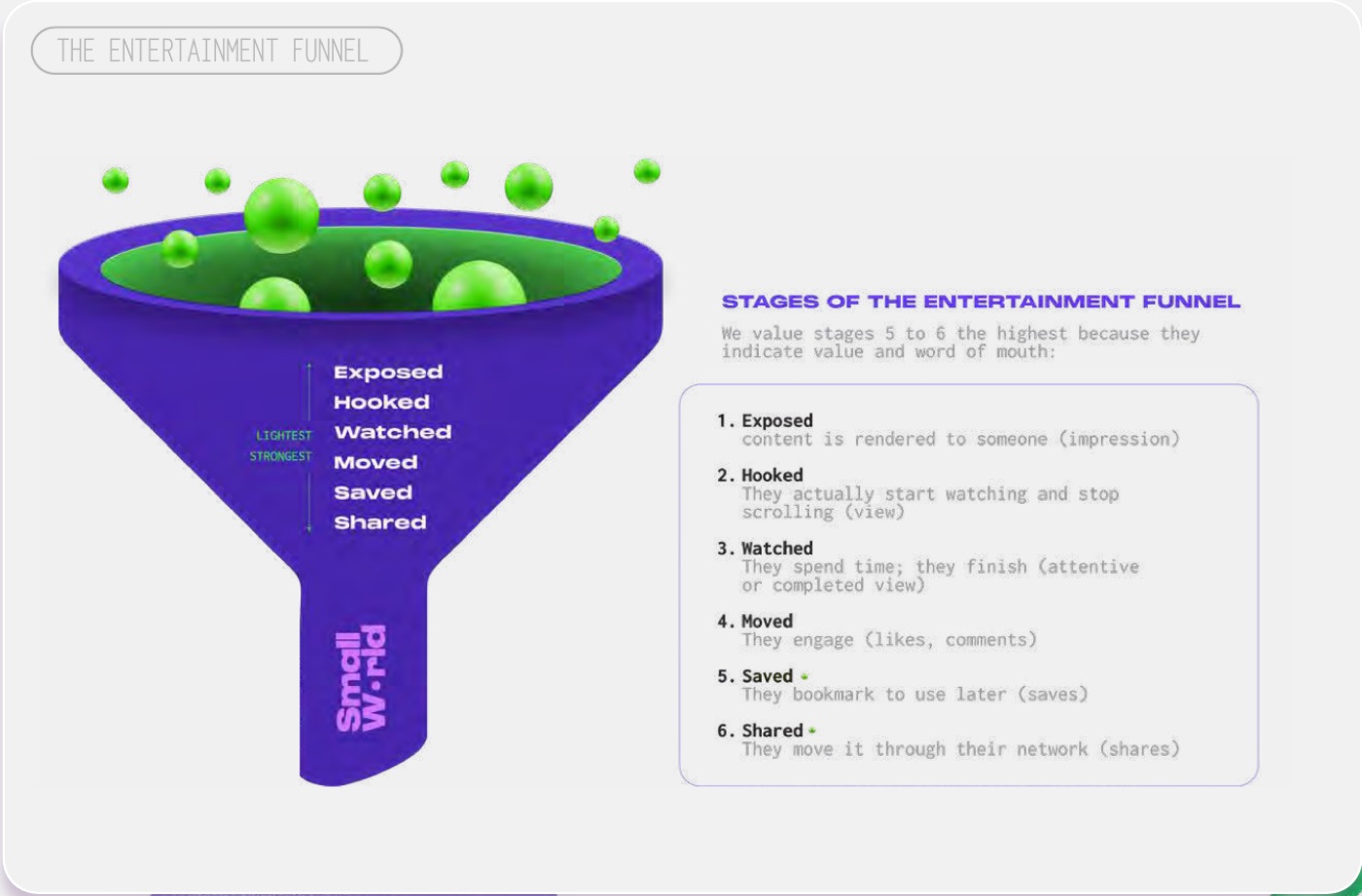
The Marketing Funnel is AIDA after it grew up and got a job. It adds the stages AIDA politely ignores - retention and advocacy - and splits the top into the TOFU, MOFU, BOFU language your media plan secretly runs on. It's the workhorse for organising content by intent. Just remember the funnel is a metaphor, not a physics law, and real people leak out and wander back in constantly.
Then there's AARRR, Dave McClure's pirate metrics, which is the funnel rebuilt for products instead of campaigns. Acquisition, Activation, Retention, Referral, Revenue. Growth teams love it because every stage is a number you can actually move, and it quietly insists that getting people in the door is the easy, vain part. The hard part is whether they stick.
A funnel tells you where people fall out. It never tells you why. For the why, you have to leave the org chart and go look at the human in the half-second the decision happens.
The behavioural models: why people move
Which is exactly where the behavioural side lives. The Fogg Behavior Model is the sharpest little equation in the bunch: behaviour happens when Motivation, Ability and a Prompt show up at the same moment. The genuinely useful insight is the trade-off. If motivation is low, don't write a more inspiring email - make the thing easier. More often than not, "engagement problems" are ability problems wearing a motivation costume.
EAST - Easy, Attractive, Social, Timely - comes from the UK's Behavioural Insights Team, the people who got more taxes paid by adding one sentence about what the neighbours do. It's a nudge checklist you can run over any flow or message in about ten minutes. Cheap, fast, and refreshingly free of grand theory. Use it as a final pass on anything you want a person to actually do.
And then the famous one. The Hook Model is Nir Eyal's four-step loop for products that become habits: a Trigger fires, the user takes an Action, they get a Variable Reward (the slot-machine bit - unpredictable rewards keep us coming back), and then they make an Investment that loads the next Trigger. Round and round, until checking the thing is reflex.
The diagram below is the Hook Model loop - the Trigger to Action to Variable Reward to Investment cycle that keeps repeating, each lap making the next one more automatic.
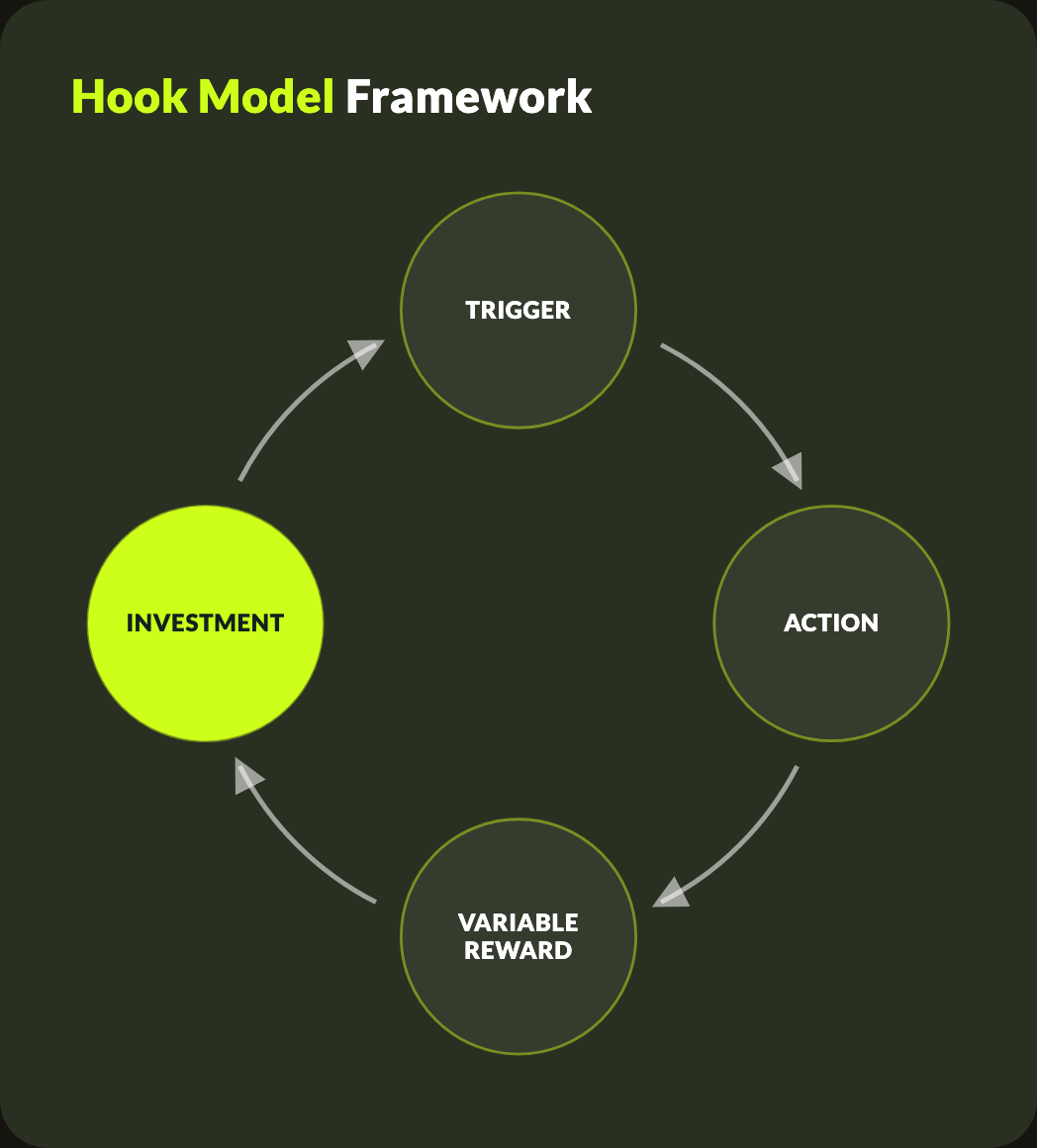
Hook Model - explore it in the library
It's powerful, which is precisely why it deserves a side-eye. The same loop that gets someone to practise a language daily is the loop behind every app you've sworn off at midnight. The framework is ethically neutral; you aren't.
Mental availability: getting remembered before the buy
Here's the inconvenient truth all the funnels skip: most of the time, your customer isn't in any funnel at all. They're living their life, not thinking about you. The question isn't how to push them down a journey - it's whether you even cross their mind when the buying situation arrives.
That's the job of Category Entry Points. CEPs map the real-world cues that make someone think of your category - the why, when, where, with whom, and while-doing-what. "A drink that won't make me look boring at a party" is a CEP. The brand linked to the most CEPs wins, long before anyone clicks anything. It's the antidote to obsessing over the bottom of the funnel while the top of someone's mind belongs to a competitor.
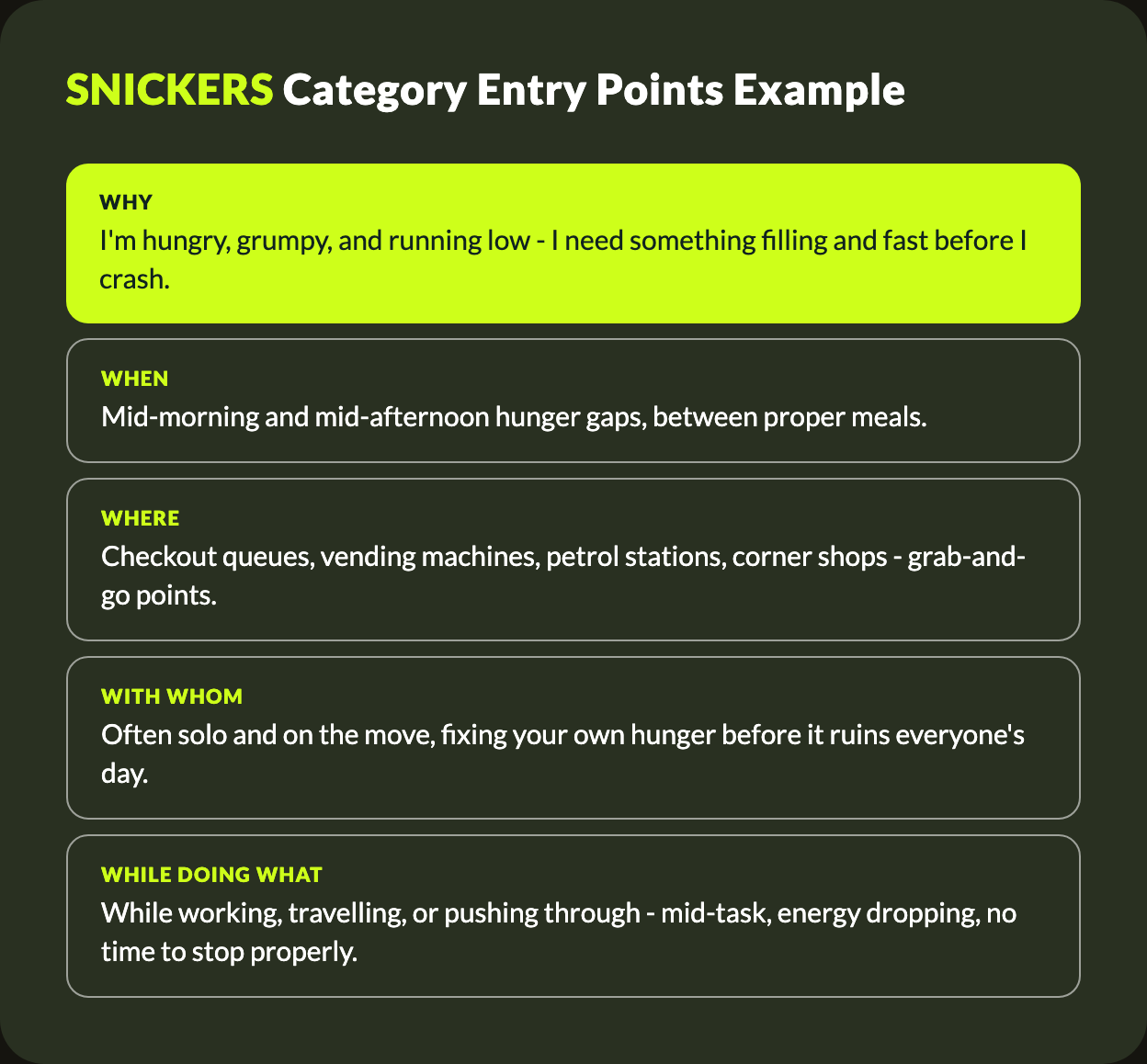
Category Entry Points: Snickers - see the full breakdown
Watch: Snickers: You’re Not You When You’re Hungry - see it in our campaigns library
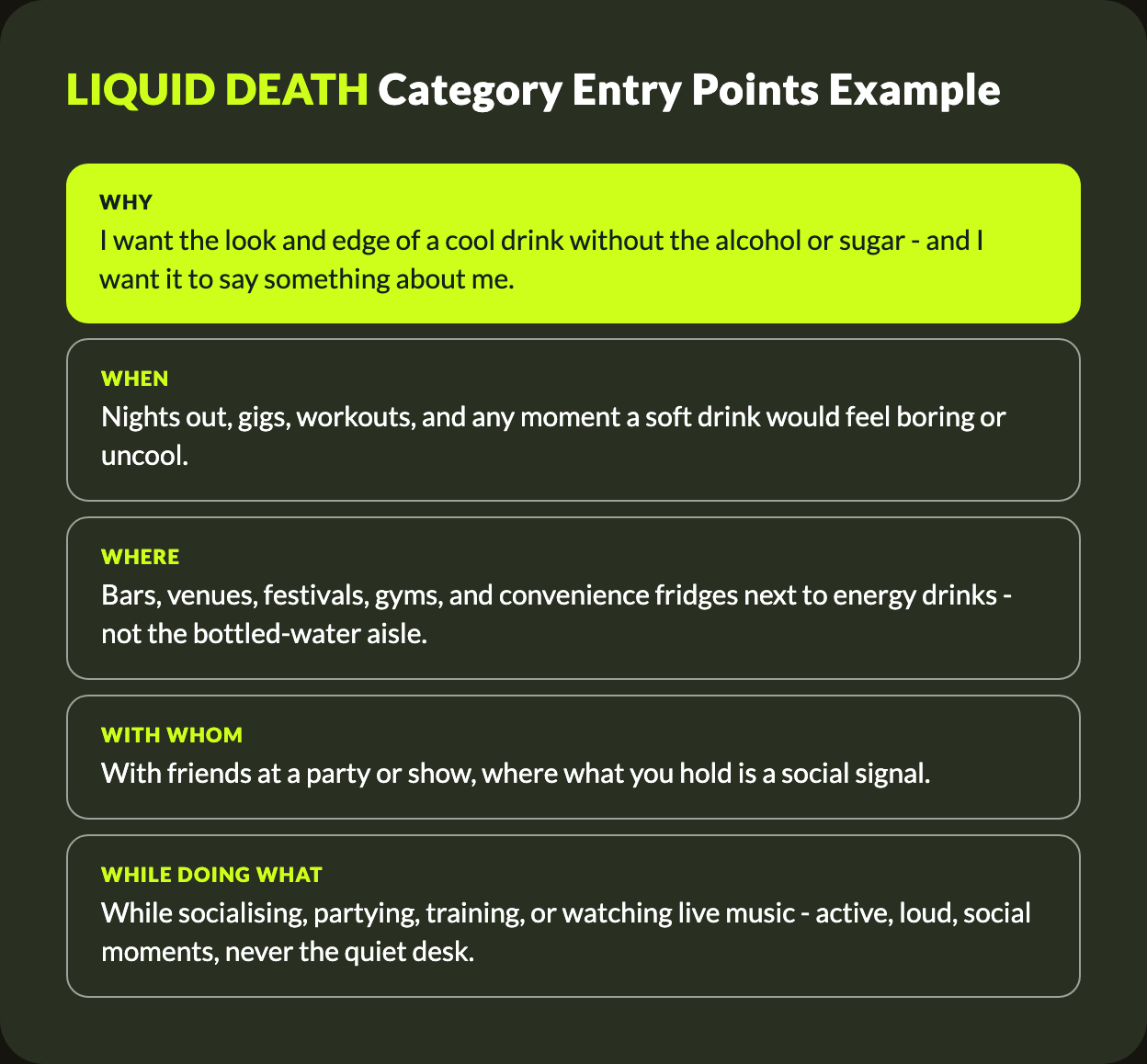
Category Entry Points: Liquid Death - see the full breakdown
Watch: Liquid Death: Your Grandma’s Energy Drink - see it in our campaigns library
The honest one: the journey is a loop, not a line
Finally, the framework that calmly admits all the others are simplifications. The Messy Middle is Google's research-based picture of how buying actually feels: not a funnel but a chaotic loop between exploration (widening your options) and evaluation (narrowing them), repeated until something tips you over - usually one of six cognitive biases doing the heavy lifting. It won't give you neat stages to report on. What it gives you is permission to stop pretending the journey is tidy and start showing up well at every loop a person makes.
So which one do you reach for?
Quick honest answer. Auditing a campaign's structure? AIDA or the Marketing Funnel. Running a product and chasing growth? AARRR. Stuck on why a step isn't converting? Fogg, then EAST as the cleanup pass. Building for repeat use? The Hook Model, conscience switched on. Worried nobody remembers you at the moment of need? Category Entry Points. And when someone insists the path is a clean straight line, hand them the Messy Middle.
None of these is the truth. Each is a useful lie that points at a different part of the same problem - and a strategist who can hold all of them at once beats one clutching a single favourite every time.
Pick the model that matches the question you're actually stuck on, open its live diagram, and steal the worked examples. They're all sitting in the Frameworks Library, ready when you are.