Marketing Laws
Evidence-based principles on how marketing actually works. From Ehrenberg-Bass to behavioral science, from Binet & Field to attention research.
Browse by category
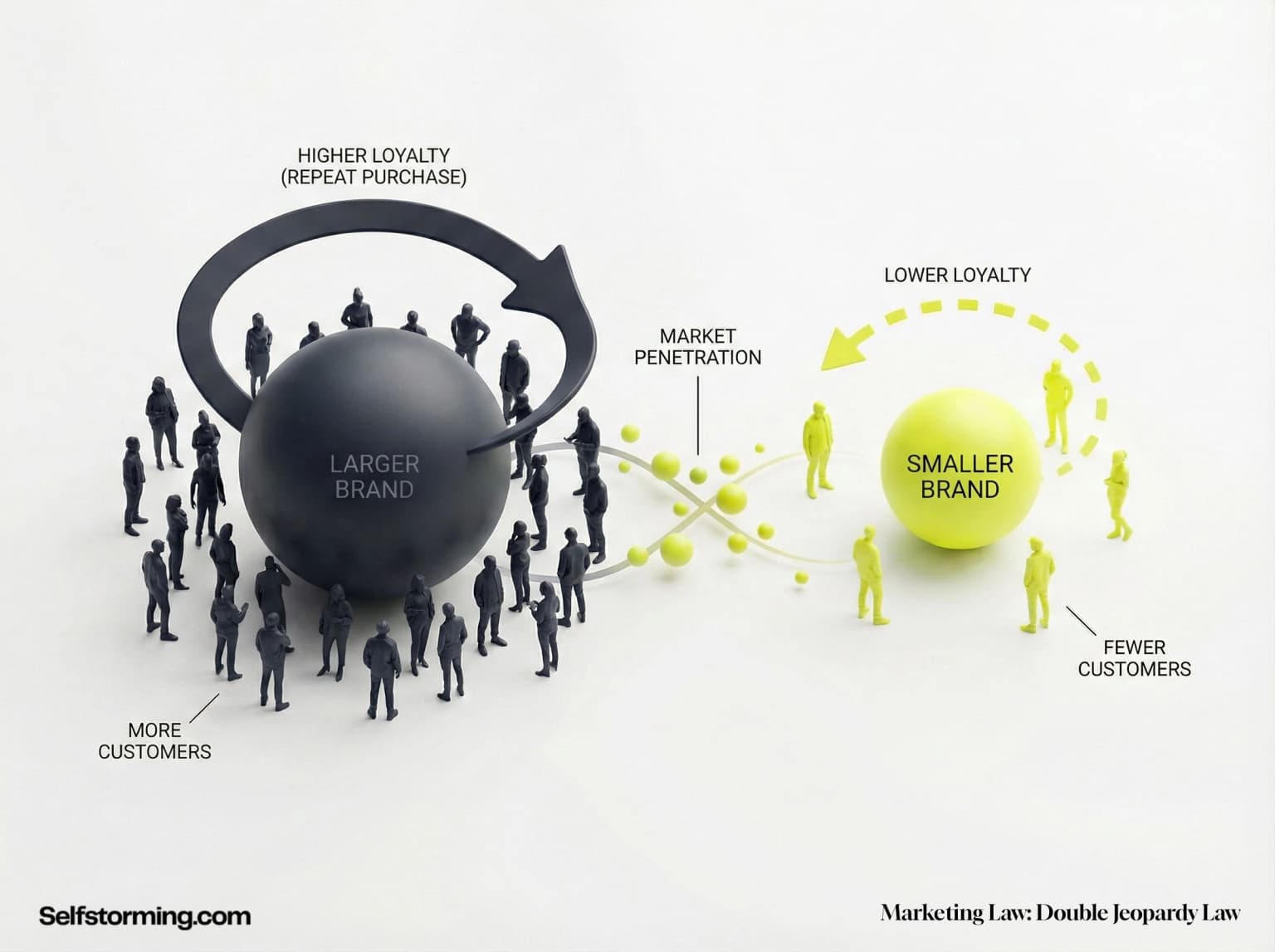
Double Jeopardy Law
Big brands have more buyers and higher repeat rates. Loyalty follows size, not strategy.
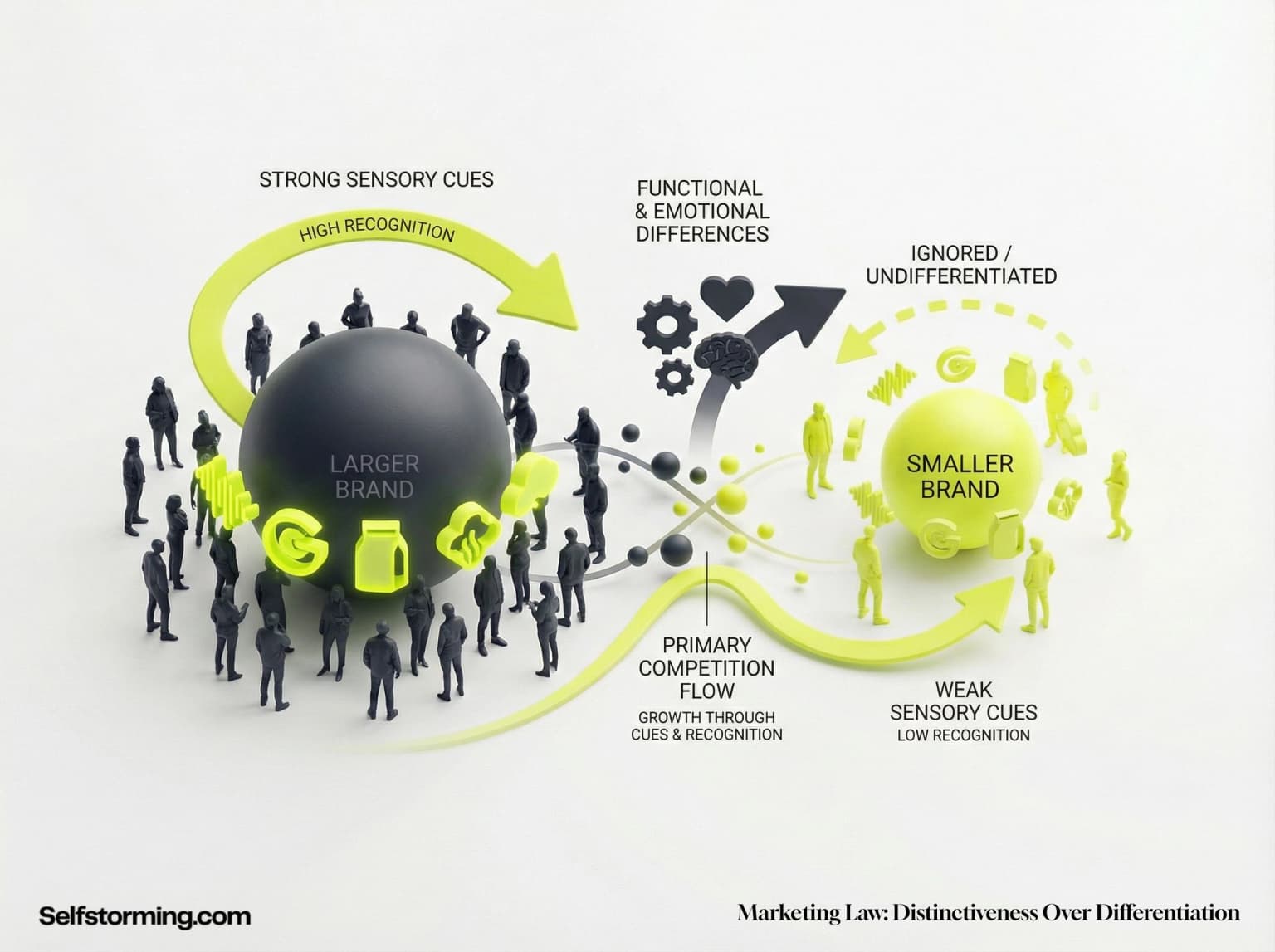
The Distinctiveness Law
Being recognisable matters more than being meaningfully different.
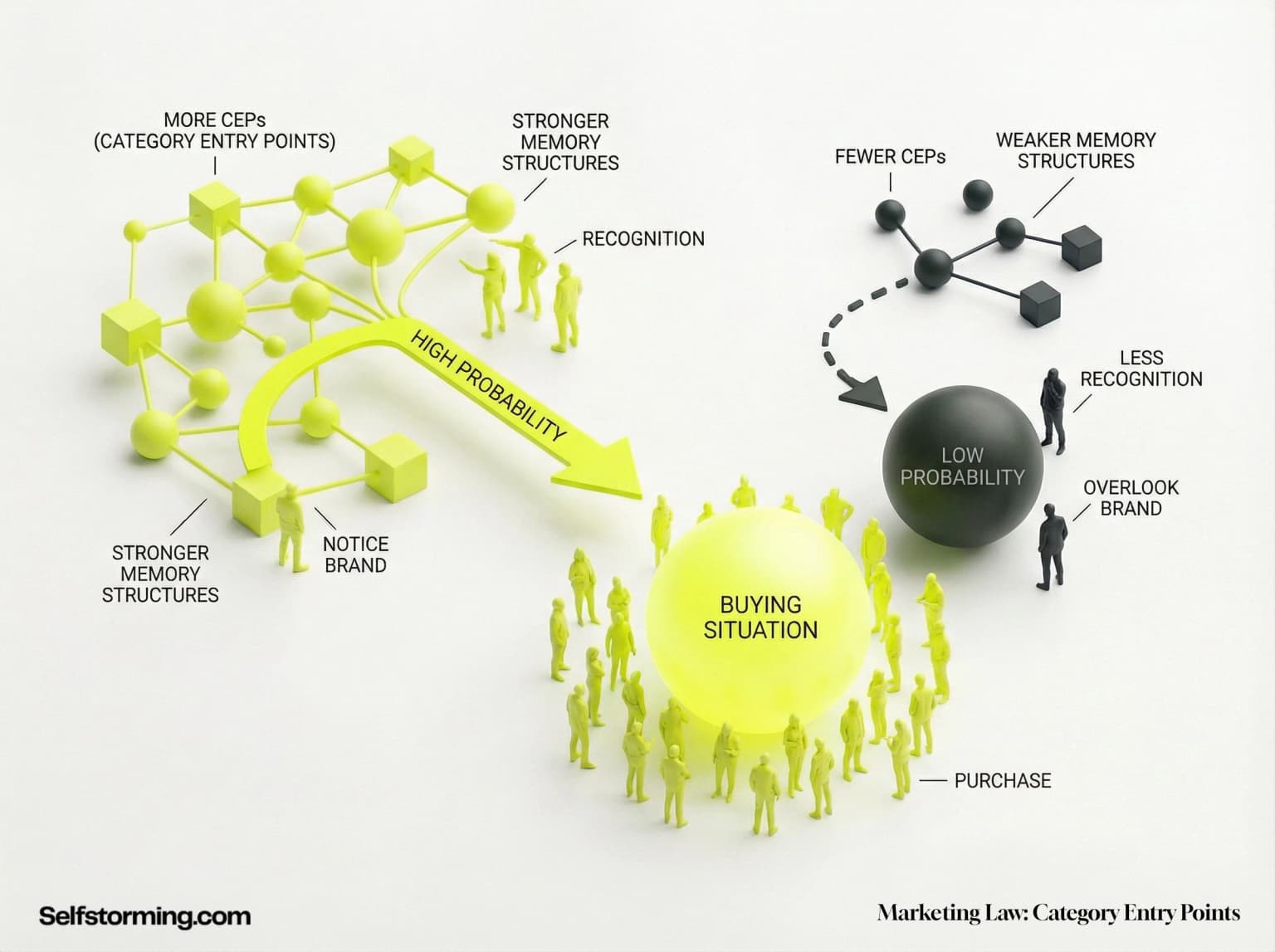
The Law Of Category Entry Points
Brands grow by linking to more buying situations.
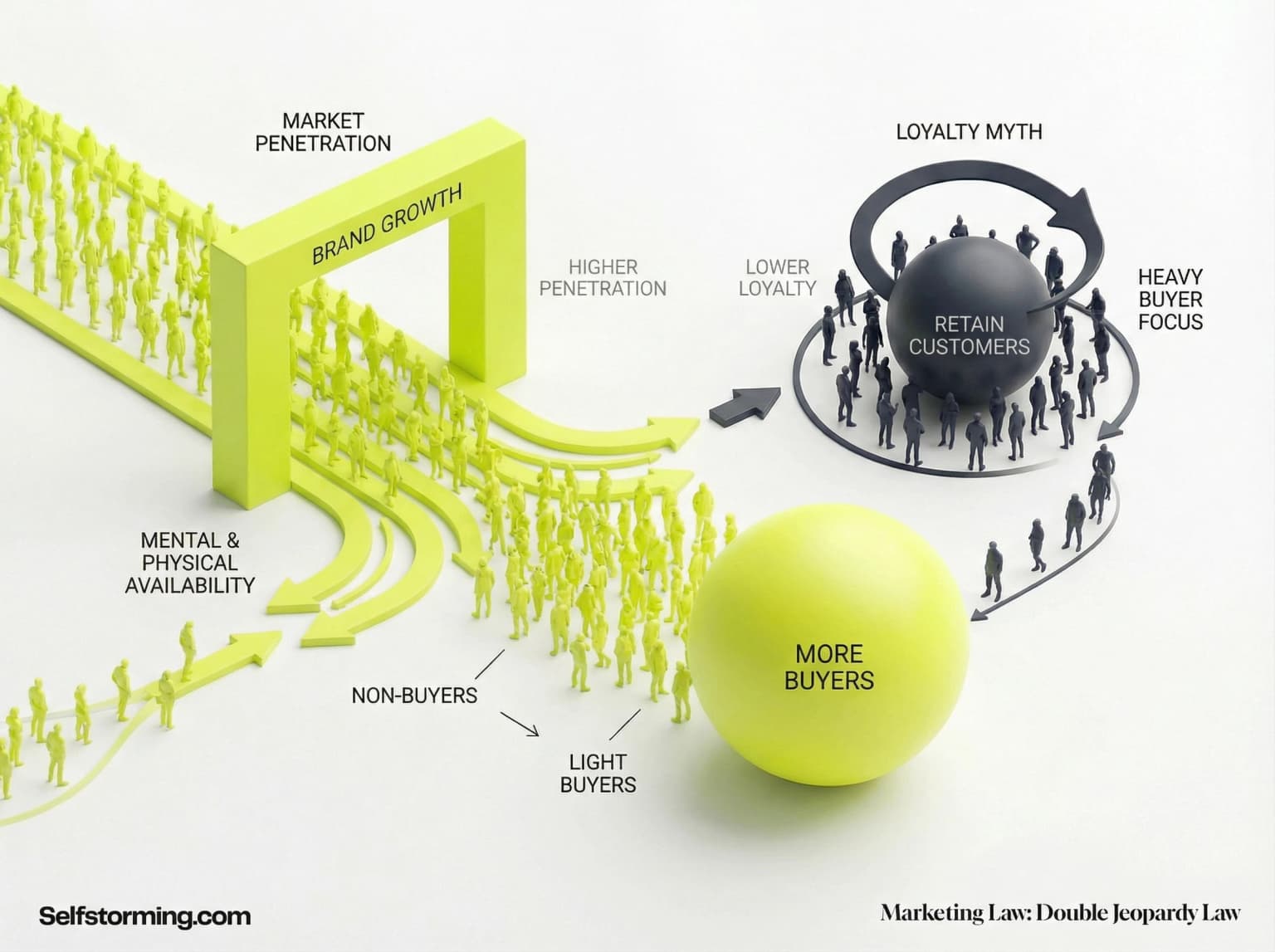
The Growth By Penetration Law
Brands grow mainly by reaching more buyers, not by increasing loyalty.

Light Buyer Law
Most sales come from buyers who purchase infrequently, not heavy users.

The Law Of Repertoire Buying
Consumers buy from a set of acceptable brands, not one favorite.

The Law Of Profit And Market Share
Larger brands tend to be more profitable due to scale advantages.

The Law Of Mental Availability
Brands grow by being easily thought of in buying situations.

The Law Of Physical Availability
Brands must be easy to buy wherever and whenever people want them.
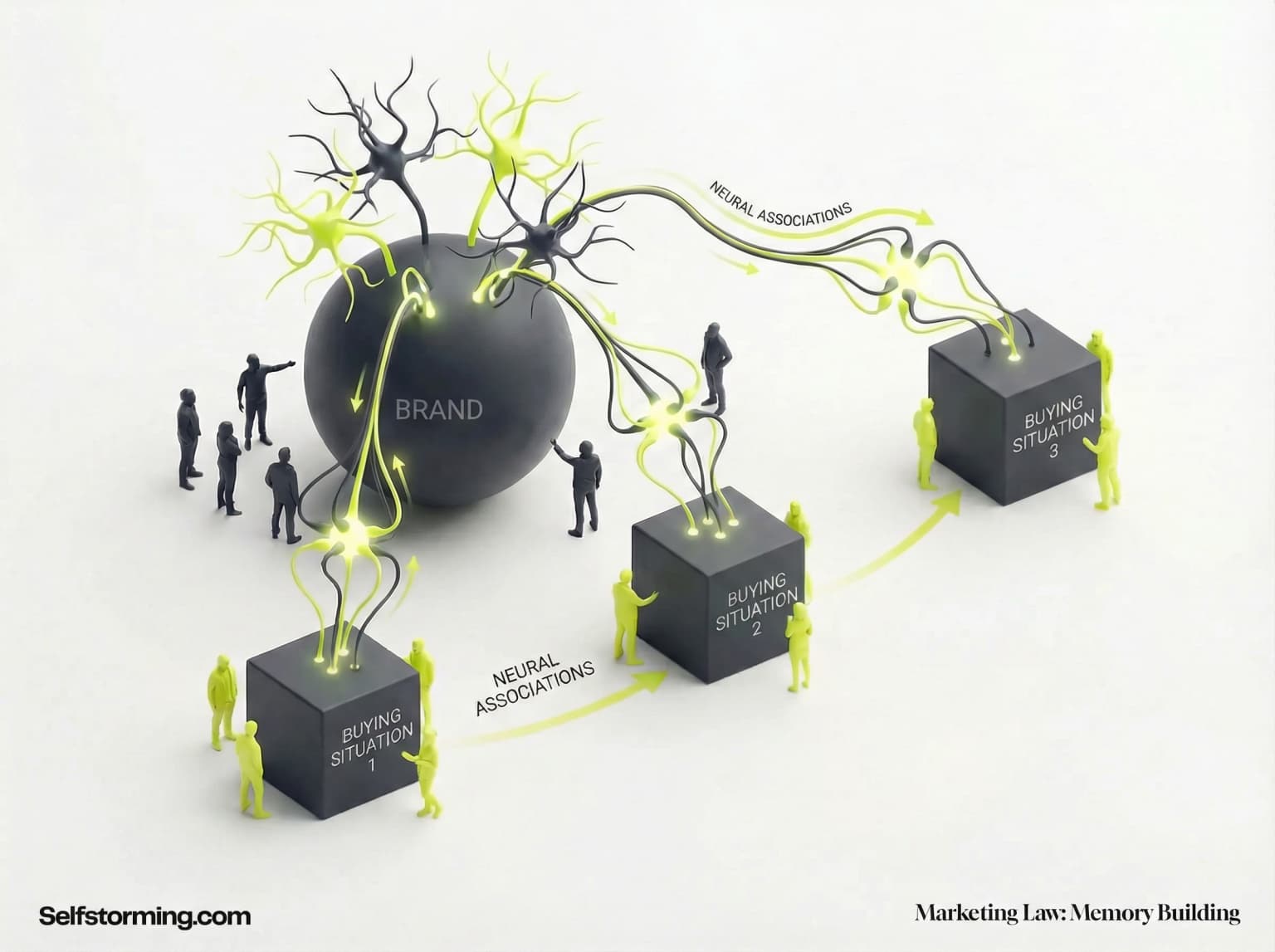
The Law Of Memory Building
Advertising works by building memory structures, not changing minds.

Distinctive Assets Law
Consistent brand cues drive recognition faster than differentiation claims.

The Law Of Fluency
Easy-to-process messages outperform complex, rational arguments.
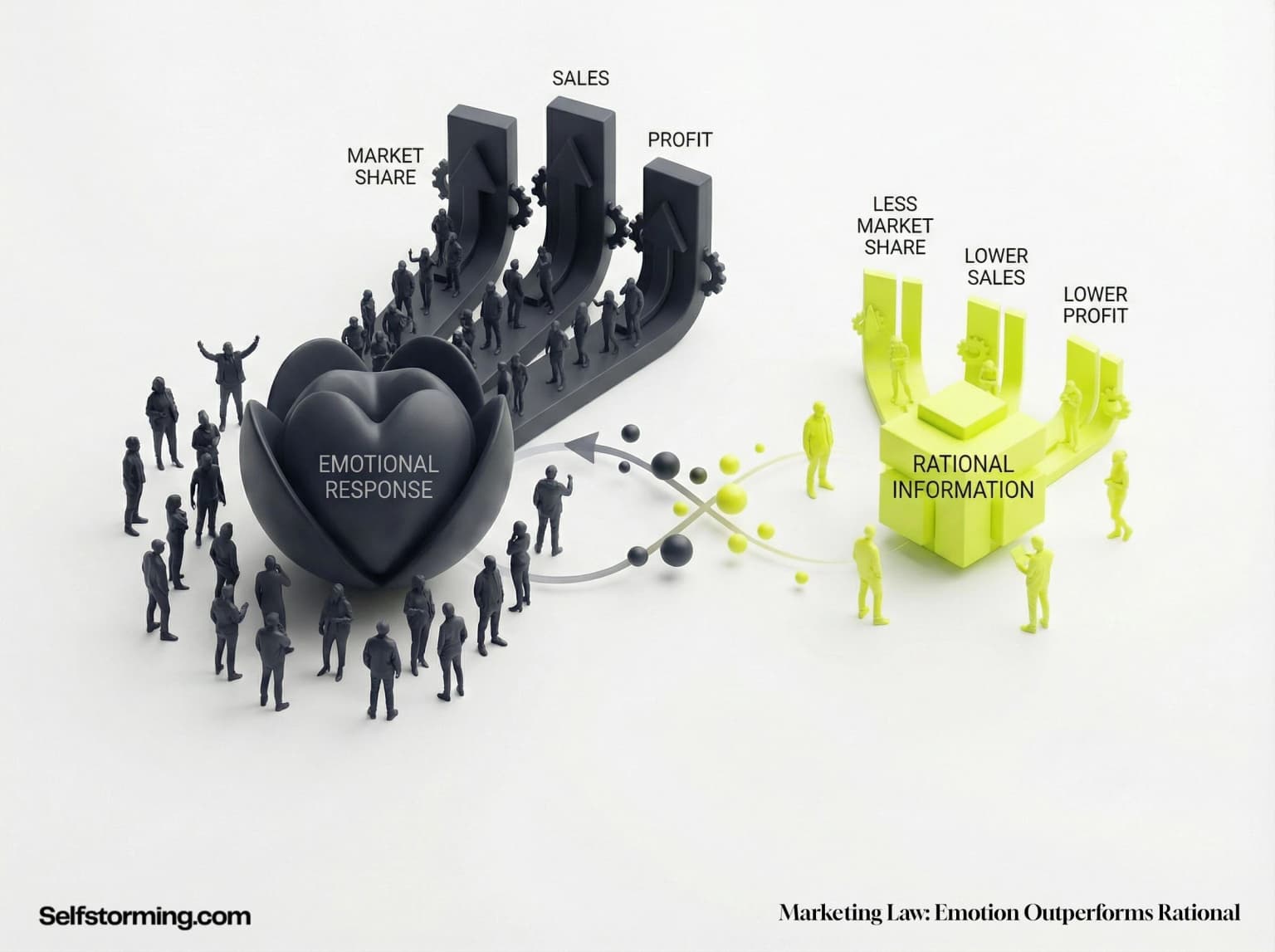
The Law Of Emotion Over Reason
Emotional advertising drives stronger long-term effects than rational ads.

The Law Of Fame
Being noticed matters more than convincing people with arguments.

The Law Of Alienation Paranoia
Marketers overestimate how many people they'll offend by being distinctive.

The Law Of Being Ignored
Neutral, safe advertising underperforms more than bold work.

The Law Of The Long And Short
Brand building and activation do different jobs and require different strategies.

The 60/40 Law
Long-term brand investment typically outperforms short-term activation alone.

The Law Of Short-Term ROI
Short-term metrics undervalue long-term brand effects.

The Law Of Brand Compounding
Long-term brand investment creates compounding returns over time.

The Law Of Effort Minimisation
People choose the easiest acceptable option, not the best one.
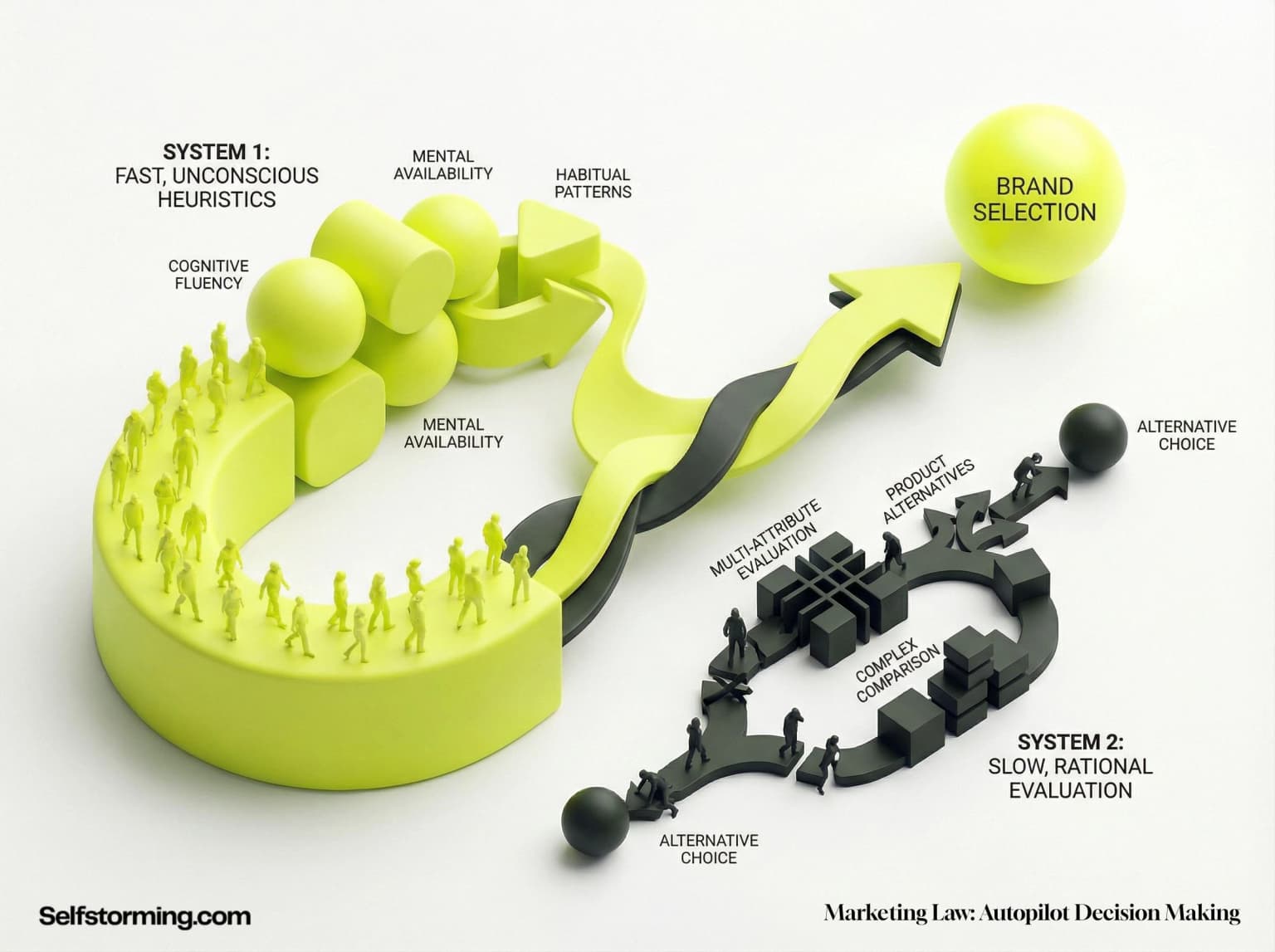
The Autopilot Law
Most brand choices are made without conscious deliberation.

The Low Attention Law
Most advertising is processed passively, if at all.

The Left-Brain Law
Over-rational advertising underperforms emotionally rich work.

The Law Of Excess Share Of Voice
Brands with higher share of voice than market share tend to grow.

The Law Of Reach Over Precision
Broad reach usually outperforms hyper-targeting for growth.

The Social Proof Law
People copy the behavior of others, especially in uncertainty.
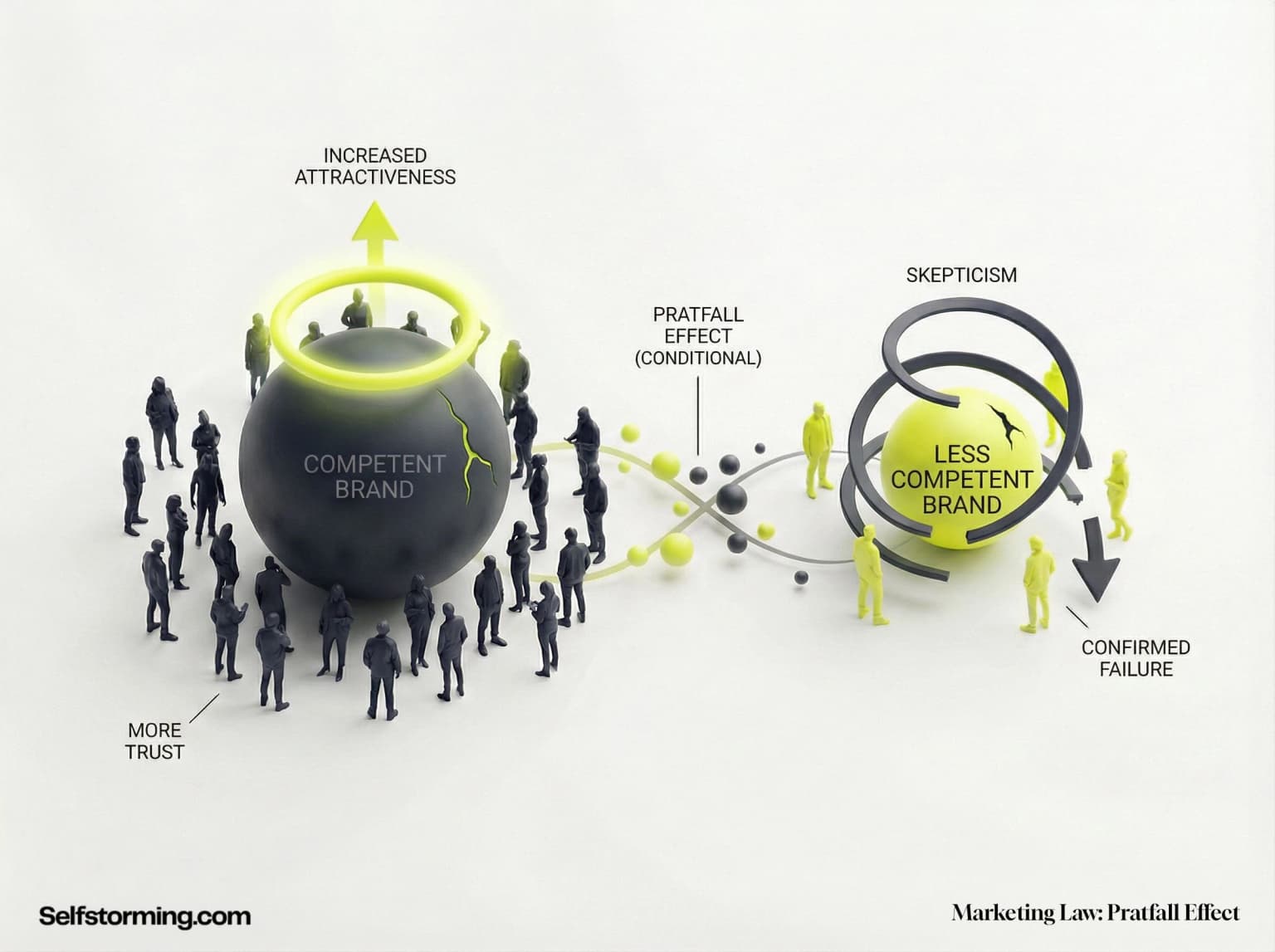
The Pratfall Law
Admitting a weakness increases credibility and likability.

The Generation Law
People remember better what they've actively completed themselves.

The Peak-End Law
People judge experiences by their peak moment and ending, not the average.

The Law Of Costly Signaling
Expensive advertising signals quality and commitment to customers.

The Context Law
Context changes perceived value more than the product itself.

The Reciprocity Law
People feel obligated to return favors and gifts.

The Scarcity Law
Limited availability increases perceived value.

The Anchoring Law
The first number you see influences all subsequent judgments.

The Active Vs Passive Attention Law
Not all attention is equal; active attention builds memory.
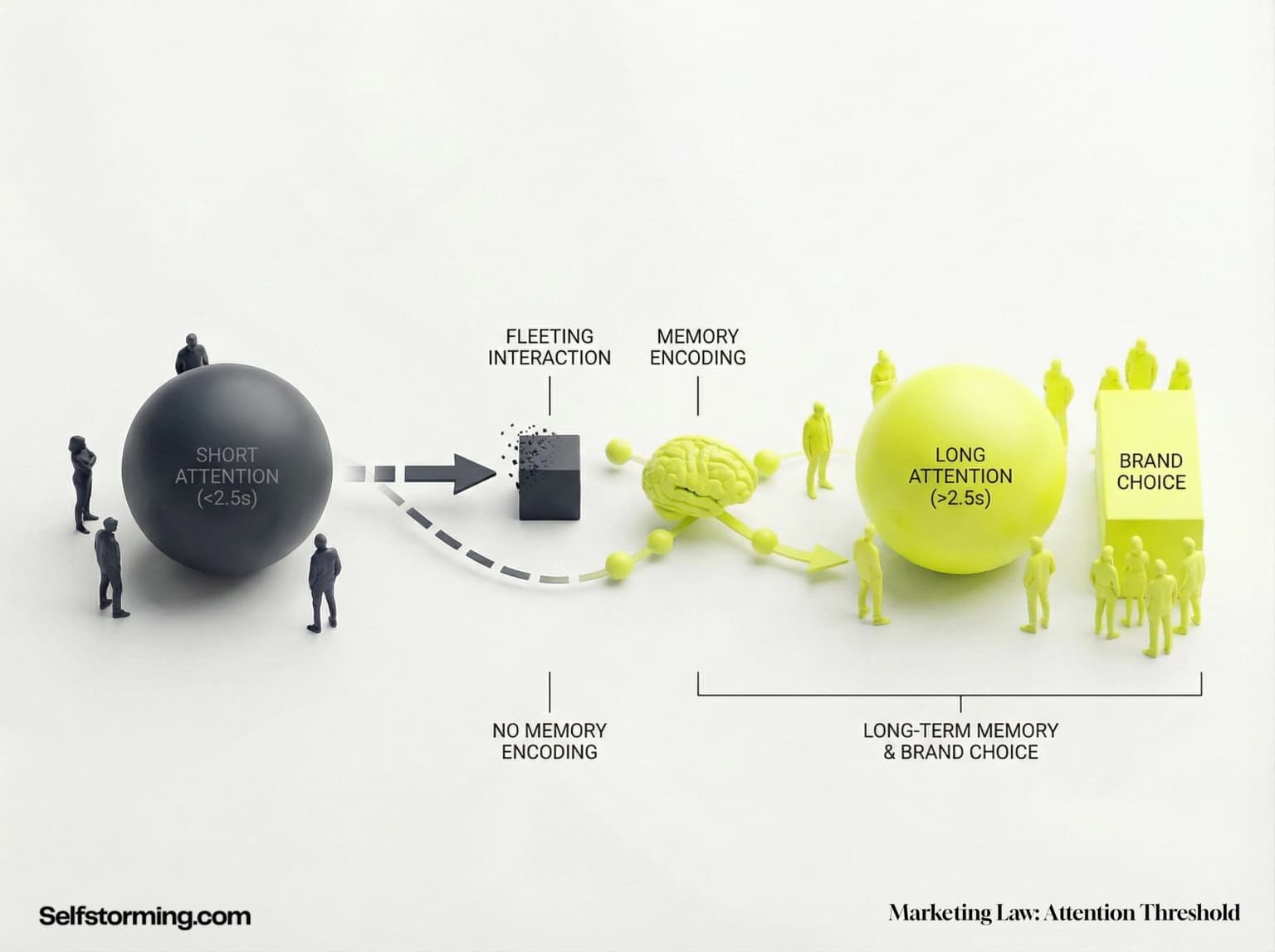
The Attention Threshold Law
There's a minimum attention level required for advertising to have an effect.
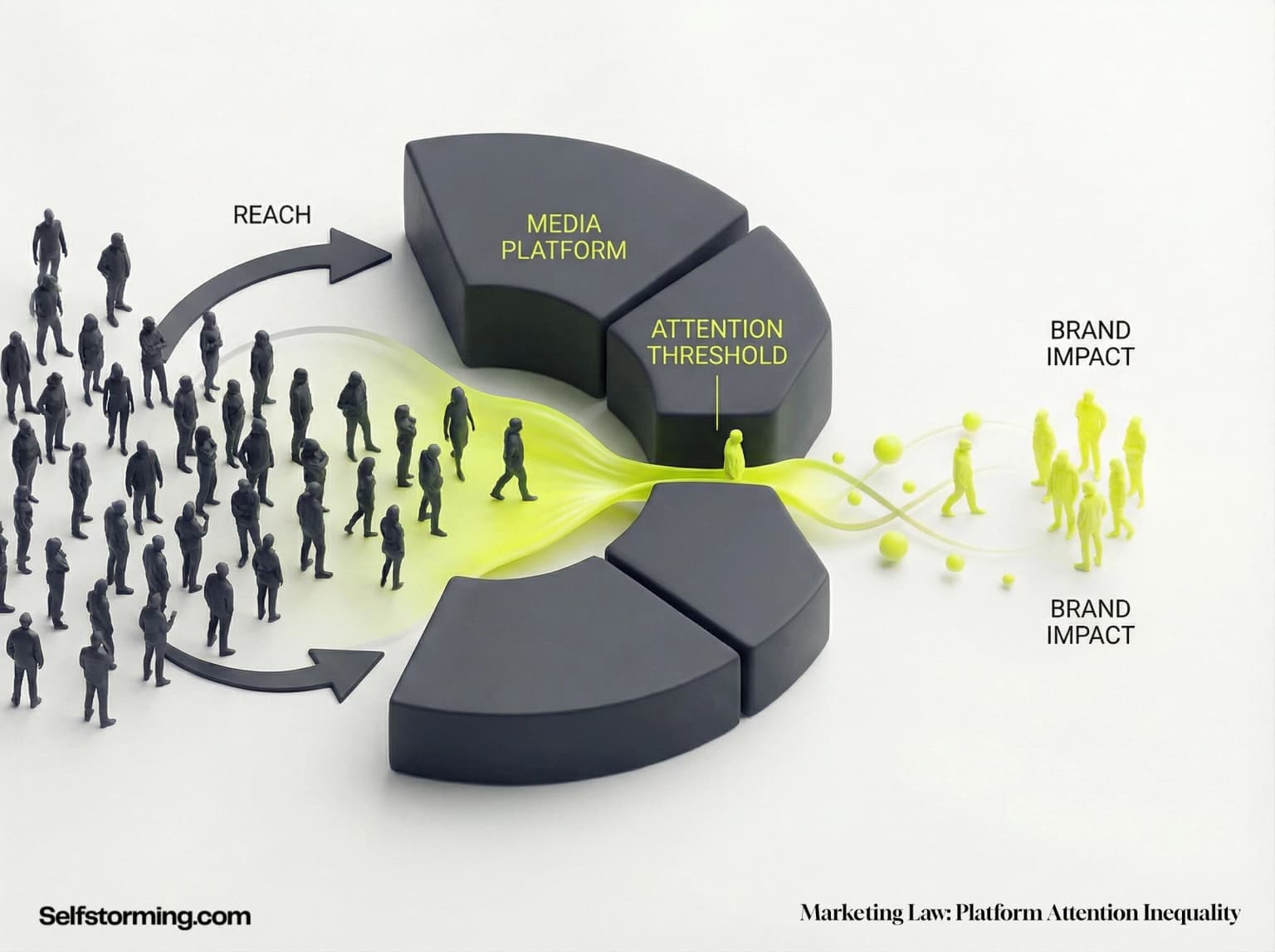
The Law Of Platform Attention
Different platforms generate vastly different attention quality.

The Pixels Vs Seconds Law
Larger ad size requires less time to build memory.

The Price-Quality Law
Higher price signals higher quality in consumers' minds.

The Decoy Law
A third option changes preferences between the original two.
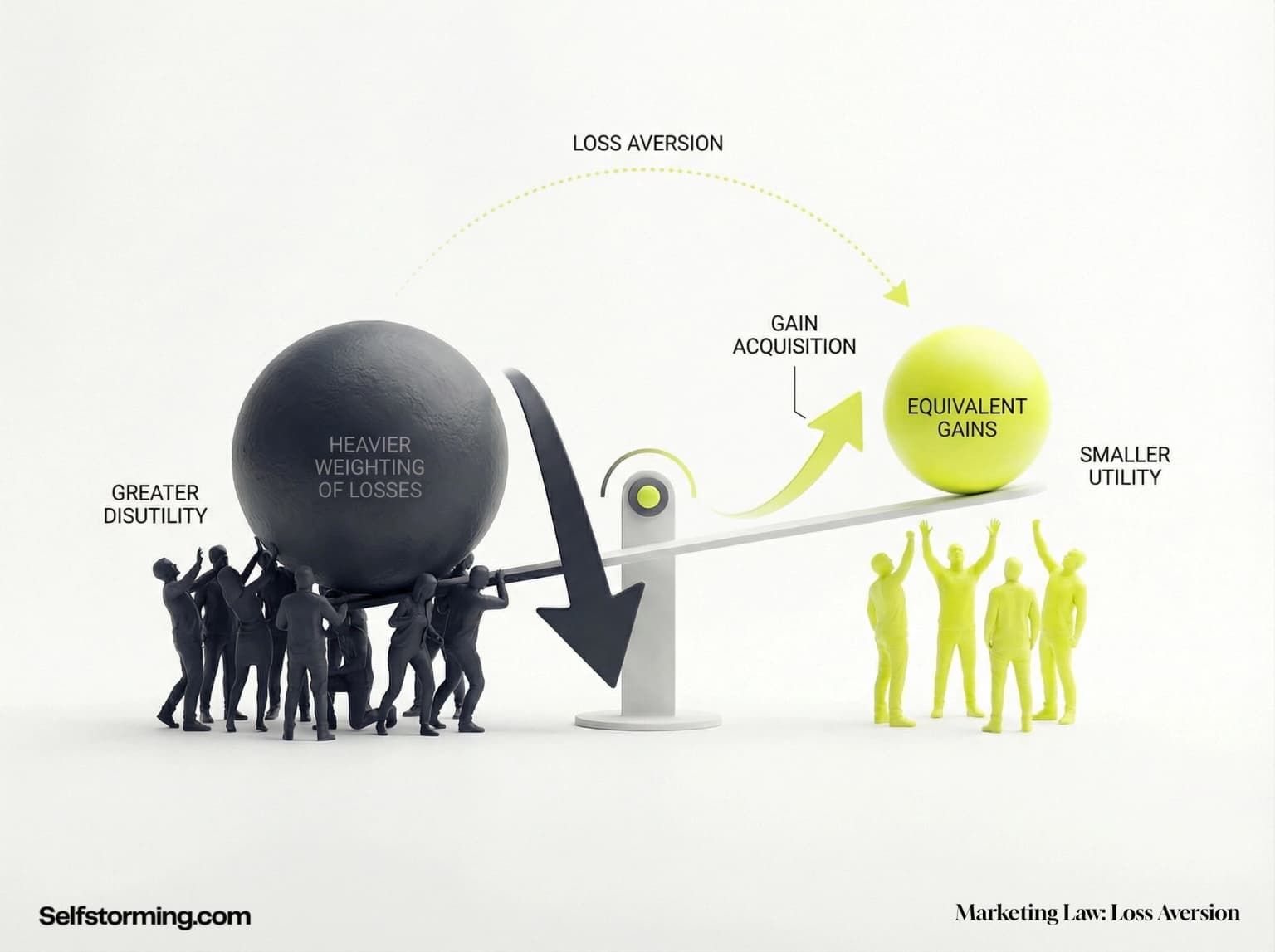
The Law Of Loss Aversion
Losses hurt twice as much as equivalent gains feel good.

The Pain Of Paying Law
Payment method affects perceived value and spending behavior.

The Law Of Psychological Pricing
$9.99 vs $10.00 works, but not for the reasons you think.

The Law Of Overclaimed Differentiation
Most brands are less unique than they believe.

The Law Of Over-Optimization
Excessive testing leads to average, forgettable work.

The Loyalty Program Law
They mostly reward existing behavior without changing it.
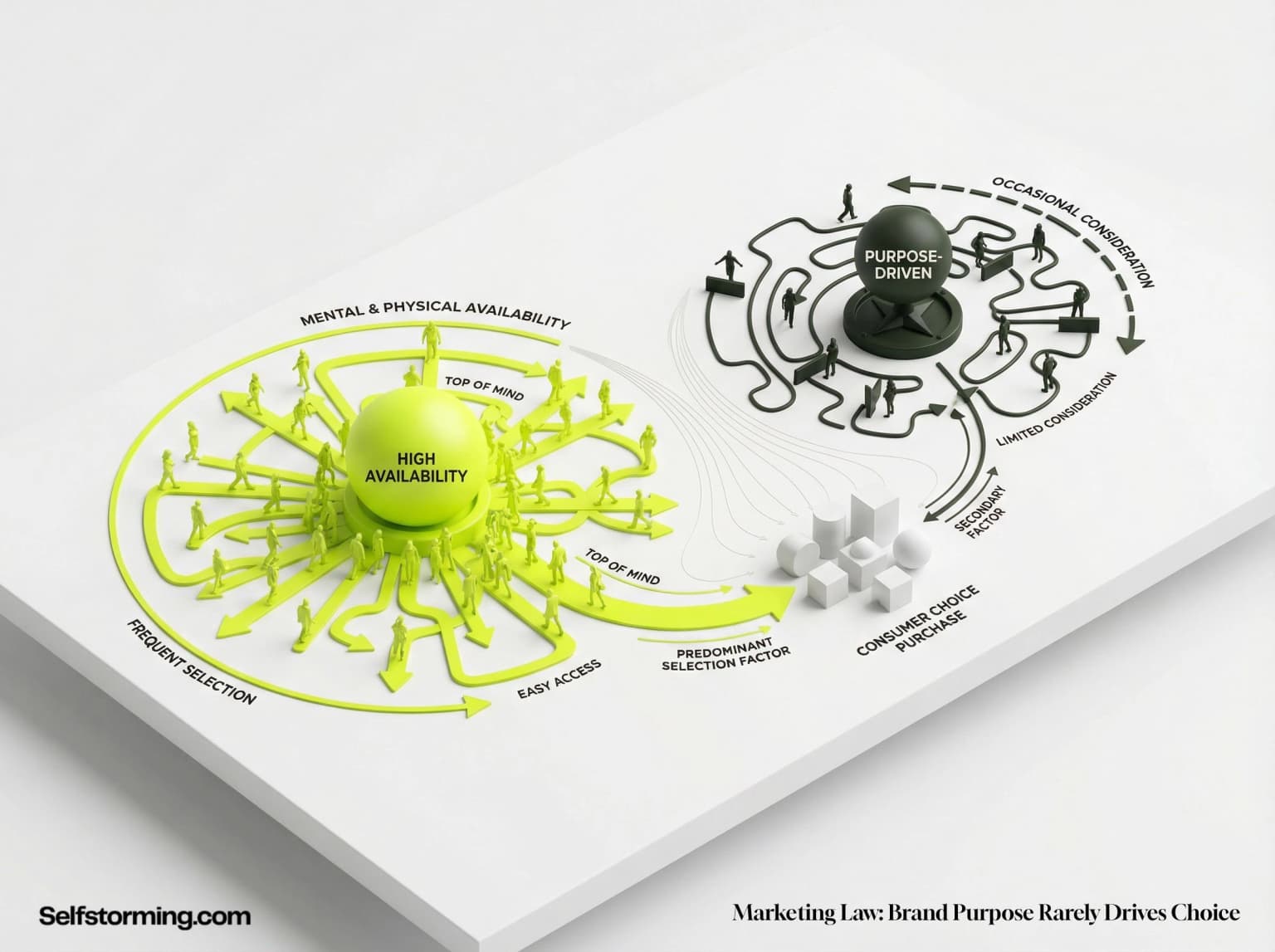
The Brand Purpose Law
Purpose matters more internally than in buying decisions.
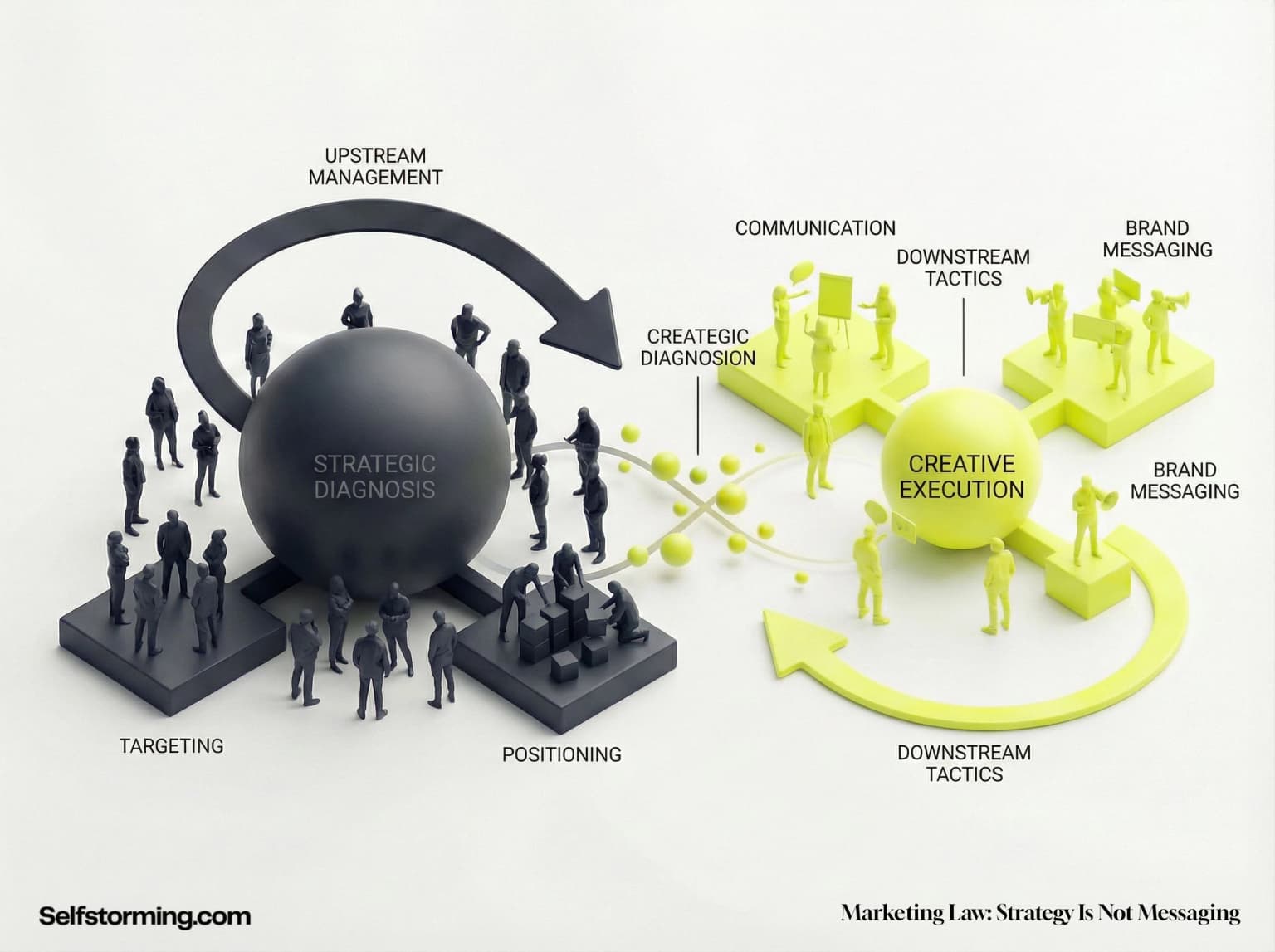
The Messaging Law
A slogan is not a strategy.

The 95/5 Law
95% of B2B buyers are not in-market at any given moment.

The Law Of B2B Buyers
B2B decisions are as emotional as B2C.
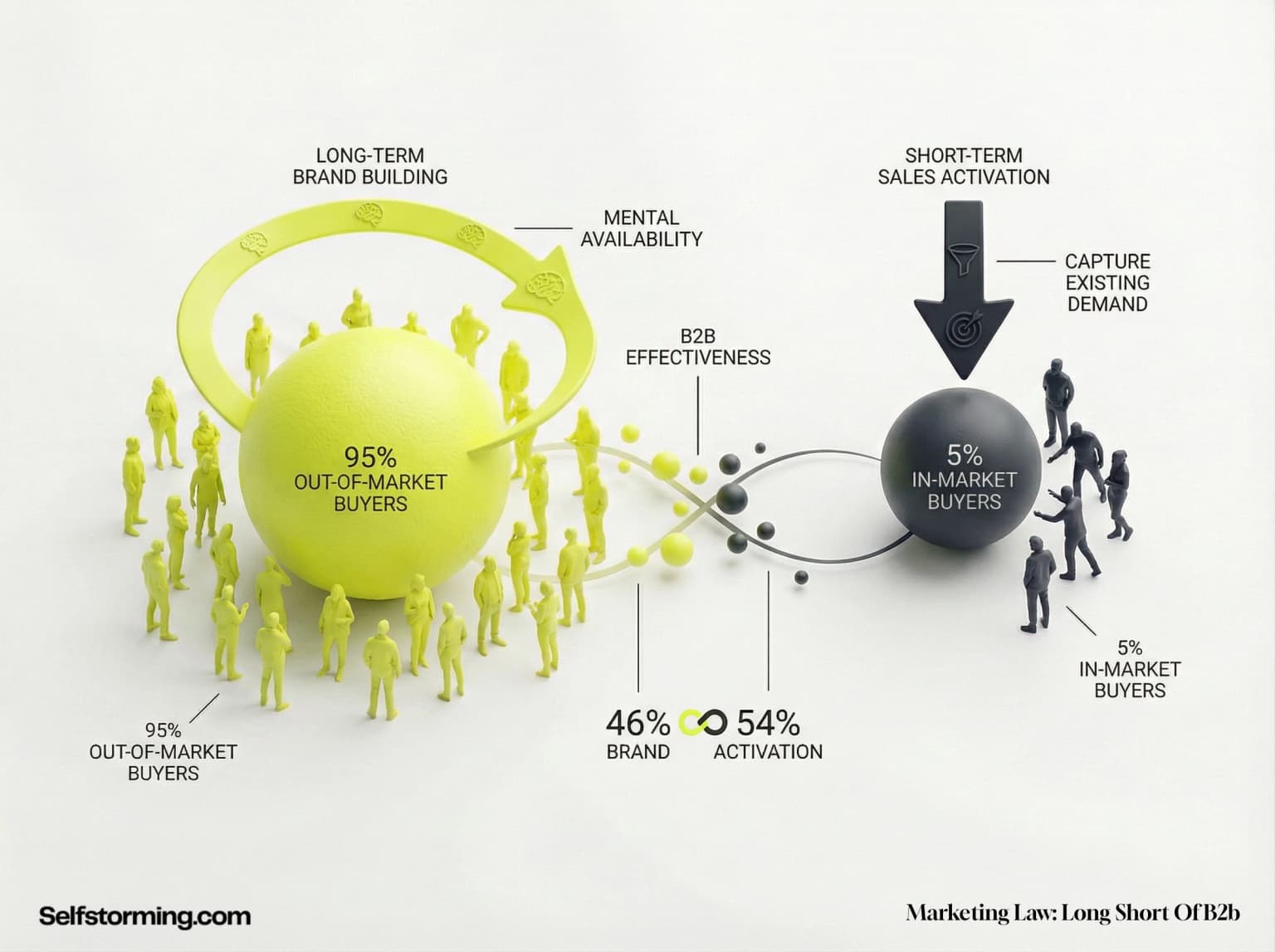
The Long & Short Of B2B Law
60/40 rule applies in B2B (adjusted to ~46/54).
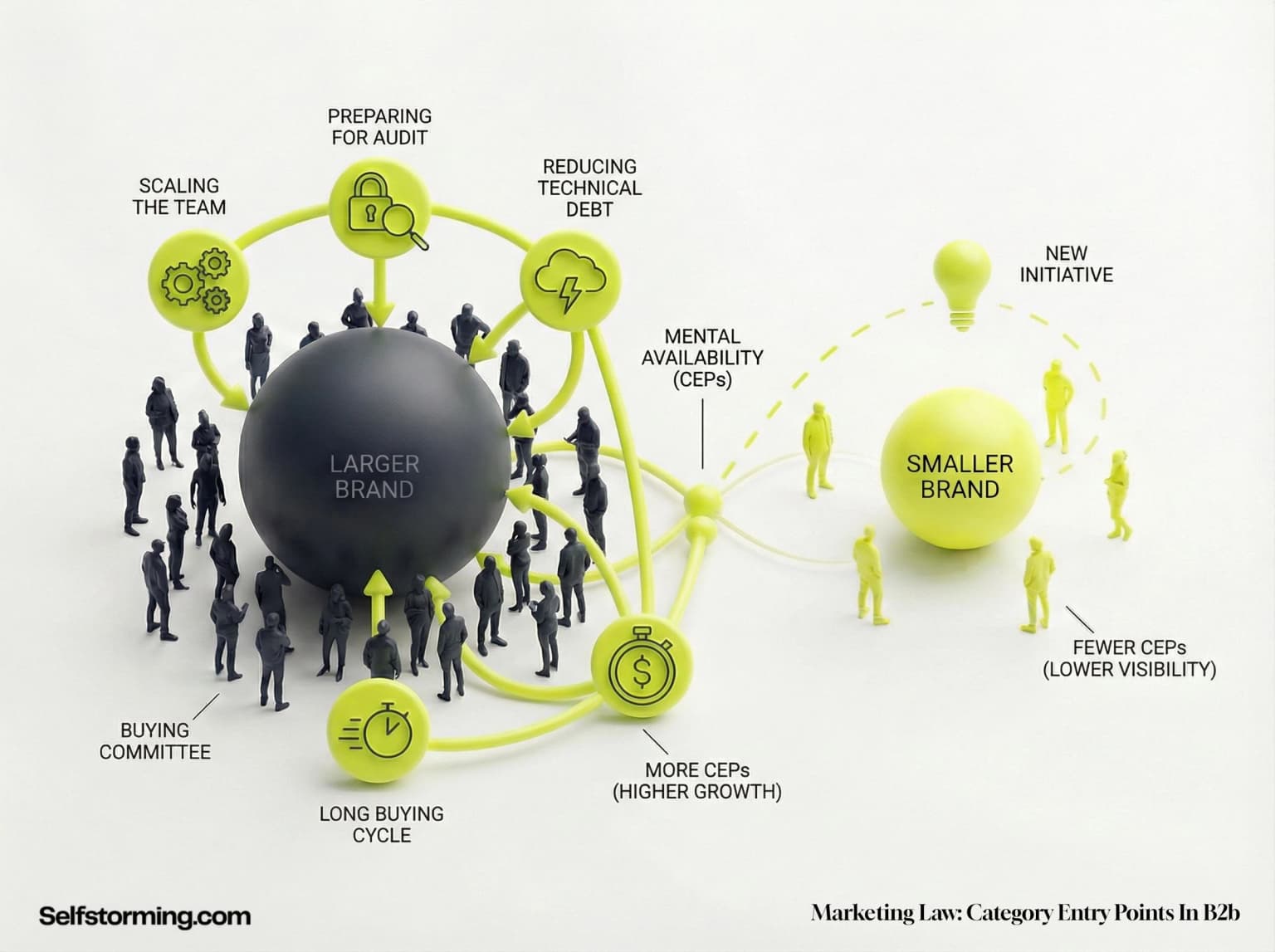
The Law Of B2B Category Entry Points
B2B brands need mental availability too.

The Law Of Digital Attribution
Digital attribution overvalues the last click.

The Incrementality Law
Most conversions would happen even without the ad.
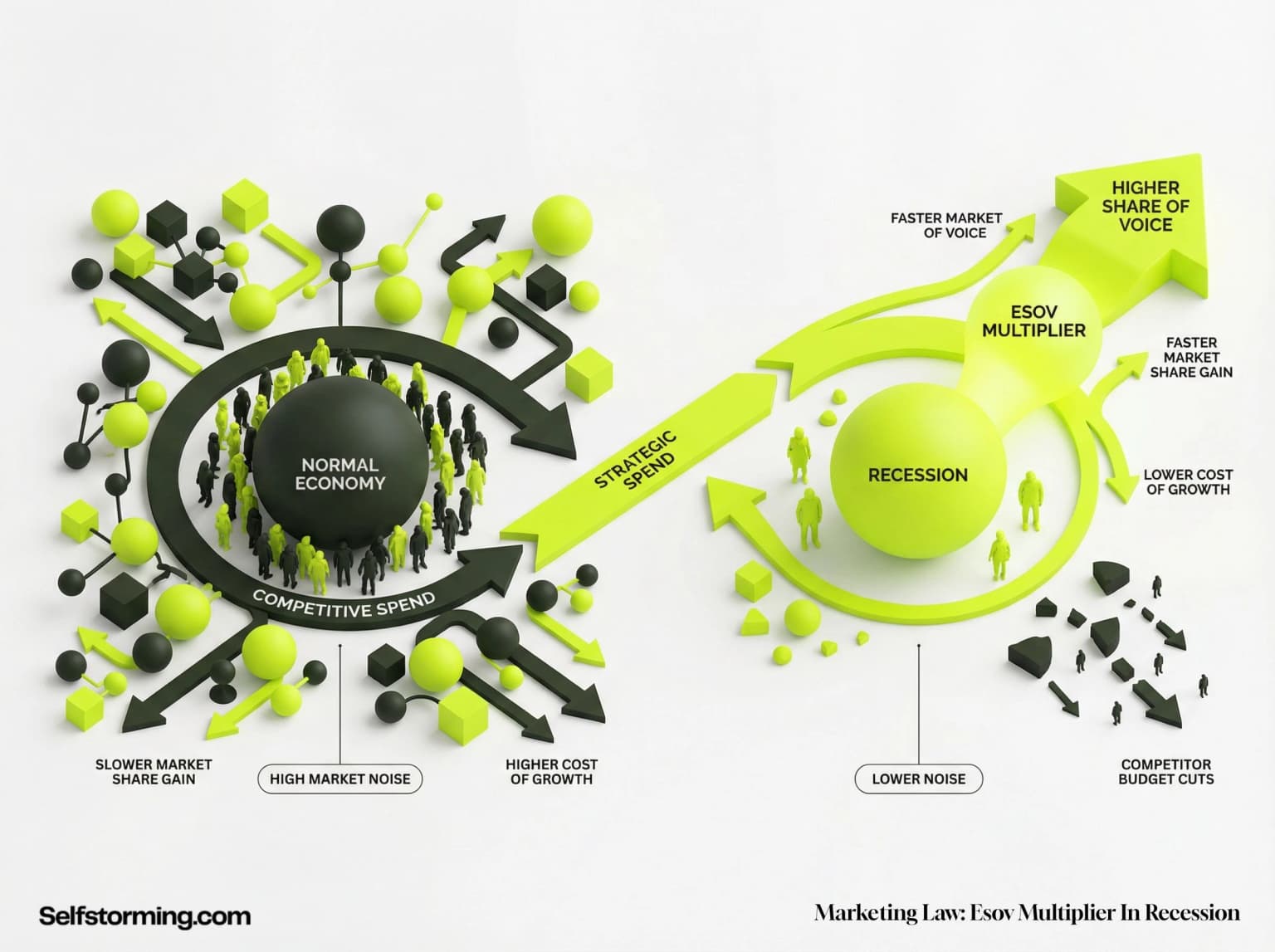
The Recession ESOV Law
ESOV effect is stronger when competitors cut budgets.

Natural Monopoly Law
Larger brands have a higher proportion of light category buyers.

The Law Of Usage Over Attitude
Personal experience shapes brand perceptions more than advertising claims.

The Pareto Law Myth (80/20 Rule)
A refined version of the Light Buyer Law: a small percentage of customers contribute a disproportionate amount to sales, but most sales still come from light buyers.
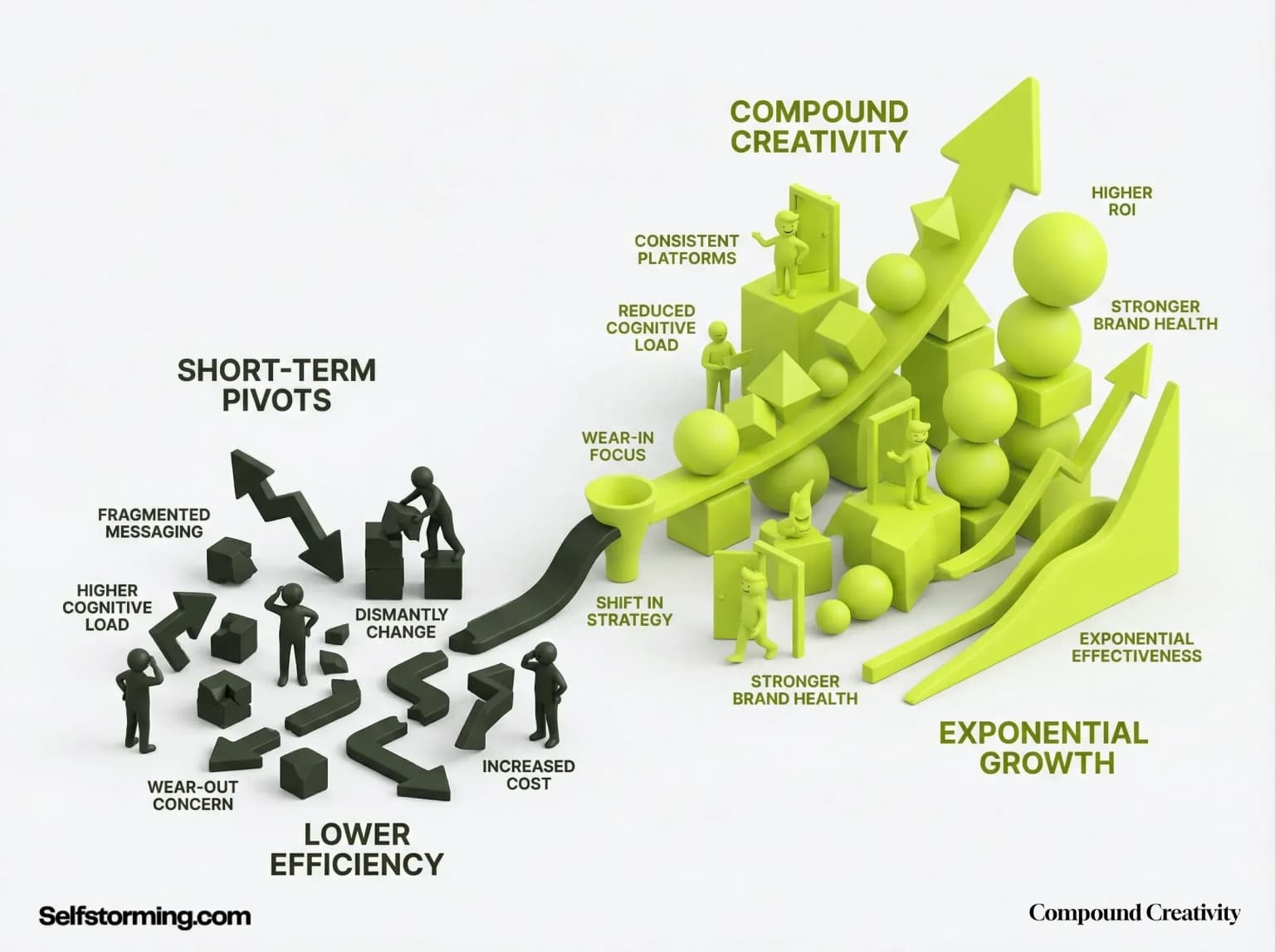
The Law Of Compound Creativity
Creative consistency leads to higher ad quality, stronger brands, and greater profits.

The Creative Wear-In Law
Long-term use of creative increases distinctiveness and effectiveness; most ads are pulled before reaching peak fluency.